
Attack on Titan Season 3
Eren and his companions in the 104th are assigned to the newly-formed Levi Squad, whose assignment is to keep Eren and Historia safe given Eren's newly-discovered power and Historia's knowledge and pedigree. Levi and Erwin have good reason to be concerned, because the priest of the Church that Hanji had hidden away was found tortured to death, making it clear that the Military Police are involved with the cover-up. Things get more harrowing when the MPs make a move on Erwin and the Levi Squad narrowly avoids capture. Eren is also having problems with his Titan transformation, and a deadly killer has been hired to secure Eren and Historia, one Levi knows all too well from his youth.
(Source: Anime News Network)
📺Anime Details
📝Editorial Analysis
The air in the underground chamber is thick—not with dust, but with silence that hums like a live wire. Eren’s breath hitches as Levi’s blade glints under flickering lantern light, not aimed at an enemy, but held steady between Erwin and the Military Police captain who just stepped across the threshold. No roar, no titan scream—just the scrape of boot on stone, the creak of a leather glove tightening, and the unbearable weight of knowing this corridor isn’t a battlefield. It’s a courtroom where the verdict has already been written, and the gavel is a knife.
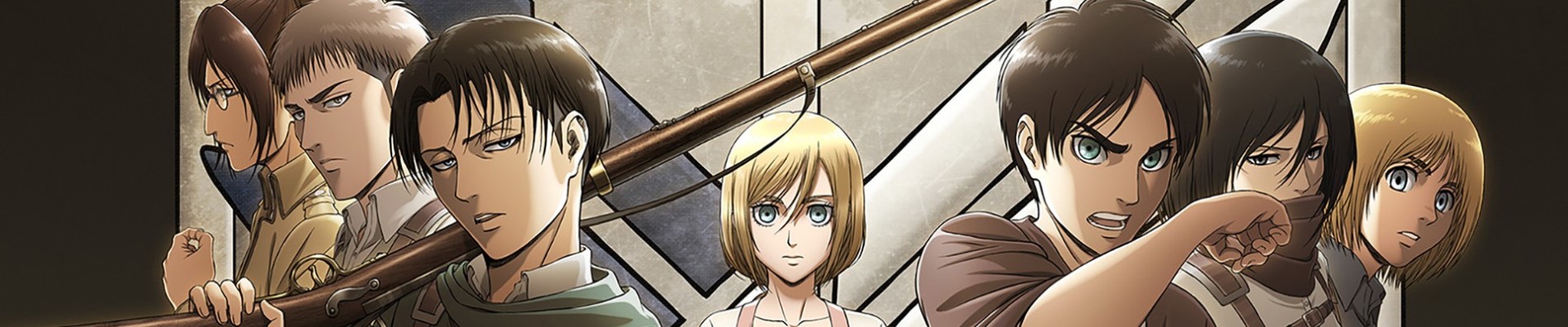
That’s the core feeling of Attack on Titan Season 3: not dread of monsters, but claustrophobic certainty. You don’t fear what might happen—you fear what must, because every door you open reveals another lock turned by someone who’s known the key all along. It’s the slow suffocation of institutional rot wearing the uniform of order: the MP insignia gleaming over a lie, Historia’s trembling hands clutching a crown she never asked for, Hanji’s notes stained with ink and something darker—evidence that evaporates the moment it’s named aloud. This isn’t dystopia as rubble and ruin; it’s dystopia as procedure: filed reports, sanctioned interrogations, promotions granted for silence. You feel cornered, not by walls, but by logic so twisted it loops back into itself—and you’re standing inside the knot.
BioShock™ shares that same vertigo of ideological collapse. Its underwater city isn’t just decayed—it’s designed to betray you, its philosophy (“Ayn Rand meets Atlantis”) calcified into architecture, audio logs, and plasmid-wielding citizens who quote objectivism while begging for ADAM. The player review calls it “revolutionary”—and it is, because the horror isn’t Rapture’s fall, but how inevitable it feels once you hear Fontaine whisper “Would you kindly?” That phrase lands like Erwin’s confession about the failed expedition: both are revelations that reframe every prior choice as complicity. You don’t escape the system—you realize you’ve been breathing its oxygen the whole time.
Then there’s Deus Ex: Game of the Year Edition, where the conspiracy isn’t lurking—it’s in the wiring, in the logos flashing on every screen, in the way your own augmentations hum with corporate firmware. The description names “an ages old conspiracy bent on world dom[ination]”, and the player review nails the immediacy: “gives you all options with one hit of the esc key.” That’s the Season 3 parallel—the illusion of agency within a machine calibrated to absorb dissent. When Eren chooses to fight, when Historia chooses to ascend, when Levi chooses not to strike—that’s not freedom. It’s the narrowest possible slit in the dam, and you feel the pressure behind it in every frame.
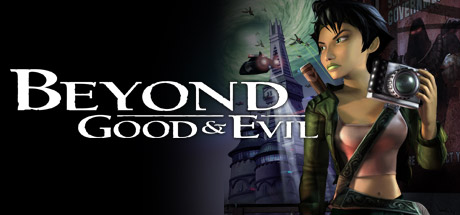
Beyond Good and Evil™ mirrors the season’s moral precision: Jade doesn’t storm a fortress—she slips into propaganda studios, hacks surveillance feeds, and records testimony from civilians whose faces are pixelated by state censors. The description says she’s “expos[ing] a terrible government conspiracy”, and the player review urges the 20th Anniversary edition—because truth, like memory in this world, degrades without care. That’s Historia’s arc in microcosm: her lineage isn’t power—it’s archival material, and protecting her is less about bloodline than about safeguarding the original source file before it’s overwritten.
Who lives for these pairings? The person who watches Eren’s fist clench—not for the punch, but for the fraction of a second his knuckles whiten before he decides whether to swing. The one who replays BioShock’s final confrontation not for the combat, but to hear Atlas’s voice crack when the script finally breaks. The player who spends twenty minutes in Deus Ex staring at a ventilation shaft, calculating angles not to bypass security—but to understand who installed the camera, who approved the budget, who signed off on the blind spot. They don’t want catharsis. They want the tremor in the hand that holds the pen signing the warrant—or the scalpel cutting open the truth. They love stories where every victory tastes like ash, every revelation narrows the path, and the most terrifying line isn’t “I am the enemy”—it’s “We knew.”
🎮14 Games That Match the Vibe








Match Dimensions Explained
❓Frequently Asked Questions
Why does BioShock feel so much like Attack on Titan Season 3’s political tension and moral collapse?
Because both dive headfirst into crumbling societies where ideology masks brutal power grabs—BioShock’s Rapture mirrors the Survey Corps’ fractured loyalties and the shocking reveals about Founding Titan manipulation. You’ll hear characters like Andrew Ryan and Atlas twist noble ideals into weapons, just like Erwin’s speech before the battle of Shiganshina or Zeke’s manipulative calm in the basement scenes.
Is there a game adaptation of Attack on Titan Season 3?
No—there’s no official game based *specifically* on Season 3. But Deus Ex: Game of the Year Edition nails that same vibe: a disillusioned agent (JC Denton) uncovering layered conspiracies while navigating morally gray factions—just like Eren’s shifting alliances and the Military Police’s hidden agendas. The game even lets you hack surveillance systems mid-mission, echoing the constant paranoia of being watched by the Royal Family or the Garrison.
Beyond Good and Evil vs. Disco Elysium—which is better for that slow-burn, emotionally heavy ‘truth-unfolding’ feeling of Season 3?
Go with Disco Elysium—it’s built for exactly that weight. Jade in Beyond Good and Evil exposes propaganda and corruption on Hillys with charm and momentum, but Disco Elysium forces you to sit with trauma, doubt, and systemic rot (like the player review quoting capital’s self-cannibalizing logic), mirroring how Season 3 makes you sit with Eren’s grief, Historia’s guilt, and the devastating cost of ‘freedom.’ Your detective literally talks to his own skill checks—like Eren arguing with his inner voices.
What if I love the intense, claustrophobic dread of the basement scenes in Season 3—what game captures that best?
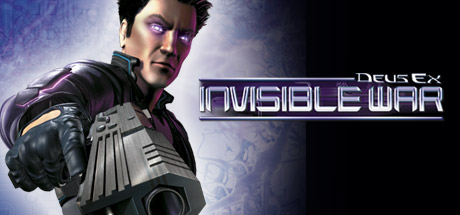
Deus Ex: Invisible War—especially its dim, flickering underground labs and bunker-level conspiracies. You play as Alex D, hunted and manipulated by factions hiding behind benevolent facades, just like Eren trapped in that basement with Zeke. The game’s techno-nightmare setting and oppressive audio design (whispers over comms, distant alarms) replicate that suffocating sense of being cornered by truth—and your choices *matter*, even when they feel futile.