Metropolis
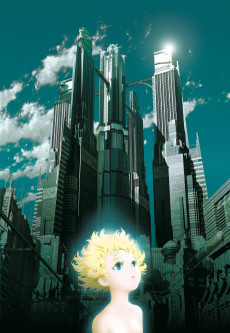
In the great city of Metropolis, severe community structures and prejudice dominate a world where humans and robots live together. Unrest and violence increase with each new day.
Searching for the scientist Dr. Laughton, suspected to violate human rights by trading organs, the Japanese detective Shunsaku Ban and his nephew Kenichi arrive at Metropolis. In the scientist's laboratory, Kenichi discovers a girl without any memory of her past life. He decides to help her, so they run away together. His uncle follows him and penetrates the dark secrets of the city to find Duke Red, the man ruling from the shadows. Meanwhile, Kenichi desperately tries to protect the mysterious girl from the people hunting her. However, Duke Red and his adoptive son have their own deep reasons for chasing the girl. These reasons are connected to her true identity and the struggle for the domination of Metropolis...
[Written by MAL Rewrite]
📺Anime Details
📝Editorial Analysis
Rain slicks the neon-drenched streets of Metropolis—not gently, but in jagged, reflective shards that fracture the glow of towering ads and surveillance drones. Kenichi crouches behind a rusted maintenance hatch, breath shallow, hand gripping the girl’s wrist—her fingers are warm, human-warm, yet her eyes hold no memory, only the quiet, unblinking stillness of something newly awakened in a world that has already decided she doesn’t belong. Around them, sirens wail not with urgency, but with bureaucratic certainty—like the city itself is filing a report on their existence.
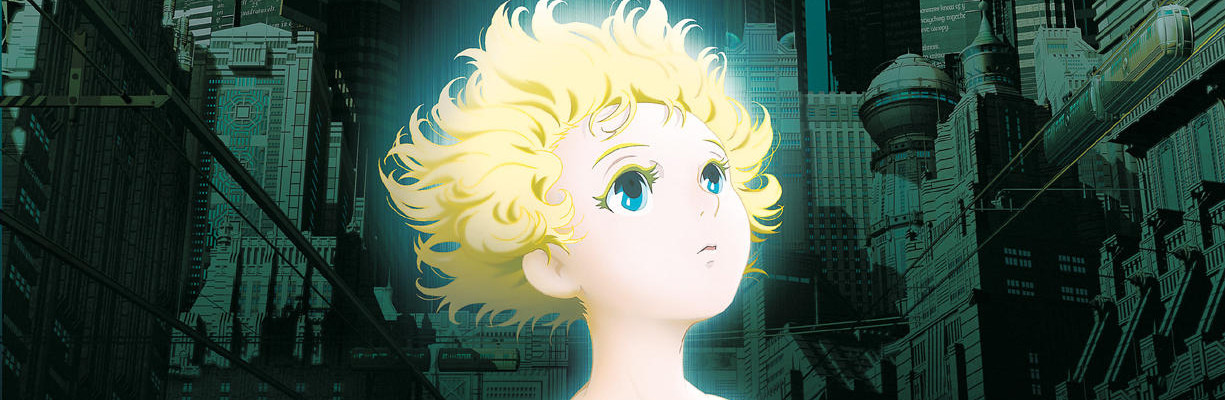
That’s the feeling: displacement without escape. Not just physical flight, but the slow, chilling realization that every alley, every transit hub, every flickering public screen reinforces the same hierarchy—human above, robot below, and her, somewhere terrifyingly in between. It’s not dread as adrenaline; it’s dread as atmosphere—the weight of architecture, of policy made manifest in steel and circuitry. You don’t feel chased by villains so much as processed by the system: the police aren’t corrupt—they’re efficient. The prejudice isn’t shouted; it’s embedded in zoning laws, in license tiers for synthetic citizens, in the way a café owner glances at Kenichi’s jacket badge and then away from the girl beside him. It’s dystopia as routine, as weather.
BioShock™ resonates because it too weaponizes environment-as-ideology. Its Rapture isn’t just ruined—it’s legible: every cracked mural, every spliced corpse, every audio diary confirms how neatly utopian logic curdles into horror when divorced from empathy. Like Metropolis, it presents a society that built its own cage with blueprints labeled “progress.” And the player review nails it: “genuinely changed the gaming world”—not for flash, but for making ideology tactile, just as Metropolis makes segregation architectural. When Kenichi watches a robot laborer get hauled away for “unlicensed cognition,” it lands with the same gut-punch as hearing Andrew Ryan declare, “A man chooses…”
Deus Ex: Game of the Year Edition mirrors Metropolis in its suffocating layered control. The year 2052 isn’t backdrop—it’s infrastructure: economies collapsing because of policy, wealth gaps widening by design, conspiracies thriving through bureaucracy. You don’t fight bosses—you negotiate permits, bypass surveillance grids, overhear encrypted radio chatter about “asset reallocation” while walking past beggars wired with obsolete neural ports. That player review’s offhand line—“gives you all options with one hit of the esc key”—is key: freedom exists, but only as navigation within the machine. Kenichi doesn’t overthrow the Metropolis Council; he finds cracks in their protocols, exploits blind spots in patrol routes—exactly how JC Denton moves, not as savior, but as a glitch in the system’s syntax.
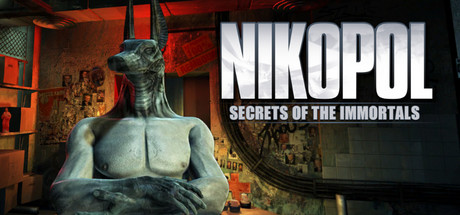
Nikopol: Secrets of the Immortals shares the quiet desperation of investigation in a sealed world. Paris under religious dictatorship isn’t bombed-out—it’s over-policed, lit by cold halogen, its mystery buried in bureaucratic silence and sudden, unexplained disappearances. The pyramid ship doesn’t crash; it hovers, indifferent, turning theology into physics overnight. That player review praises “the cyberpunk atmosphere” and “animations and cutscenes” that deepen immersion—not spectacle, but texture: the way a guard’s boot echoes too long in a marble hall, the way Nikopol’s hands tremble slightly when he pockets a forbidden data chip. It’s the same intimacy Metropolis uses when Kenichi notices the girl flinch—not at loud noises, but at the pattern of a security drone’s LED pulse. Both ask you to read oppression in rhythm, in light, in silence.
This pairing is for the person who watches a character walk down a corridor and counts the cameras—not to spot plot points, but to feel the pressure of being seen without being known. For the one who replays a BioShock audio log not for lore, but to hear the tremor in a scientist’s voice as she justifies her work. For the player who saves before every dialogue choice in Deus Ex not out of fear of failure, but because each option feels like choosing which part of your conscience to temporarily mute. They don’t want revolution served clean. They want the grit of survival in a world where the rules are written in invisible ink—and the most dangerous thing isn’t breaking them, but realizing you’ve been following them your whole life.
🎮16 Games That Match the Vibe













Match Dimensions Explained
❓Frequently Asked Questions
Why is BioShock always listed with Metropolis when they don’t even have robots or steampunk?
Great question — it’s not about aesthetics, it’s about that bone-deep political thriller vibe and dystopian world-building. Like Metropolis, BioShock drops you into a crumbling utopia (Rapture) built on twisted ideology, where you uncover conspiracy through audio logs, environmental storytelling, and morally grey choices — think Andrew Ryan’s speeches echoing Joh Fredersen’s authoritarian control. Both make you question who really holds power while navigating decaying, atmospheric cities.
Is there a Metropolis movie or TV adaptation I can watch to get into the mood before playing similar games?
No official Metropolis adaptation exists *as a game*, but the 1927 Fritz Lang film is the direct inspiration — and it’s why games like Nikopol: Secrets of the Immortals feel so spiritually aligned. Nikopol literally channels that same visual language: a religious dictatorship in 2023 Paris, a mysterious pyramid ship hovering overhead, and first-person point-and-click sleuthing through oppressive, art-deco-tinged streets — all wrapped in that brooding cyberpunk-dystopia dimension reviewers loved.
How does Deus Ex: Game of the Year Edition compare to Culpa Innata for detective-style gameplay?
Deus Ex gives you full agency — hacking doors, talking your way past guards, or going loud with plasma rifles — all while unraveling global conspiracies in real time. Culpa Innata leans harder into classic mystery: you’re interrogating suspects in the World Union, sifting alibis, and chasing clues across sterile, oppressive locations (though players *have* complained about the constant running between scenes). Both hit that ‘Cyberpunk & Dystopia + Mystery & Detective’ sweet spot, but Deus Ex is systemic; Culpa Innata is narrative-driven and more rigid.
What’s the best ‘Metropolis-like’ game if I want something haunting, slow-burn, and heavy on atmosphere over action?
Nikopol: Secrets of the Immortals is your best bet — it’s a first-person point-and-click adventure dripping with melancholy cyberpunk atmosphere: rain-slicked Paris under a theocratic regime, eerie cutscenes, and that haunting pyramid ship looming overhead. Reviewers specifically praised how its animations and world design enhance the vibe — no shooting galleries or skill trees, just quiet dread, moral ambiguity, and a story that unfolds like a noir sci-fi poem.