
Lord of Mysteries
In a Victorian world of steam, dreadnoughts, and occult horrors, Zhou Mingrui awakens as Klein Moretti. He walks a razor’s edge between light and darkness, entangled with warring Churches. This is the legend of unlimited potential…and unspeakable danger.
(Source: Crunchyroll)
📺Anime Details
📝Editorial Analysis
The gaslight flickers—not from wind, but because something else just brushed past the wall. You feel it in your molars: a low, sub-audible hum vibrating up through the floorboards of Klein Moretti’s rented room in the Foggy City. Zhou Mingrui’s fingers tremble as he traces the chalk sigil on the floorboard—half-erased, half-renewed—not out of carelessness, but because every time he redraws it, the lines shift slightly, as if the geometry itself is remembering a different god. That’s the first breath of Lord of Mysteries: not spectacle, but dread held in suspension, like standing barefoot on a live rail while reciting scripture backward.

This isn’t Victorian aesthetics as set dressing—it’s structural decay. Steam hisses not just from pipes, but from ruptured theology. Dreadnoughts loom not as symbols of empire, but as blasphemous vessels shaped like ossified leviathans. The Churches don’t merely oppose each other—they’re fractured mirrors, each reflecting a different wound in reality’s membrane. What you feel watching Lord of Mysteries isn’t wonder or awe—it’s vertigo of scale: the slow, sickening realization that every prayer, every ritual, every whispered oath is less a plea and more a tuning fork struck against cosmic static. You think about agency, yes—but more urgently, about consent: who signed the contract binding humanity to these gods? And when did we stop being signatories and become ink?
That same vertigo lives in Disco Elysium - The Final Cut, where the city of Revachol doesn’t just hold secrets—it digests ideology. Its description calls it a “groundbreaking role playing game” built on a “unique skill system,” but what resonates with Lord of Mysteries is how every dialogue branch feels like stepping onto unstable theology: the player-review quote—“Capital has the ability to subsume all critiques into itself. Even those who would critique capital end up reinforcing it instead.”—mirrors Klein’s horror when he realizes even his resistance to the Churches is already encoded in their liturgies. Both works weaponize epistemology: knowledge isn’t power here—it’s contagion.
Then there’s BioShock, whose description names it a shooter “loaded with weapons and tactics never seen,” but its real DNA pulses in the phrase “Body Horror & Occult”—exactly the axis where Lord of Mysteries bleeds into flesh. Recall the anime’s unflinching gaze at transformation: not heroic metamorphosis, but unraveling, where a priest’s skin cracks open to reveal glyphs written in his own spinal fluid. The player review calls it “one of the most revolutionary games ever!”—not for its gunplay, but because Rapture’s collapse isn’t political theater. It’s ontological rot: the moment Atlas’s voice stops sounding like a man and starts sounding like a frequency your bones recognize. That’s the same shudder you get when Klein hears the True Name of a Greater Lord—not as language, but as a structural failure in causality.
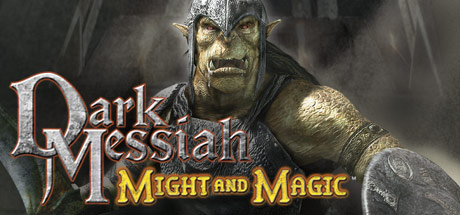
And Dark Messiah of Might & Magic, often overlooked, hits with surgical precision: its description promises “ferocious combat in a dark and immersive world,” but the player review nails the texture—“A fantastic melee combat game that still holds up pretty well today.” That durability isn’t about engine fidelity. It’s about weight: every swing lands with the grim finality of a sacrificial knife, every spell crackles with the risk of self-consumption. Like Lord of Mysteries, it refuses catharsis—victory smells like burnt hair and ozone, and the magic system isn’t a menu, it’s a bargain written in scar tissue. No glowing UIs. Just blood on the blade, and the quiet, awful certainty that the thing you just summoned knew your name before you spoke it.
This pairing isn’t for fans of “cool powers” or “epic battles.” It’s for the ones who pause mid-episode when Klein stares at his own reflection—and watches the pupils dilate a fraction too slow. For players who replay BioShock’s lighthouse descent not for the twist, but to hear the water drip just once more in that hollow silence before the first splicer screams. It’s for readers who highlight sentences like “the Churches are not institutions—they are wounds wearing robes” and feel their pulse skip—not in fear, but in recognition. These are stories for people who understand that the most terrifying mystery isn’t what’s out there. It’s how deeply in here the horror has already taken root—and how tenderly, how religiously, we keep tending it.
🎮75 Games That Match the Vibe















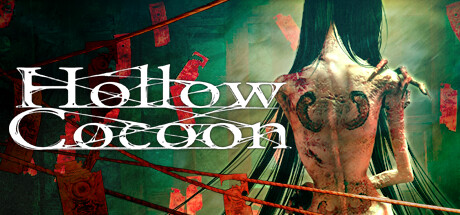
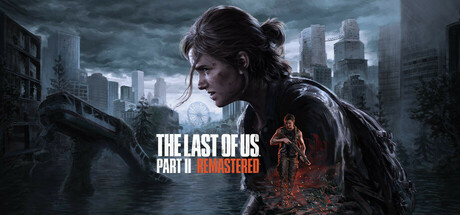




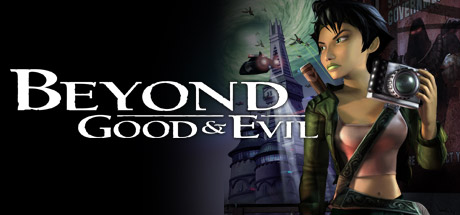
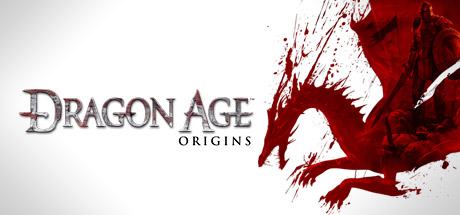



Match Dimensions Explained
❓Frequently Asked Questions
Why is Disco Elysium recommended for Lord of Mysteries fans despite having no magic system?
Because both dive deep into layered mysteries where truth is fragmented, unreliable, and tied to ideology — like how Disco’s ‘Capital’ skill literally argues with you mid-investigation, echoing Luo Jie’s unraveling of hidden truths in the Second Epoch. The game’s emotional narrative and detective-driven progression (e.g., piecing together the Whirling-in-Rags case while battling your own fractured psyche) mirrors the slow-burn revelation and psychological weight of LoM’s epistolary clues and divine hierarchies.
Is there a Lord of Mysteries video game adaptation?
No — there’s no official Lord of Mysteries game adaptation yet. But fans often reach for BioShock because its Rapture setting mirrors LoM’s blend of decaying utopian idealism and body horror: think Andrew Ryan’s objectivist dogma collapsing like the God-Emperor’s doctrine, or the Little Sisters’ grotesque fusion of innocence and occult violation — very much like the Hollows or the consequences of uncontrolled Sequence ascension.
How does Assassin’s Creed compare to The Witcher 3 for LoM vibes?
Assassin’s Creed (Director’s Cut) nails LoM’s early-game ‘hidden world beneath the mundane’ tension — like climbing Jerusalem’s rooftops while sensing unseen Templar rituals below — but lacks Geralt’s rich emotional narrative and morally grey contracts. Witcher 3 delivers deeper character intimacy (Ciri’s trauma, Yennefer’s sacrifices) and political intrigue across war-torn realms, closer to LoM’s layered factionalism and personal cost of power — though it swaps LoM’s occult mystery for grounded monster-hunting stakes.
What’s the best game like Lord of Mysteries if I want that slow-burn, eerie, ‘something ancient is watching’ vibe?
Dark Messiah of Might & Magic — especially its grim, rain-slicked Mordent and the visceral dread of facing corrupted knights or flesh-warped cultists in cramped catacombs. Its Body Horror & Occult dimension matches LoM’s unsettling transformations (like the ‘Silent One’ or ‘Hollow’ sequences), and the emotional narrative hits when you witness allies break under arcane pressure — not unlike Klein’s friends confronting the price of forbidden knowledge in the early chapters.