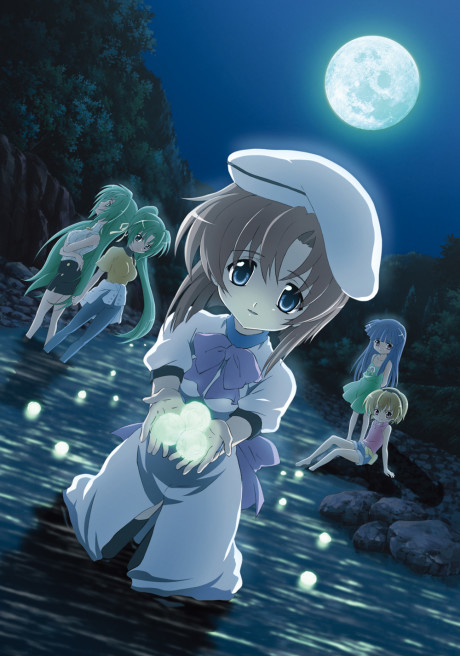
When They Cry Kai
Continuing from the first series, Higurashi no Naku Koro ni Kai begins to shed some light on the dark mysteries prevalent in the preceding season. The young group of friends in the town of Hinamizawa continue to enter terrible conflicts with one another in their never ending summer of 1983, often ending with the brutal murder of one of their numbers. Furude Rika, with the help of her spiritual friend Hanyuu, tackles challenges over and over, trying her best to keep their lives from coming to a tragic end. With no end to the torture in sight, Rika must call upon the bonds of friendship and trust among her friends to discover the true villain of this eternal June.
📺Anime Details
📝Editorial Analysis
The cicadas scream. Not the gentle, drowsy hum of a lazy afternoon—but a shrill, unrelenting screech, vibrating in your molars, pressing down like wet concrete on your chest. You’re watching Rika Furude kneel in the dirt behind the shrine, her small hands trembling as she clutches Hanyuu’s horn—not a weapon, not a shield, just a fragile, pulsing anchor—while the sky bleeds orange and the air smells of burnt sugar and rust. This isn’t horror as jump-scare or gore; it’s horror as recognition: you’ve seen this exact angle of light before, heard that exact pitch of laughter from Satoko just seconds before everything shatters. You know what comes next—and yet, you lean in, breath held, because somewhere beneath the dread is something quieter, sharper: hope, thin as rice paper, folded over and over until it holds.
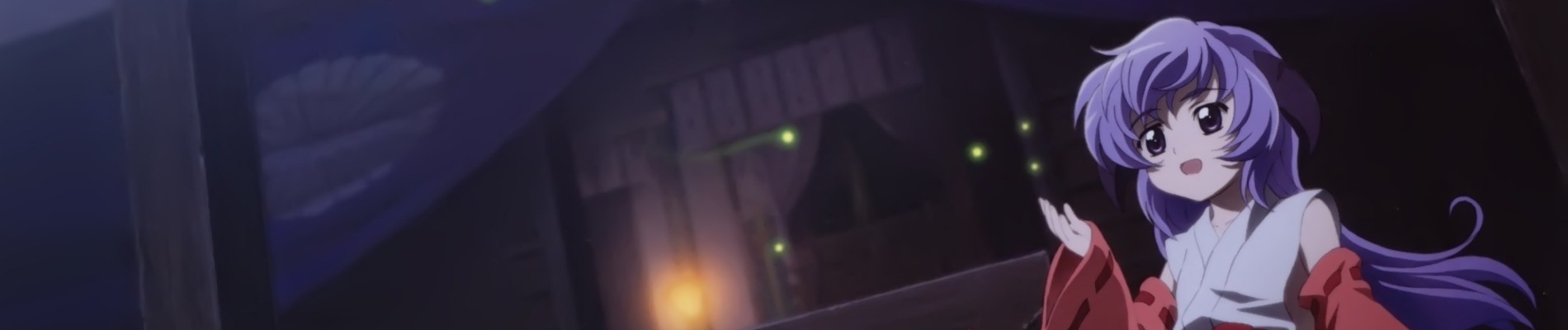
That’s the atmosphere of When They Cry Kai: not fear of the unknown, but grief for the known. It’s the weight of memory that won’t stay buried—the way a single phrase (“Let’s all go to the festival together”) curdles into prophecy, how a shared glance between Keiichi and Rena can bloom into tenderness or terror depending on which timeline’s soil it lands in. This isn’t time travel as spectacle. It’s time as wound: a loop not of convenience, but of compulsion—Rika reliving June 1983 not because she wants to, but because stopping means surrendering the last thread holding her friends’ souls together. The rural quiet of Hinamizawa isn’t peaceful—it’s charged, humming with suppressed violence and whispered gods, where every creak of the old schoolhouse floorboard feels like a confession.
That emotional DNA—time as trauma, memory as both cage and compass—resonates fiercely with BioShock Infinite. Its description names “Time & Memory” as core dimensions—and yes, Booker DeWitt’s debt isn’t financial, it’s chronological: he’s running from consequences that fold across realities, his identity fraying at the edges of every choice. A player review admits, “I know that some people are still bitter about the Bioshock Infinite we could have gotten.” That line stings because it mirrors Kai’s own ache—the bitterness isn’t about plot holes, but about the frustration of nearness: how close Rika gets to saving everyone, only for the loop to snap shut again, just shy of grace. Both works make you feel the exhaustion of carrying truth no one else can hold.
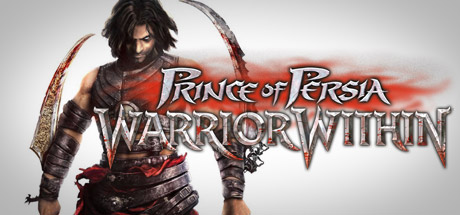
Then there’s Prince of Persia: Warrior Within, hunted by Dahaka—an “immortal incarnation of Fate.” Not a monster, but consequence made flesh, stalking the Prince across shifting sands and crumbling architecture. The player review calls the Dahaka chase “still as goated as it was before”—and that’s key: its power isn’t in novelty, but in relentlessness. Like Rika waking up each time in the same tatami room, same cicada shriek, same crushing certainty that time won’t let her rest. The Prince doesn’t fight to win—he fights to delay, to carve milliseconds of agency from an inevitability that breathes down his neck. That’s Hinamizawa’s air: thick with the scent of what must happen, even as characters claw toward what could be.
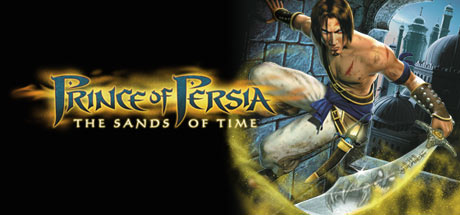
And Prince of Persia: The Sands of Time, where a young prince draws power from a magic dagger “borne by blood and ruled by deceit.” Its description echoes Kai’s central paradox: salvation and damnation wear the same face. Rika’s power—her ability to rewind—isn’t heroic; it’s cursed intimacy. Every reset demands she remember the murder, the betrayal, the slow rot of trust. Just as the Prince must constantly rewind his own mistakes, watching sand spill from his hands like time itself leaking out, Rika’s loops aren’t escapes—they’re acts of bearing witness, again and again, to the unbearable.
These pairings aren’t for fans of “dark stories” or “twisty plots.” They’re for the person who watches Rika press her forehead to the shrine gate and feels the tremor in her wrists—not as weakness, but as the quiet, furious pulse of refusal. For the player who replays Warrior Within not for nostalgia, but because that Dahaka chase still makes their throat tighten—not from fear, but from recognition: yes, I too have run from something I helped create. They’re for those who understand that the most devastating horror isn’t blood on the floor—it’s the silence after the scream stops, and the terrible, tender work of remembering how to speak again.
🎮13 Games That Match the Vibe

Match Dimensions Explained
❓Frequently Asked Questions
Why does When They Cry Kai match with BioShock Infinite but not the original BioShock?
It’s all about the 'Time & Memory' dimension — Kai shares that haunting, layered storytelling where reality fractures and past choices echo in devastating ways, just like Booker’s cyclical guilt and Elizabeth’s multiverse revelations. Original BioShock trades that for a 'Political Thriller' focus (Rapture’s ideology, objectivism vs. collectivism), which doesn’t align with Kai’s intimate psychological unraveling — plus its score (63) and thematic DNA are notably different.
Is there an anime or manga adaptation of When They Cry Kai?
No — unlike the main Higurashi or Umineko series, Kai has never been adapted into anime, manga, or drama CD. It remains a standalone visual novel experience, much like how Prince of Persia: The Sands of Time stayed purely a game before its film attempts — no spin-offs, no retellings, just that raw, time-bent narrative with Kaileena’s dagger and the Prince’s rewind mechanic echoing Kai’s own temporal reckoning.
How does Prince of Persia: Warrior Within compare to The Sands of Time in terms of When They Cry Kai vibes?
Warrior Within leans harder into Kai’s darker, more oppressive tone — think Dahaka’s relentless chases mirroring Kai’s suffocating dread and inevitability, especially during those looping, desperate escapes. Sands of Time matches Kai’s structure better: both use time manipulation as both gameplay *and* emotional device — rewinding after a fatal fall feels like Kai’s ‘reset’ moments, where small choices spiral into irreversible tragedy.
What’s the best game like When They Cry Kai if I want that slow-burn, emotionally exhausting feeling of remembering too much?
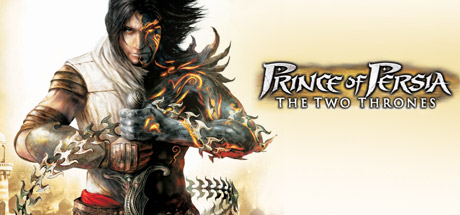
Go straight to Prince of Persia: The Two Thrones — it’s got that exact vibe: the Prince literally battling his own corrupted shadow-self while haunted by Kaileena’s death, flashbacks bleeding into present combat, and that crushing weight of memory you can’t outrun. Its 83 score and 'Time & Memory' alignment with Kai make it the most tonally faithful pick — especially scenes where the Dark Prince emerges mid-dialogue, just like Kai’s sudden, destabilizing recollections.