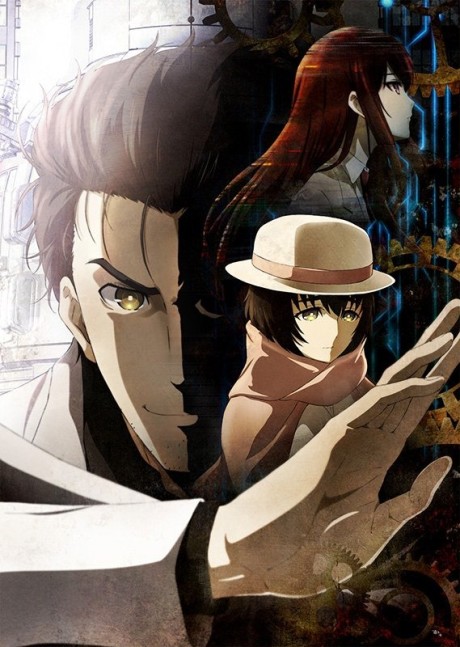
Steins;Gate 0
The eccentric, self-proclaimed mad scientist Rintarou Okabe has become a shell of his former self. Depressed and traumatized after failing to rescue his friend, he has decided to forsake his mad scientist alter ego and live as an ordinary college student. Surrounded by friends who know little of his time travel experiences, Okabe spends his days trying to forget the horrors of his adventures alone.
While working as a receptionist at a college technology forum, Okabe meets the short, spunky Maho Hiyajo, who later turns out to be the interpreter at the forum's presentation, conducted by Professor Alexis Leskinen. In front of a stunned crowd, Alexis and Maho unveil Amadeus—a revolutionary AI capable of storing a person's memories and creating a perfect simulation of that person complete with their personality and quirks. Meeting with Maho and Alexis after the presentation, Okabe learns that the two were Kurisu's colleagues in university, and that they have simulated her in Amadeus. Hired by Alexis to research the simulation's behavior, Okabe is given the chance to interact with the shadow of a long-lost dear friend. Dangerously tangled in the past, Okabe must face the harsh reality and carefully maneuver around the disastrous consequences that come with disturbing the natural flow of time.
📺Anime Details
📝Editorial Analysis
The fluorescent hum of the college tech forum reception desk. Okabe’s fingers hover over a keyboard, not typing—just resting, slack, as if afraid to press any key might shatter the fragile silence he’s built around himself. His eyes don’t track the students passing by; they’re fixed on the reflection in the darkened monitor screen—ghostly, hollow, unmoored. That’s not depression as a plot device. That’s the sound of breath held too long after trauma has rewired the nervous system.
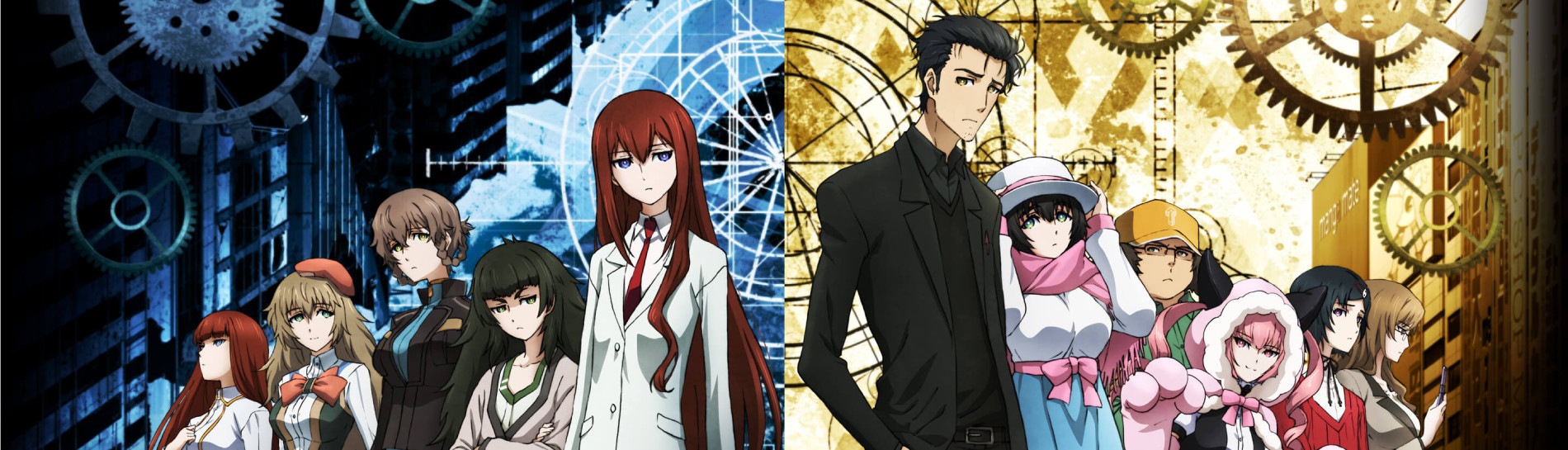
What makes Steins;Gate 0 ache so deeply isn’t its time machines or dystopian war—it’s how it weaponizes stillness. It doesn’t rush toward revelation; it lingers in the suffocating weight of aftermath. You don’t feel like a spectator to tragedy—you feel like someone trying to relearn how to stand upright in a world where gravity shifted without warning. The sci-fi scaffolding isn’t spectacle—it’s architecture for grief: every failed world line is a scar tissue, every AI interface a mirror reflecting fractured identity, every urban alleyway soaked in the quiet dread of a future already lost. This isn’t about saving the world. It’s about surviving the memory of having tried—and failed—so close.
That same emotional DNA pulses in TimeShift™, where Dr. Aiden Krone’s “reckless” Time Jump fractures reality into a disturbing alternate universe—not as spectacle, but as psychological fallout. The player review calls it “a blast,” yes—but only after community patches fix its instability. That mirrors Okabe’s own struggle: brilliance buried under broken systems, potential choked by technical and emotional fragility. Like Okabe abandoning his lab coat, Krone’s power isn’t heroic—it’s destabilizing, isolating, exhausting. Both stories treat time not as a tool, but as a wound that won’t scab over.
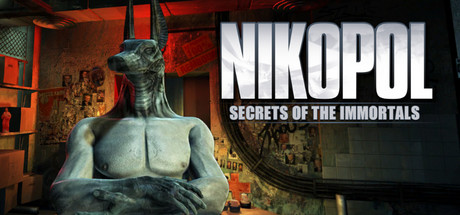
Then there’s Nikopol: Secrets of the Immortals, where France in 2023 is ruled by an iron-fist religious dictatorship—and a pyramid ship appears above Paris. The player review praises its “cyberpunk atmosphere” and how cutscenes enhance the emotional narrative. That’s the resonance: not just dystopia as backdrop, but as lived texture—the oppressive weight of ideology pressing down on individual memory, much like Okabe’s friends unknowingly walking past him in the forum while he replays the moment Kurisu didn’t wake up. Nikopol’s first-person perspective forces intimacy with decay; Steins;Gate 0 does the same through Okabe’s dissociative gaze—both make you feel the grain of a collapsed future.
And The Longest Journey, though tonally lighter, shares something quieter but sharper: April Ryan’s journey between parallel universes isn’t about multiversal tourism—it’s about identity splintered across ontological fault lines. The player review nails it: “It’s less a long journey than a long conversation.” That’s Okabe’s entire arc—talking around the truth, circling trauma in halting dialogue, performing normalcy like a script he forgot how to memorize. Both works treat divergence not as physics, but as psychic geography: every choice leaves a residue, every world line a version of yourself you can’t quite reintegrate.
Who would love this pairing? Someone who cries not at grand sacrifices, but at the sight of a half-packed suitcase left open for three weeks—someone who recognizes dissociation in the way a character pauses mid-sentence, or stares at rain on glass like it’s code they used to understand. Not fans of “cool time travel”—but people who’ve ever woken up certain they’d forgotten something vital, and spent the whole day searching their own mind like a ruined archive. They don’t want answers. They want the weight of the question—held, shared, felt.
🎮31 Games That Match the Vibe





















Match Dimensions Explained
❓Frequently Asked Questions
Why is TimeShift™ recommended for Steins;Gate 0 fans despite being an action game?
Because both hinge on *personal, high-stakes time manipulation with irreversible consequences*—like Okabe’s failed attempts to save Kurisu in Steins;Gate 0, Dr. Krone’s reckless Time Jump in TimeShift™ fractures reality into a dystopian alternate timeline you physically navigate. The 81-scored game even mirrors the emotional weight of cause-and-effect choices, though it swaps dialogue trees for time-rewind combat mechanics (slow-mo, rewind, freeze) that make every firefight feel like a desperate recalibration of fate.
Is there a visual novel adaptation of Culpa Innata like Steins;Gate 0?
No—Culpa Innata is *only* a full 3D narrative adventure (no VN version), and it’s structurally nothing like Steins;Gate 0’s branching timelines or lab-notebook UI. It’s a slow-burn, location-hopping detective sim set in a sterile 'perfect' World Union, where you interrogate NPCs and chase clues across sterile megacities—not a character-driven time-paradox thriller. One player bluntly put it: 'every location, run, run, run'—so if you loved Okabe’s cramped lab banter and emotional pacing, this won’t scratch that itch.
How does Nikopol: Secrets of the Immortals compare to The Longest Journey for Steins;Gate 0 fans?
Nikopol leans harder into *cyberpunk dread and political mystery*—think the oppressive religious dictatorship over Paris and that eerie pyramid ship hovering above the Seine—while The Longest Journey focuses on *multiverse whimsy and philosophical dialogue*, like April Ryan bouncing between magic-infused Stark and tech-heavy Arcadia. Both share Steins;Gate 0’s ‘adult, dark seinen’ tone, but Nikopol’s atmospheric cutscenes and noir-ish detective work (70% of gameplay is clue-gathering in decaying Parisian streets) hit closer to the melancholy weight of Episode 23 than April’s more playful interdimensional banter.
What’s the best game like Steins;Gate 0 if I want that same heavy, emotionally exhausting ‘waiting for the next tragedy’ vibe?
Go straight to Nikopol: Secrets of the Immortals—the 69-scored game nails that suffocating, slow-burn tension: you’re trapped in a 2023 France ruled by fanatical clergy, uncovering secrets while that ominous pyramid ship looms overhead like Okabe’s looming divergence meter. Its first-person point-and-click pacing forces quiet reflection between revelations, and players praise how the cyberpunk atmosphere ‘enhances’ the emotional narrative—exactly the kind of grim, thoughtful dread that makes Steins;Gate 0’s hospital scenes or Labmemos so devastating.