
Jin-Roh: The Wolf Brigade
In a very different Tokyo from the one we know today, the totalitarian government rules with an iron fist. But a group called "the Sect" is staging demonstrations and challenging the government's martial law. Constable Fuse of the Capital Police's Special Unit is on a mission to stop a Sect demonstration when he encounters a girl in the sewers under Tokyo.
When he fails to shoot as ordered, he is put on trial, questioned, and "re-conditioned" as a soldier. But the dead girl haunts him, both in his dreams and in the face of her sister, whom Fuse has befriended. But Fuse has made himself a target for some very powerful men... And as the world comes crashing down around him, Fuse is continually challenged to decide what is real and what is right.
(Source: Discotek)
Note: The film received an early premiere at the Fantasia Film Festival on August 6, 1999.
📺Anime Details
📝Editorial Analysis
The flicker of a single bare bulb in the sewer tunnel—cold, yellow, trembling—as Constable Fuse lowers his rifle, breath catching in his throat. The girl stands there, small and silent, clutching a grenade like it’s a schoolbook. Not a threat. Not a soldier. Just there, lit from below, her face half-drowned in shadow, eyes wide with something far older than fear: resignation. He doesn’t fire. And in that suspended second—no music, no score swell, just dripping water and his own pulse—the world cracks open.
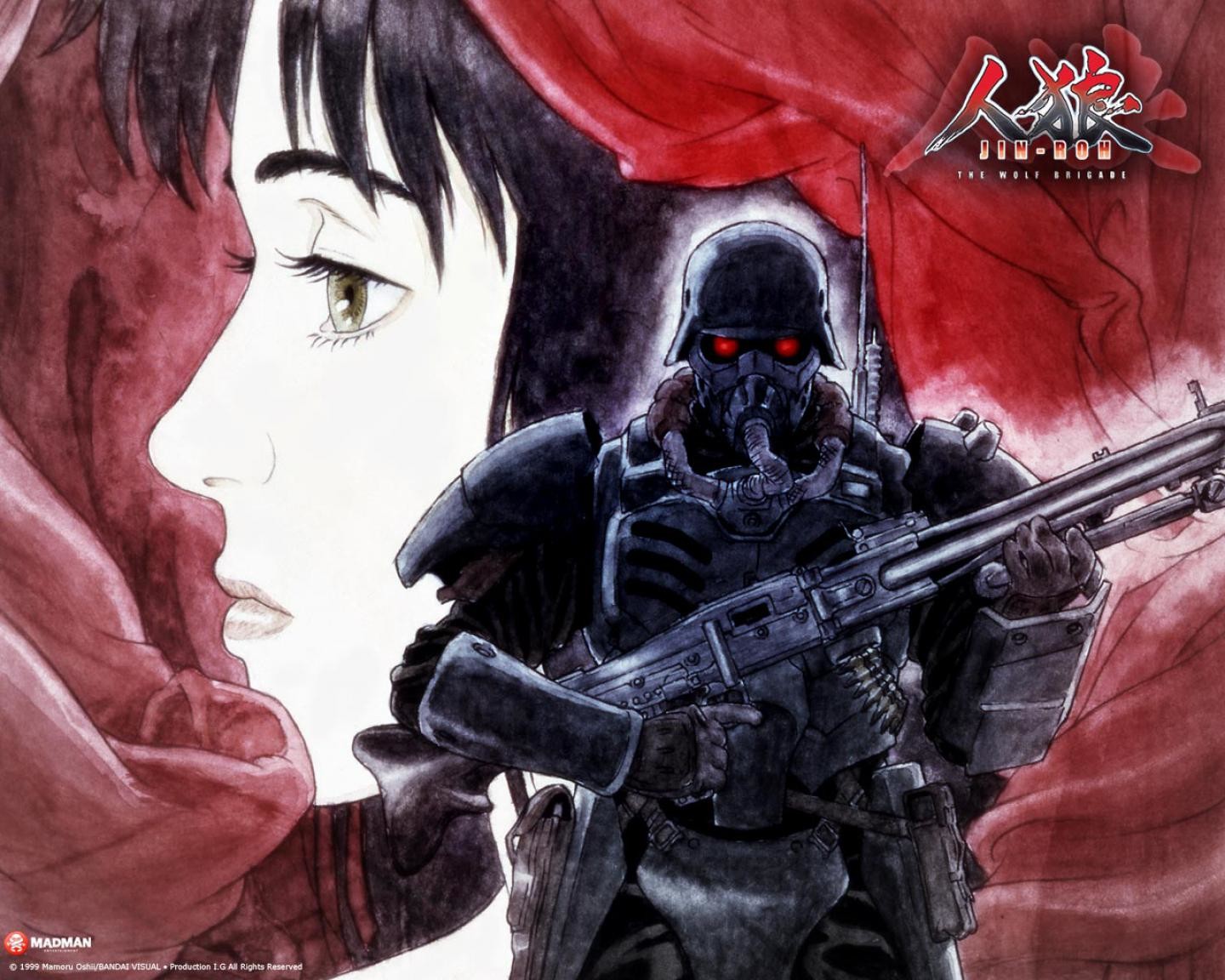
That moment isn’t about action or ideology. It’s about weight: the unbearable gravity of choice when every option is already poisoned. Jin-Roh: The Wolf Brigade doesn’t trade in dystopian spectacle—it lives in the suffocating quiet between orders, in the tremor of a hand relearning how to hold a weapon, in the way a dead girl’s red hood keeps appearing at the edge of frame like guilt made visible. This isn’t noir for its rain-slicked alleys; it’s noir for its moral erosion—the slow, clinical stripping away of self until only duty remains, hollow and polished. You don’t feel oppressed by the state’s power—you feel complicit in your own unmaking. Every glance from a superior, every salute, every regulated breath in the barracks carries the chill of inevitability. It makes you think not about revolution, but about the terrifying ease with which conscience can be filed down to a serviceable edge.
That same suffocating, ideologically saturated dread lives in BioShock™, where the player walks through Rapture’s drowned Art Deco halls—a city built on absolutes, then devoured by them. Its description calls it a “Political Thriller, Cyberpunk & Dystopia, Adult & Dark Seinen”—and yes, the plasmids and Big Daddies dazzle, but what lingers is the hollowness behind Andrew Ryan’s “A man chooses, a slave obeys.” Like Fuse, you’re conditioned—not by drills, but by narrative architecture. Player reviews call it “revolutionary,” not for its guns, but because it makes you question your own agency mid-gameplay, mirroring Fuse’s trial and re-conditioning. The horror isn’t the monsters—it’s realizing you’ve been following orders all along.
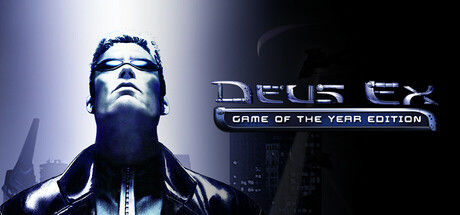
Then there’s Deus Ex: Game of the Year Edition, whose description names an “ages old conspiracy bent on world domination” in a 2052 choked by inequality—a world where power doesn’t shout, it whispers through encrypted channels and corporate logos. Its dim tags—“Political Thriller, Cyberpunk & Dystopia, Neon Noir”—align precisely with Jin-Roh’s texture: not flashy rebellion, but quiet surveillance, layered loyalties, and the exhaustion of seeing truth as a liability. A player review notes how the game “gives you all options with one hit of the esc key”—just as Fuse is given protocol, procedure, and doctrine… yet still stumbles into moral vertigo. Both force you to move through systems you’re meant to serve, while feeling the floor tilt beneath your boots.
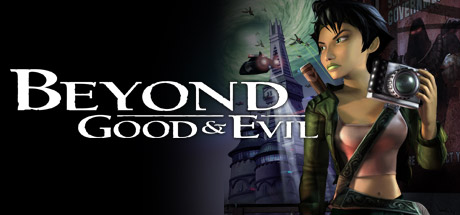
And Beyond Good and Evil™, though brighter in palette, shares Jin-Roh’s core wound: the reporter Jade investigating state lies while her world frays at the seams. Its description positions her as an “investigative reporter” exposing “a terrible government conspiracy”—not with tanks, but with stolen data pads and whispered interviews in alleyways. Player reviews praise its “crazy” energy—but beneath that lies the same quiet tragedy: the cost of seeing clearly in a world that rewards blindness. Like Fuse, Jade operates in the gray zones where loyalty to truth isolates you from everyone—even those you love.
These aren’t stories for people who want heroes. They’re for the ones who flinch at salutes, who pause before pulling triggers, who hear propaganda and feel their stomach tighten—not because it’s false, but because it’s plausible enough to be dangerous. They’re for viewers who remember the exact shade of that red hood, and players who still hear the echo of Fontaine’s voice long after the credits roll. For anyone who’s ever stood still in a corridor of authority—and felt, deep in their ribs, the terrible freedom of hesitation.
🎮34 Games That Match the Vibe














Match Dimensions Explained
❓Frequently Asked Questions
Why does BioShock keep coming up in 'games like Jin-Roh' lists?
Because both hinge on oppressive political systems where ideology masks brutal control—Jin-Roh’s Public Security Bureau mirrors BioShock’s Rapture, where Andrew Ryan’s ‘objectivist’ utopia collapses into fascist surveillance and moral compromise. You’ll feel that same suffocating weight when confronting Fontaine’s propaganda or watching Jack’s identity unravel—just like Kazuki’s slow dehumanization during the Wolf Brigade’s ‘cleansing’ ritual.
Is there a Jin-Roh anime game adaptation?
No—there’s never been an official Jin-Roh video game adaptation, animated or otherwise. But if you’re craving that exact tone (muted colors, bureaucratic dread, morally compromised agents), Beyond Good and Evil nails it: Jade’s undercover reporting under the DomZ-controlled IRIS Network echoes Jin-Roh’s surveillance state, especially in scenes where she hides her camera inside Pey’j’s belly to document secret military transports.
How does Deus Ex compare to Assassin’s Creed for Jin-Roh fans?
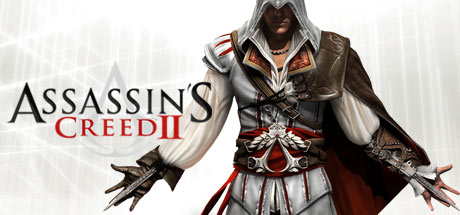
Deus Ex is the stronger match—it shares Jin-Roh’s layered conspiracy storytelling and body-as-battleground tension (think JC Denton’s augmentations vs. Kazuki’s suppressed trauma), while Assassin’s Creed leans more into kinetic parkour and historical spectacle. In Deus Ex, the Majestic 12 briefing rooms and UNATCO’s sterile interrogation chambers hit that same cold, institutional unease as the PSB’s rain-slicked corridors and silent train station standoffs.
What’s the best Jin-Roh-like game if I want that quiet, heavy, rainy-night-in-Tokyo mood?
Beyond Good and Evil—especially its 20th Anniversary Edition—is your best bet. Its Neo-Paris-inspired city of Hillys drips with neon-reflected rain, muted blues and greys, and constant low-grade paranoia; Jade’s stealthy rooftop takedowns and hushed conversations in the lighthouse basement echo Jin-Roh’s tense, almost soundless moments—like Kazuki staring out the train window before the massacre, just as the rain blurs the city lights.