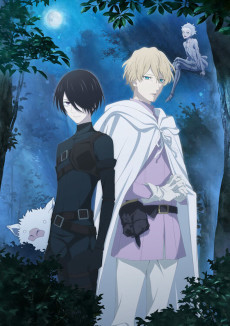
Requiem of the Rose King
📺Anime Details
📝Editorial Analysis
The candlelight flickers low over Richard’s face—not the prince, not yet, but the boy who feels like a ghost before he dies. His fingers tremble as he traces the edge of a cracked mirror in the Tower of London, and for a breath, his reflection doesn’t move. Not because it’s broken—but because he is. That stillness isn’t silence. It’s the weight of a body that refuses to hold its own truth, a soul caught between crown and curse, between history’s verdict and something far more tender: the ache of being seen, not as symbol, but as self.
That’s the atmosphere—not gothic ornamentation or political scheming alone, but the pressure of existing inside a story already written against you. Requiem of the Rose King doesn’t dramatize history; it haunts it. Every frame hums with the dissonance of desire pressed into duty, of love folded into treason, of identity worn like armor too tight to breathe in. You don’t watch it to follow plot—you inhabit its claustrophobia, its fever-dream logic where ghosts speak truths kings deny, and romance blooms not in sunlight but in candlelit corridors thick with dread and devotion. It makes you think about how power demands erasure—and how love, especially queer love in hostile terrain, becomes both rebellion and requiem.
Baldur’s Gate 3 shares that same emotional narrative gravity—where romance isn’t a side quest, but the axis on which moral collapse or redemption turns. Its Romance & Shoujo dimension mirrors Requiem of the Rose King’s intimacy: choices aren’t just tactical—they’re confessions. When Astarion confesses his fear of touch, or when Shadowheart’s faith fractures under divine betrayal, it echoes Richard’s trembling hands before the mirror—vulnerability as battlefield. The Dark Fantasy texture isn’t just monsters and magic; it’s the way light falls on skin after violence, how tenderness persists even when trust is ash. Player reviews don’t praise mechanics—they say, “I cried during the campfire scenes,” because the stakes are human, not heroic.
Amnesia™: Memories lands with equal precision—not through swords or spells, but through Body Horror & Occult unease that maps directly onto Requiem of the Rose King’s core tension: the terror of a body that won’t obey your soul. When Richard’s form shifts, when his voice cracks between registers, when the ghost of his mother whispers from the walls—it’s not spectacle. It’s embodied dissonance. Amnesia™: Memories does the same: memory loss isn’t plot device—it’s visceral estrangement from self, where every recovered fragment feels like stepping into someone else’s skin. Its Emotional Narrative isn’t told; it’s felt in the pulse of a distorted heartbeat, in the way a lover’s hand lingers just a second too long before pulling away. That hesitation? That’s the same breath before Richard chooses loyalty over survival.
And then there’s Kingdom Come: Deliverance II, whose Political Thriller dimension isn’t about backroom deals—it’s about watching a world calcify around you while you’re still soft. Henry’s rise isn’t triumphant; it’s exhausting, granular, stained with mud and doubt. Like Richard, he’s trapped in systems older than himself—feudalism, patriarchy, dogma—all demanding performance, not personhood. Its Emotional Narrative lives in the silence after a betrayal, in the way a knight’s armor clanks heavier each time he lies. No grand monologues—just a glance across a banquet hall, full of everything unsaid. That’s the same air Requiem of the Rose King breathes: politics as slow suffocation, love as quiet defiance.
Who loves this pairing? Not just fans of “historical tragedy” or “LGBTQ+ themes”—but people who recognize the weight of a pause. The ones who replay a dialogue choice three times because the silence between lines holds more truth than the words. Who replay a cutscene not for lore, but to feel that tremor again—the one where identity isn’t declared, but unfolds, fragile and fierce, in candlelight, in shadow, in the space between breaths. They’re the readers who underline marginalia instead of plot summaries. The players who save before every conversation—not to avoid consequences, but to savor the risk of being real. They don’t want escape. They want resonance. And here, in these flickering, haunted, fiercely tender spaces—ghost, tremble, pause, unfold, breathe—they find it.
🎮41 Games That Match the Vibe















Match Dimensions Explained
❓Frequently Asked Questions
Why does Baldur's Gate 3 keep showing up in Requiem of the Rose King recommendations?
Because both lean hard into tragic romance, political betrayal, and emotionally gut-punching choices—like when Richard III’s loyalty fractures or BG3’s Astarion wrestles with vampiric corruption. The shared 'Romance & Shoujo' + 'Dark Fantasy' + 'Emotional Narrative' dimensions make them resonate on a visceral level, especially in scenes where love and duty collide (e.g., Henry Tudor’s conflicted vows vs. BG3’s Shadowheart confession in the Underdark).
Is there an anime or manga adaptation of Requiem of the Rose King that’s actually good?
No official anime or manga adaptation exists—Requiem is *itself* the original manga (by Aya Kanno), and while there was a 2022 anime, it’s widely criticized for rushed pacing and tonal whiplash. Fans seeking that same blend of Shakespearean tragedy, gender-fluid identity, and lush historical dread often pivot to Amnesia™: Memories instead—it nails the psychological intimacy and body-horror-tinged romance Requiem fans crave.
How does Kingdom Come: Deliverance II compare to Requiem of the Rose King in terms of political intrigue?
Both dive deep into realist medieval power struggles—Requiem’s Wars of the Roses courtroom betrayals mirror KCII’s factional scheming in Bohemia, like when Sigismund’s court manipulates Henry IV’s succession just as Warwick ‘the Kingmaker’ orchestrates Edward IV’s rise. KCII’s dialogue trees and consequence-driven quests (e.g., choosing sides in the Coup of Kutná Hora) deliver the same weighty, morally gray political tension you feel watching Richard III’s coronation unravel.
What’s the best game like Requiem of the Rose King if I want slow-burn romance and gothic atmosphere without combat?
Amnesia™: Memories is your best bet—it swaps swords for whispered confessions and occult dread, with romance unfolding through layered memory fragments (think: Requiem’s flashbacks to young Richard’s isolation, but rendered as tactile, haunting vignettes). Its 'Romance & Shoujo' + 'Body Horror & Occult' + 'Emotional Narrative' alignment means you’ll get that same aching, candlelit intimacy—no swordfights, just trembling hands, locked eyes, and consequences that linger like smoke.