
Golden Kamuy Final Season
📺Anime Details
📝Editorial Analysis
The smell of wet earth and gunpowder hangs thick in the air—not clean, not cinematic, but heavy, like breath caught mid-scream. In Golden Kamuy Final Season, Asirpa crouches low in the Hokkaido undergrowth, fingers brushing the cold iron of a rifle bolt she’s just cleaned with bear fat and birch bark ash. Her breath fogs. Her eyes don’t flicker toward danger—they measure it: wind direction, tree density, the tremor in her own wrist after firing three rounds. No music swells. Just the rasp of metal on metal, then silence so deep it vibrates.
That silence is the soul of it—not peace, but tension held in the body. This isn’t adventure as escape; it’s adventure as consequence. Every gunshot echoes with colonial violence. Every laugh cracks under the weight of betrayal. The humor isn’t relief—it’s resistance, a knife twisted sideways to deflect despair. You don’t watch Golden Kamuy Final Season to forget reality—you watch because it refuses to let you look away from how history lives in muscle memory, in scar tissue, in the way Saichi’s hands still jerk when he hears a train whistle. It makes you feel exhausted, yes—but also awake, fiercely, uncomfortably present. It asks you to hold contradiction: tenderness and brutality, loyalty and calculation, Indigenous knowledge and imperial erasure—all at once, without resolution. There is no catharsis here, only continuity. And that’s what lingers: the weight of survival, not the thrill of victory.
Which is why Assassin's Creed™: Director's Cut Edition lands with such eerie resonance. Its description calls it “a next-gen game… that redefines the action genre”—but what actually sticks is the player’s own admission: “some of the models and textures are quite dated but no issues with me.” That acceptance of roughness, of imperfection as authenticity, mirrors Golden Kamuy Final Season’s refusal to polish its trauma. Both treat history not as backdrop but as terrain—uneven, weathered, demanding navigation over spectacle. The “Political Thriller” dimension isn’t about intrigue for intrigue’s sake; it’s about bodies moving through systems designed to break them. When Altair walks Jerusalem’s narrow alleys, every step feels like Asirpa stepping over frost-heaved ground—each choice weighted, each alliance temporary, each death real in its logistical aftermath.
Then there’s Prince of Persia, described as “an all-new epic journey” built by Ubisoft Montreal, introducing “a new prince, new lands and a brand new story completely separate from the sands…” That deliberate separation—that insistence on fresh ground—is kin to Golden Kamuy Final Season’s final arc, where characters shed old roles like worn uniforms. The player review notes its “Healing & Slow Life” dimension—and yes, that’s the quiet pulse beneath the gunfire: Saichi teaching Asirpa to read Ainu script by firelight, Nizam’s quiet grief folded into daily ritual, the long silences between men who’ve buried too many friends. Not healing as cure, but healing as continuance. Like Prince of Persia’s slow, deliberate acrobatics—each landing measured, each fall absorbed—the anime’s emotional beats land with physical precision. No grand speeches. Just hands passing a cup of tea. Just a glance held a half-second too long. Tender. Precise. Unhurried.
And Kingdom Come: Deliverance II, scoring 80 alongside Assassin's Creed™, shares something deeper than historical setting: its “Tactical Warfare” dimension isn’t about winning battles—it’s about logistics as morality. How do you feed your squad when supply lines collapse? What do you do when your ally’s honor conflicts with your mission? That same granular ethics lives in Golden Kamuy Final Season’s fugitive calculus: stealing medicine isn’t rebellion—it’s arithmetic. Choosing who gets the last bullet isn’t drama—it’s arithmetic. Both refuse to outsource consequence to cutscenes. They make you feel the cost in your thumbs, in your breath, in the lag between decision and outcome.
This pairing isn’t for fans of “cool fights” or “epic lore dumps.” It’s for the person who watches Saichi wipe blood off his glasses and thinks, I know that gesture. For the player who reloads in Kingdom Come: Deliverance II not to win faster—but to get the weight right. For the one who pauses Prince of Persia, not to admire the architecture, but to watch how light falls on the prince’s knuckles as he grips a crumbling ledge—exactly how Asirpa watches light catch the edge of her father’s knife. These are works for people who understand that dignity isn’t shouted—it’s carried. Quietly. Heavily. With both hands.
🎮26 Games That Match the Vibe



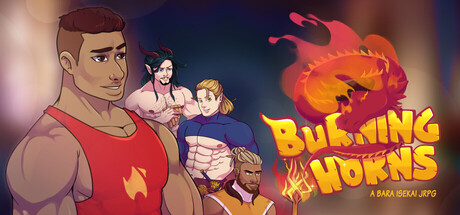

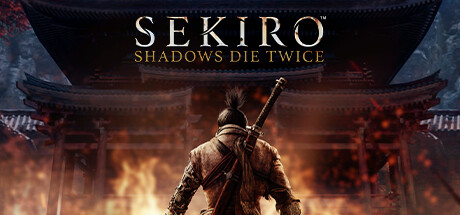
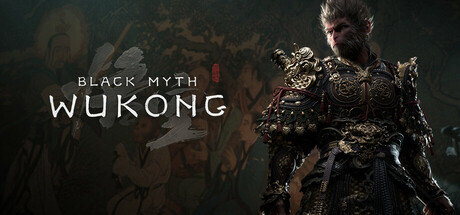


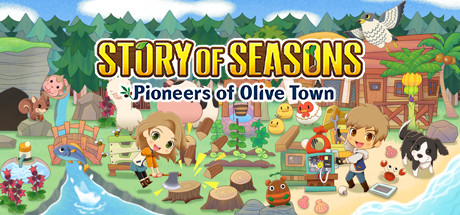

Match Dimensions Explained
❓Frequently Asked Questions
Why does Golden Kamuy Final Season feel so different from Assassin's Creed: Director's Cut Edition even though both have political thriller and tactical warfare elements?
Great question—Golden Kamuy’s grounded, historically precise Hokkaido setting and focus on character-driven moral ambiguity (like Asirpa’s quiet resolve or Sugimoto’s weary pragmatism) contrasts sharply with Assassin’s Creed’s mythic, conspiracy-laden Levantine world and parkour-heavy stealth loops. While both share Political Thriller and Tactical Warfare dimensions, Assassin’s Creed leans into ideological grandstanding and templar/assassin lore, whereas Golden Kamuy’s tension lives in intimate, dialogue-driven standoffs—think the tense bear-hunt standoff in Ep 12 vs. AC’s rooftop chases over Jerusalem.
Is there a Golden Kamuy video game adaptation coming out soon?
No—there’s no official Golden Kamuy game adaptation in development or announced. The closest matches are games that *feel* like Golden Kamuy in tone and structure: Kingdom Come: Deliverance II nails the historical grit and political maneuvering (e.g., navigating Bohemian noble factions like Golden Kamuy’s Ainu-Japanese power struggles), while Throne of Lies®: Medieval Politics mirrors its layered betrayals and slow-burn alliances—but neither is based on the manga or anime.
How does Prince of Persia compare to Monster Hunter: World for someone who loves Golden Kamuy’s blend of action and emotional weight?
Prince of Persia (2024 reboot) leans into poetic, melancholic pacing—its healing mechanics and slow-life dimension let you sit with grief like Sugimoto’s flashbacks, especially during quiet moments in the palace gardens. Monster Hunter: World, by contrast, delivers Golden Kamuy’s visceral, grounded action spectacle (think the bear fight choreography translated into Rathalos hunts), but trades emotional intimacy for JRPG-style narrative beats and monster ecology depth—no Asirpa-style character growth, but tons of tactile, sweat-and-snow combat.
What’s the best game like Golden Kamuy Final Season if I want something with that same ‘quiet intensity’ and historical realism?
Kingdom Come: Deliverance II is your best bet—it’s got the same unflinching historical texture as Golden Kamuy’s Meiji-era Hokkaido, right down to period-accurate armor, dialects, and morally gray choices (e.g., choosing whether to betray a village elder feels like deciding whether to trust Kōryū). With an 80 Metacritic score and matching Political Thriller + Dark Fantasy dimensions, it captures that hushed, snow-heavy tension where every conversation could tip into violence—or revelation.