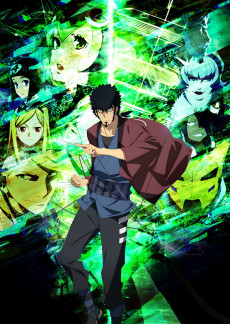
Dimension W
In the year 2071, the world's energy problems seem solved by a network of cross-dimensional electric-field inductors- "coils" -that extract energy from a seemingly infinite source. That source is the W dimension, a fourth plane that exists beyond the X, Y, and Z dimensions.
In this world, unofficial "illegal" coils harness powers that the police can't hope to counter. Dealing with these coils is the job of coil-hating repo man Kyoma, whose run-in with the unique coil android Mira leads the two to form a reluctant partnership.
(Source: FUNimation)
📺Anime Details
📝Editorial Analysis
Rain slicks the neon-drenched alley in Shinjuku’s 2071—cold, synthetic, humming. Kyoma kneels beside a shattered coil, its fractured casing leaking violet static that doesn’t dissipate, doesn’t fade—it pulses, like a dying nerve exposed to air. His gloved hand hovers. Not to disarm. Not to reclaim. To feel the resonance—the wrongness of energy bleeding from somewhere else. Mira stands just behind him, silent, her optical sensors reflecting the same flicker—not as light, but as memory she wasn’t built to hold. That pause—between recoil and recognition—is where Dimension W lives: not in spectacle, but in the weight of proximity to the uncontainable.

What makes it ache isn’t the cyberpunk surface—the chrome, the rain, the drones—but the tremor beneath. This is a world where physics has become theology: the W dimension isn’t metaphor. It’s infrastructure. And every coil is a wound in reality’s skin. You don’t just see consequences—you sense them in the silence after a coil overload, in the way streetlights stutter just long enough for you to question whether time itself hiccuped. It’s loneliness dressed as efficiency, grief disguised as protocol. Kyoma doesn’t hate coils because they’re dangerous—he hates them because they remind him what it means to be unmoored: from time, from identity, from the ground beneath your feet. The amnesia isn’t plot convenience—it’s atmospheric texture. Every forgotten name, every erased log, every ghost signal in the urban static whispers the same thing: you are more fragile than you think.
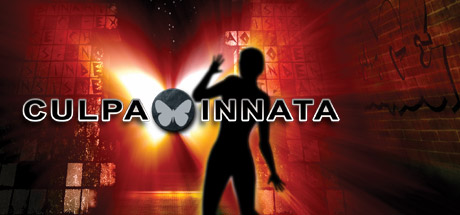
That same tremor lives in Culpa Innata, where “the World Union is labeled the ‘perfect society’”—and the word labeled does all the work. Like Kyoma walking past billboards advertising “Stable Dimensional Yield,” the game’s veneer of flawless order feels engineered, not earned. The player review nails it: “every location, run, run, run—not enjoyable.” That exhaustion? It’s kin to Kyoma’s fatigue—not from action, but from navigating systems that pretend to eliminate consequence. Both force you into motion while withholding resolution, making urgency feel hollow, even oppressive. The dread isn’t in the explosion—it’s in the loop: another checkpoint, another corridor, another promise of harmony that hums just slightly off-key.
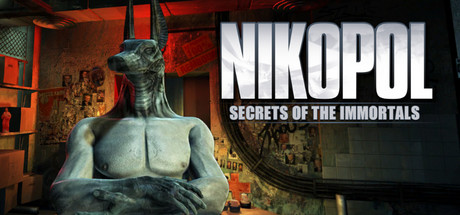
Then there’s Nikopol: Secrets of the Immortals, where “2023 France is ruled by an iron-fist religious dictatorship” and “a mysterious pyramid ship suddenly appears above Paris.” That intrusion—the impossible geometry descending on a choked, authoritarian city—is pure Dimension W logic: not rebellion against power, but rupture caused by something older, stranger, dimensionally out-of-phase. The player calls it “a pretty good adventure game” whose “cyberpunk atmosphere gives it a nice vibe”—but it’s the vibe, not the plot, that syncs. Like Mira’s stillness amid chaos, Nikopol’s cutscenes don’t explain—they linger, letting the dissonance between dogma and anomaly settle in your bones. The animations don’t clarify; they deepen the unease.
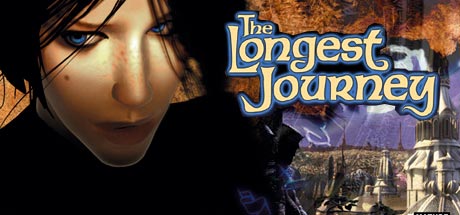
And The Longest Journey, where April Ryan journeys “between parallel universes”—not as spectacle, but as condition. Its player review says it’s “less a long journey than a long conversation.” Exactly. Kyoma and Mira don’t race across dimensions—they negotiate them, sentence by sentence, silence by silence. The emotional labor is in translation: human to android, memory to data, grief to protocol. When April steps from Stark into Arcadia, it’s not wonder you feel—it’s vertigo masked as routine. That’s Dimension W’s heartbeat: the quiet horror of realizing your world is just one layer, thin as foil, vibrating next to something vast and indifferent.
This pairing isn’t for fans of “cool tech” or “neon cities.” It’s for the ones who flinch when elevators stall just half a second too long—who stare at their phone’s loading icon and wonder if the delay is mechanical… or dimensional. It’s for people who’ve ever stood in a train station at 3 a.m., watching reflections warp in wet glass, and felt untethered—not scared, not excited, but aware of how thin the membrane is between what’s real and what’s merely running. They’ll recognize Kyoma’s weariness not as bitterness, but as vigilance. They’ll hear Mira’s pauses not as glitches, but as breath. And they’ll play these games not for answers—but for the resonance, deep and low, that says: yes, you felt that too.
🎮39 Games That Match the Vibe


















Match Dimensions Explained
❓Frequently Asked Questions
Why is Culpa Innata often compared to Dimension W?
Because both dive deep into cyberpunk dystopias where reality-warping science hides dark societal control—Culpa Innata’s 'perfect society' World Union mirrors Dimension W’s twisted dimensional physics and moral ambiguity. You’ll feel that same tense, noir-tinged detective vibe as you unravel conspiracies in sterile labs and shadowy corridors, just like Kyouma Mabuchi chasing down Coil malfunctions.
Is there a Dimension W video game adaptation?
No—there’s no official Dimension W game, but fans often turn to Nikopol: Secrets of the Immortals for that same gritty, first-person dystopian detective experience. Its 2023 Paris ruled by a religious dictatorship, sudden pyramid ship over the city, and slow-burn mystery echo Dimension W’s tone and pacing far more closely than most sci-fi games.
How does The Longest Journey compare to BioShock in capturing Dimension W’s vibe?
The Longest Journey nails the cerebral, universe-hopping mystery—think April Ryan bouncing between Stark and Arcadia like Kyouma shifts between dimensional layers—while BioShock leans harder into visceral, morally gray action (like fighting Splicers in Rapture’s flooded halls). Both share Dimension W’s adult, dark-seinen weight, but TLJ prioritizes dialogue-driven revelation; BioShock weaponizes atmosphere and audio logs.
What’s the best Dimension W-like game if I want something atmospheric but not frustratingly slow-paced?
Go with Nikopol: Secrets of the Immortals—it keeps the cyberpunk dread and political mystery tight and cinematic, without Culpa Innata’s infamous ‘run, run, run’ fatigue or TLJ’s heavy exposition stretches. Its animated cutscenes, moody Parisian rain, and focused point-and-click pacing let you sink into the world like watching Dimension W’s Tokyo neon-slicked alleyways unfold in real time.