
Golden Kamuy Season 3
Separated from Sugimoto, Asirpa now travels toward the Russian border, focused on discovering more about her and her father’s involvement with the coded tattoos. But Sugimoto is determined to find and protect Asirpa! Along the way, he’ll discover new people, new cultures rich with history, and an unforgiving terrain. Will Sugimoto and Asirpa survive their journeys and reunite?
(Source: Funimation)
📺Anime Details
📝Editorial Analysis
The wind howls across the frozen tundra—not with menace, but with weight. You feel it in Asirpa’s breath fogging in the air as she walks alone, boots crunching over frost-heaved earth, her mittened hand brushing the bark of a birch tree—its white skin marked with faint, ancient carvings. She doesn’t pause. She listens: to the distant cry of a hawk, the groan of shifting ice on the riverbank, the low hum of her own pulse beneath the cold. This isn’t silence. It’s presence—dense, unblinking, alive with memory and consequence.
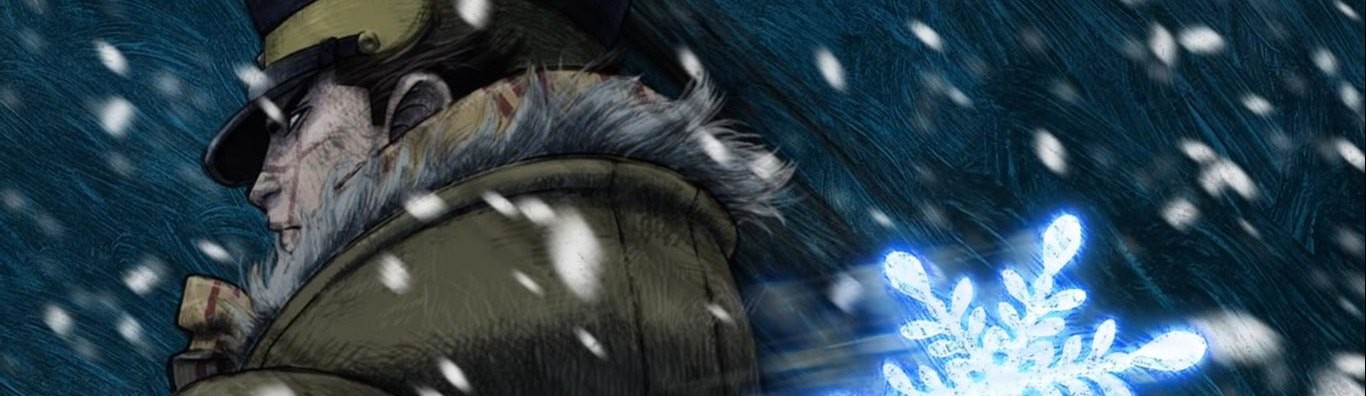
That’s what Golden Kamuy Season 3 does: it makes history tactile. Not as textbook dates or battlefield reenactments, but as terrain you traverse, as language you fumble to pronounce, as food you chew slowly—dried salmon, fermented fish oil, sour milk—each bite carrying generations of adaptation. The show refuses speed. Every confrontation is preceded by shared tea. Every betrayal is rooted in a childhood story told around firelight. Even gunfire—sharp, brutal, realistic—lands not as catharsis, but as rupture: a wound that bleeds time, not just blood. You don’t just watch Sugimoto track Asirpa—you feel the ache in his shoulders, the grit in his teeth, the way his gaze lingers on a patch of lichen he knows Ainu elders use for dye. This is slow reverence, not slow pacing. It’s the kind of storytelling that asks you to hold space—for grief, for mistrust, for the quiet dignity of people whose names were erased from maps but never from land.
Which is why Stardew Valley, despite its pixelated charm and pastoral music, shares its emotional DNA. Its description says you “inherit your grandfather’s old farm plot” and “learn to live off the land”—not conquer it. Like Asirpa reading the forest for edible roots or Sugimoto interpreting snowdrift patterns, Stardew demands attentiveness to cycles: seasons shift, crops fail, relationships deepen only through repeated, patient gestures. A player review nails it: “Spent the first 2 years trying to do everything and never having enough time… Days upon days of constantly running around trying to find the town…” That exhaustion? That tender, grinding commitment to place and people? It mirrors Sugimoto’s march across Hokkaido—not as a hero’s sprint, but as a man learning, again and again, how to belong without erasing.
Then there’s Heroes of Might & Magic V, where the description emphasizes “tactical warfare” fused with “deep fantasy” and “next-generation visuals”—but its resonance lies deeper. Its player review declares it “the best HoMM game ever made” because it honors systems: supply lines, morale, terrain modifiers, cultural allegiances between factions. Just like Golden Kamuy Season 3, it treats conflict as layered—not good vs. evil, but Ainu vs. Imperial Army vs. Russian deserters vs. escaped convicts—all operating under distinct codes, histories, survival logics. When Sugimoto negotiates with a Gilyak elder over smoked sturgeon, or when Asirpa deciphers tattoo fragments using oral tradition passed down by women, it’s tactical worldbuilding of the same order: every choice reverberates across social, ecological, and spiritual grids.
And yes—even Prince of Persia, though set in mythic deserts, taps into that same adult & dark seinen dimension. Its description promises “a new prince, new lands, a brand new story completely separate from the sands timeline”—a deliberate severing from legacy, much like Asirpa rejecting colonial narratives of her father’s death to seek truth in fragmented, embodied knowledge. A player review notes it’s a “reboot,” but what matters is the tone: weighty, morally ambiguous, physically consequential. When Sugimoto’s knuckles split open gripping a rifle stock in subzero wind, or when Asirpa’s voice catches mid-sentence translating a poem about fox spirits, that’s the same raw, unvarnished humanity—the kind that doesn’t flinch from exhaustion, doubt, or the sheer effort of remembering.
This pairing isn’t for fans of slick power fantasies or frictionless progression. It’s for the person who replays the same fishing minigame in Stardew until they feel the tug of the line in their wrist. For the one who pauses mid-battle in Heroes of Might & Magic V to read the lore text on a crumbling shrine. For the one who watches Asirpa trace a tattoo with her fingertip—not to solve a puzzle, but to recognize her father’s hand in the ink. They’re drawn to stories where survival isn’t just physical—it’s cultural, linguistic, generational. Where healing isn’t instant, but woven slowly, stitch by stitch, into the fabric of daily life: boiling water, mending nets, sharing a name, remembering a song. That is the quiet, stubborn pulse beating beneath both Golden Kamuy Season 3 and these games—not escape, but return. To land. To language. To each other.
🎮6 Games That Match the Vibe





Match Dimensions Explained
❓Frequently Asked Questions
Why does Chains keep coming up in Golden Kamuy Season 3 game recommendations?
Because Chains’ meditative, physics-driven chain-building mirrors the quiet focus and tension of Asirpa’s precision tracking scenes—like when she reads animal trails in the Hokkaido wilderness. It’s not about action, but sustained attention and small, satisfying wins (clearing bubbles = spotting a clue), which matches Season 3’s slower-burn investigative pacing and healing-focused downtime between conflicts.
Is there a Golden Kamuy anime-to-game adaptation for Season 3?
No—there’s no official Golden Kamuy game adaptation for Season 3 (or any season). The ‘games like’ list is based on *vibe matching*, not licensing: Stardew Valley fits the rural Hokkaido homesteading energy of Asirpa and Sugimoto rebuilding their lives, while Heroes of Might & Magic V echoes the layered clan politics and tactical standoffs seen in the Ainu-Russia-Japan power struggles.
Stardew Valley vs. The Sims 4—which is better for Golden Kamuy Season 3’s cozy-but-resilient vibe?
Stardew Valley wins hands-down for that Season 3 feel: think Sugimoto tending his garden at the end of Episode 12 or Asirpa learning to process salmon—hands-on, seasonal, quietly meaningful labor. The Sims 4 lacks that grounded, resource-rooted warmth; its player review even calls it ‘no fun without DLC’, whereas Stardew’s farming, foraging, and friendship systems naturally echo the show’s themes of self-reliance and cultural reconnection.
What’s the best game like Golden Kamuy Season 3 if I want something calming but with subtle tension?
Chains is your best bet—it’s got that same ‘quiet intensity’ as Asirpa’s bow-aiming sequences or Sugimoto’s controlled breathing before a confrontation. The physics-based bubble chaining demands calm focus under increasing pressure (like timed stages), and its Healing & Slow Life dimension directly aligns with Season 3’s emphasis on recovery, ritual, and deliberate pacing—no combat, just steady, tactile presence.