
Fire Force Season 3
The third season of Enen no Shouboutai.
Shinra and the team are about to uncover the world’s greatest secret. But just as the other Special Fire Force Companies unite to face the looming disaster, Obi is captured by the Tokyo Imperial Army, and Company 8 is branded as traitors. Hunted by the Empire, they must fight alone to rescue Obi and stop the Evangelist—all while a new assassin and the corrupt Captain Burns block their path.
(Source: Crunchyroll)
📺Anime Details
📝Editorial Analysis
The air in Tokyo’s ruins doesn’t just smell of ash—it tastes like betrayal. Not the clean, heroic kind, but the slow, metallic burn of loyalty curdling into suspicion: Shinra’s breath catching as Company 8’s insignia is torn from his coat while sirens wail—not for fire, but for traitors. That moment isn’t about flames or fists; it’s the gut-punch realization that the institution meant to save you has just declared you its enemy—and the only map left is drawn in blood and burnt concrete.

What makes Fire Force Season 3 vibrate with such raw, claustrophobic weight isn’t its pyrokinetic spectacle, but how deeply it weaponizes trust. Every corridor feels surveilled. Every ally might be compromised. The Empire isn’t just corrupt—it’s architectural, built into the city’s infrastructure, the chain of command, even the language of duty. You don’t just fight demons or assassins—you fight the vertigo of realizing your moral compass was calibrated by the very system now hunting you. It’s not dystopia as backdrop; it’s dystopia as physiology: the way your pulse jumps when a uniformed officer steps too close, the way silence between comrades thickens with unspoken doubt. This isn’t hopelessness—it’s hyper-vigilance, a state where every choice echoes with consequence because no authority is neutral, no corridor is safe, and no rescue mission is ever just about saving one person.
That same suffocating tension lives in BioShock™, where the player walks through Rapture—a drowned utopia whose slogans (“No gods or kings”) curdle into propaganda the moment you hear Andrew Ryan’s voice crack over intercoms. Like Company 8 branded traitors, Jack arrives in a world where ideology has hardened into dogma, and every plasmid, every splicer, every flickering neon sign whispers: you were never supposed to see this. A player review calls it “revolutionary”—and it is, because BioShock forces you to breathe the lie before you break it. The emotional DNA matches: both make conspiracy visceral, not intellectual—felt in the tremor of a hand reaching for a weapon, in the way light bends unnaturally off wet tiles, in the dread of hearing footsteps behind you in a place that should be empty.
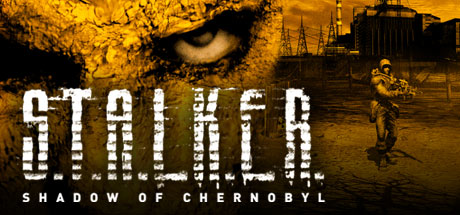
Then there’s S.T.A.L.K.E.R.: Shadow of Chernobyl, where the Zone isn’t just dangerous—it’s sentiently hostile. Radiation doesn’t announce itself; anomalies shimmer without warning. Other stalkers don’t greet you—they assess. Just like Company 8 navigating Tokyo’s fractured alliances, you learn fast that trust is a resource rarer than ammo, and every decision—from which artifact to pocket to whether to help a bleeding stranger—ripples through a web of unseen consequences. The player review notes being “intrigued in the whole thing,” and that’s the key: it’s not about solving a puzzle, but living inside the mystery, where the map is vast and beautiful because it refuses to explain itself. Fire Force Season 3 mirrors that—the Evangelist isn’t a villain you confront head-on at first; it’s a presence you feel in the static between radio frequencies, in the way Obi’s capture leaves silence that hums with implication.
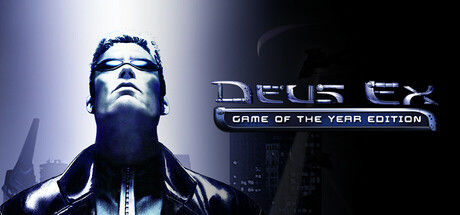
And Deus Ex: Game of the Year Edition? Its world isn’t collapsing—it’s already collapsed, reassembled by oligarchs and secret societies who’ve turned governance into code you’re not allowed to read. The game gives you “all options with one hit of the esc key”—but choice here isn’t freedom; it’s exposure. Every dialogue path, every hacked terminal, every augment you install peels back another layer of the lie. Like Shinra choosing between burning down a checkpoint or slipping past it in shadows, Deus Ex makes agency exhausting, because every action confirms how deep the rot goes. The political thriller dimension isn’t plot—it’s texture, the way your fingers hover over the keyboard, knowing the next decision won’t just change your mission—it’ll redefine what “truth” even means.
This pairing isn’t for fans of “cool powers” or “epic battles.” It’s for the ones who pause mid-episode when Shinra stares at a cracked Imperial crest on a wall—not because he’s angry, but because he’s measuring it: how wide the crack is, how much pressure it would take to widen it, how many lives hinge on whether he pushes or waits. It’s for players who linger in Rapture’s flooded halls not to loot, but to listen—to the distant, distorted lullaby playing over broken speakers, to the way a single line of dialogue shifts the entire moral gravity of the room. These are stories for people who feel dread as texture, who find resonance in systems that refuse to be simplified, who understand that the most terrifying fire isn’t the one consuming the city—it’s the one quietly burning inside the doctrine you once swore to uphold.
🎮36 Games That Match the Vibe













Match Dimensions Explained
❓Frequently Asked Questions
Why does BioShock feel like Fire Force Season 3’s Church of the Holy Light arc?
Because both dive deep into ideological extremism masked as salvation—BioShock’s Rapture is literally built on a twisted Objectivist utopia, just like the Holy Light’s apocalyptic dogma. You’ll recognize the same chilling mix of grandiose sermons (Fontaine’s recordings), morally grey 'chosen ones' (Jack vs. Shinra), and environmental storytelling that makes every ruined hallway or flickering neon sign feel like a sermon in decay.
Is there a Fire Force anime game adaptation for Season 3?
No—there’s no official Fire Force Season 3 game, anime tie-in or otherwise. But if you’re craving that same blend of high-stakes political thriller + dystopian worldbuilding, Deus Ex: Game of the Year Edition nails it: its 2052 setting mirrors the Holy Light’s shadowy influence, with conspiracies unfolding through hacked terminals and morally ambiguous factions like the Illuminati and Majestic 12.
How does S.T.A.L.K.E.R.: Shadow of Chernobyl compare to RAGE for Fire Force fans?
S.T.A.L.K.E.R. leans hard into eerie, atmospheric survival—think Shinra navigating the unstable, anomaly-riddled ruins of Tokyo after the Great Cataclysm—while RAGE leans into arcadey vehicular chaos and flashy set-pieces. If you loved the dread-filled exploration of Season 3’s underground labs and irradiated zones, S.T.A.L.K.E.R.’s haunting Zone (with its radiation storms, invisible anomalies, and desperate Stalkers) hits way closer than RAGE’s more bombastic, less introspective wasteland.
What’s the best game like Fire Force Season 3 if I want that oppressive, conspiracy-heavy vibe?
Deus Ex: Game of the Year Edition—it’s *the* blueprint for layered political thriller gameplay in a cyberpunk dystopia. Like Season 3’s slow-burn unraveling of the Evangelist and White Clad, Deus Ex drops you into a fractured world where every NPC hides agendas, every augment gives moral weight, and even your elevator ride up to UNATCO HQ feels charged with quiet dread. The player review says it best: 'gives you all options with one hit of the esc key'—just like Shinra choosing between duty, truth, or rebellion.