
No Game, No Life Zero
A movie adaptation of the sixth volume of the light novel series announced at the MF Bunko J Summer School Festival 2016 event.
Six thousand years before Sora and Shiro were even a blink in the history of Disboard, war consumed the land, tearing apart the heavens, destroying stars, and even threatening to wipe out the human race. Amid the chaos and destruction, a young man named Riku leads humanity toward the tomorrow his heart believes in. One day, in the ruins of an Elf city, he meets Schwi, a female exiled "Ex Machina" android who asks him to teach her what it means to have a human heart.
(Source: Sentai Filmworks)
📺Anime Details
📝Editorial Analysis
The air tastes like ash and static—six thousand years before Sora and Shiro’s first gambit, before the rules of Disboard were even whispered into existence. Riku stands in the skeletal remains of an Elf city, boots sinking into powdered marble and irradiated lichen, his breath shallow not from exertion but from the sheer weight of silence: no birds, no wind through intact towers, only the low groan of collapsing strata beneath him—and then, a flicker of movement. Not enemy, not ally. Just her. A girl with eyes that hold starlight long since snuffed out, standing where memory itself has cracked open.
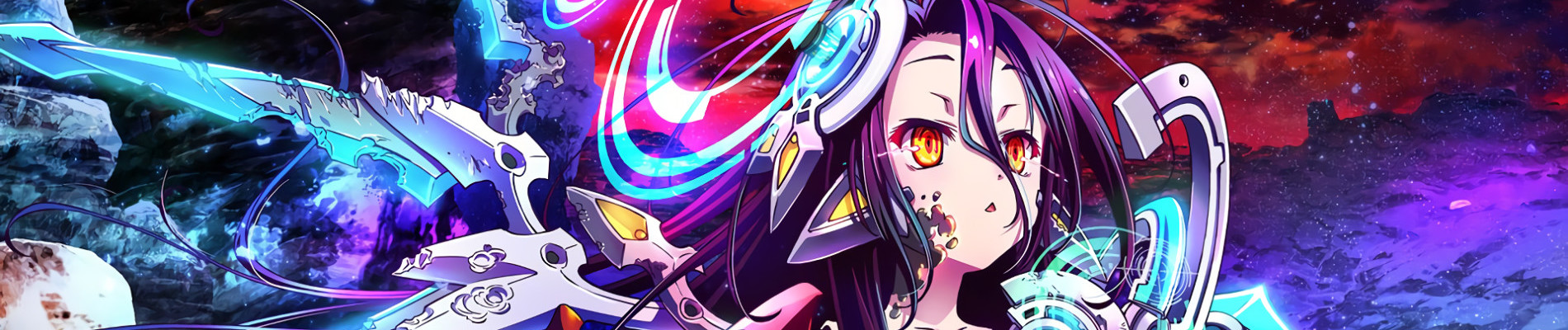
That moment isn’t about spectacle. It’s about presence—how fragile it is, how defiant, how unbearably tender when placed against annihilation. No Game, No Life Zero doesn’t trade in hope as a promise. It trades in hope as a refusal: to stop breathing, to stop naming the dead, to stop believing in “tomorrow” even when the sky bleeds black dust and the gods have turned their faces away. This isn’t dystopia as aesthetic—it’s dystopia as lived erosion. Every frame feels like holding your breath underwater, listening for echoes of what used to be human: laughter buried under rubble, a half-sung lullaby hummed over a ration tin, the way Riku’s hand hovers—not quite touching—when offering warmth to someone who hasn’t felt safe in decades. You don’t just watch this film. You grieve with it, quietly, in real time.
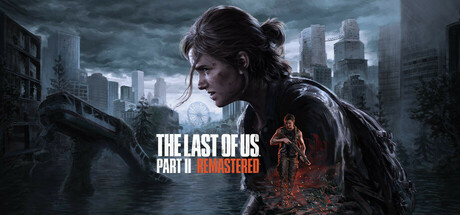
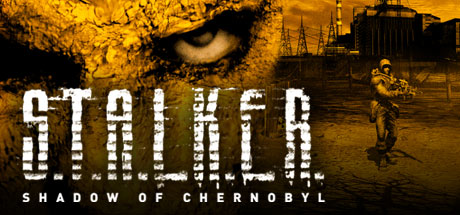
Which is why S.T.A.L.K.E.R.: Shadow of Chernobyl lands with such visceral precision. Its description names “survival in the Zone—a very dangerous place, where you fear not only the radiation, anomalies and deadly creatures, but other S.T.A.L.K.E.R.s.” That layered dread—external threat and human unpredictability—is the same gravity well pulling Riku forward. The player review says, “The story is also really good, I'm intrigued in the whole thing”—not because it’s flashy, but because mystery here is textural: whispers on static, journals left behind by people who didn’t make it, ruins that remember names better than the living do. Like Riku walking through the Elf city, you’re not chasing plot points—you’re tracing ghosts, learning how much love can persist inside a single, salvaged locket or a bullet casing engraved with initials.
Then there’s Dreamfall: The Longest Journey, whose player review nails the emotional core: “It's less a long journey than a long drama. And somehow, the drama is compelling enough that you keep watching scene after scene…” That’s Zero’s heartbeat—slow, deliberate, unflinching. Its description calls it “the continuation of a saga… considered to be one of the [most]”—but what matters is how both works treat time as emotional architecture. In Zero, six thousand years isn’t backdrop. It’s the weight pressing down on every glance, every hesitation, every choice made not for victory, but for witness. Dreamfall’s pacing—its willingness to let silence sit, to let grief linger in a character’s pause before speaking—mirrors how Zero makes tragedy breathe, rather than rush past it.
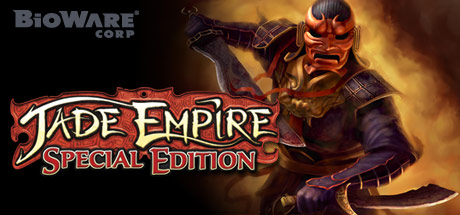
And Jade Empire™: Special Edition, though its description focuses on martial-arts duality (“open palm or closed fist”), carries something deeper in its player review’s accidental poetry: “Fantastic game, but to get to launch I had to follow these instructions…”—a line that, strangely, resonates with Zero’s central tension. Both demand ritual. Not just gameplay mechanics, but commitment to meaning-making: choosing mercy over dominance, truth over survival, connection over control—even when the system is rigged, even when the cost is your own erasure. Jade Empire’s mythology isn’t decoration; it’s scaffolding for moral consequence. So is Zero’s war-torn cosmology. Gods aren’t abstract—they’re forces that bend human will, and resisting them requires more than strength. It requires integrity, forged in quiet acts: sharing water, remembering a name, refusing to forget what peace looked like.
This pairing isn’t for fans of “epic battles” or “world-saving twists.” It’s for the person who watches Riku press his forehead to cold stone—not in prayer, but in recognition—and feels their throat tighten. For the player who spends ten minutes staring at a broken radio in S.T.A.L.K.E.R., wondering whose voice it last carried. For the one who saves mid-dialogue in Dreamfall just to sit with a character’s silence a little longer. These are stories that trust you to hold sorrow without resolution, to find awe not in scale, but in the stubborn, trembling persistence of care—in ash, in anomaly zones, in the space between two hands almost touching.
🎮57 Games That Match the Vibe
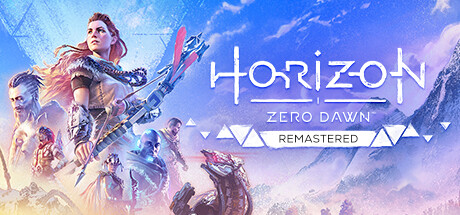
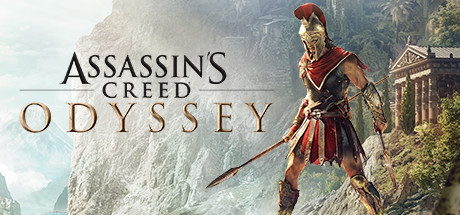
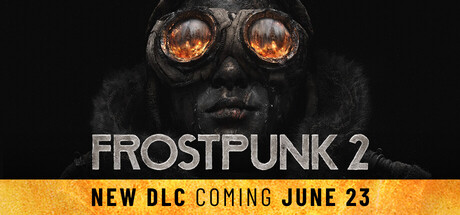
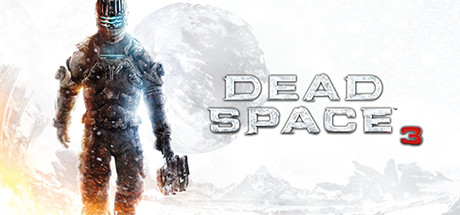


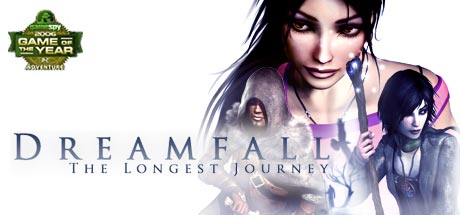




Match Dimensions Explained
❓Frequently Asked Questions
Why does No Game, No Life Zero feel so different from S.T.A.L.K.E.R.: Shadow of Chernobyl even though both are dystopian survival stories?
Great question — it’s all about *how* the dread lands. In No Game, No Life Zero, the tension comes from high-stakes, ritualized war-games like Shiro’s chess duel against the Flügel, where every move carries existential weight. S.T.A.L.K.E.R., on the other hand, builds dread through environmental storytelling: radiation fog rolling across the abandoned Pripyat streets, anomalies cracking open mid-air, and that constant fear of being ambushed by bloodsuckers or rogue stalkers — no grand speeches, just raw, tactile survival. Both live in the Cyberpunk & Dystopia + Survival & Crafting overlap, but Zero is cerebral and mythic; S.T.A.L.K.E.R. is visceral and grounded.
Is there a No Game, No Life Zero anime or game adaptation?
No — there’s no standalone anime or video game adaptation of *No Game, No Life Zero*. The film is a canonical prequel to the anime series, but it’s never been turned into a game. That said, if you love Zero’s blend of tragic strategy and world-ending stakes, *Dreamfall: The Longest Journey* nails the same emotional gravity — especially April Ryan’s quiet, devastating choices across parallel worlds — and shares its Cyberpunk & Dystopia + Emotional Narrative DNA with an 81% critical score.
How does Jade Empire compare to Dreamfall: The Longest Journey for emotional storytelling?
Both are heavy hitters in Emotional Narrative (Jade Empire: 80, Dreamfall: 77), but they wear their hearts differently. Jade Empire leans into intimate, character-driven moral weight — think choosing between the Open Palm’s compassion or Closed Fist’s ruthlessness while mentoring your master’s ghost, or facing Li’lun’s betrayal in the Spirit Realms. Dreamfall goes broader and more melancholic: April’s journey feels like watching a slow, beautiful collapse — her apartment scenes, the rain-soaked streets of Casablanca, and that gut-punch ending hit like a quiet storm. If Zero’s emotional core is ‘sacrifice masked as strategy,’ Jade Empire is ‘duty vs. heart,’ and Dreamfall is ‘hope wearing thin.’
What’s the best game like No Game, No Life Zero if I want that intense, high-stakes ‘war as chess’ vibe?
Go straight to *S.T.A.L.K.E.R.: Shadow of Chernobyl* — not for the shooting, but for the *strategic tension*. Like Zero’s war council scenes where Shiro calculates enemy psychology and terrain, S.T.A.L.K.E.R. forces you to read the Zone like a battlefield: scanning for anomaly fields before crossing, rationing ammo like political capital, and deciding whether to ambush a rival stalker group or slip past them — all while the entire map breathes with unseen consequences. It’s got that same 81-score weight, and players rave about how the story pulls you in *because* every choice feels dangerous and deliberate — no cutscene hand-holding, just consequence.