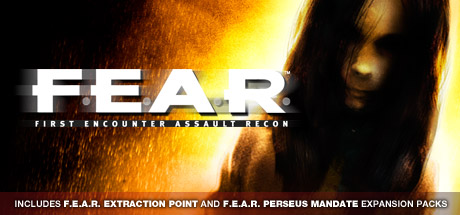
F.E.A.R.
Experience the original F.E.A.R. along with F.E.A.R. Extraction Point and F.E.A.R. Perseus Mandate.
🎮Game Details
💬What Players Say
"F.E.A...."
"BU OYUNU BU KADAR GEC KESFETTIGIM ICIN KENDIMDEN UTANIYORUM SU AN... CIDDIYIM."
"F.E.A...."
📝Editorial Analysis
The flicker of fluorescent light in the abandoned office corridor—sudden, stuttering, then gone—leaving only darkness and the drip of something wet on concrete. You’re crouched behind a shattered desk, breath shallow, shotgun heavy in your hands. The air smells like ozone and old dust. Then—she’s there, just beyond the doorway, barefoot, hair obscuring her face, head tilted at a wrong angle—not moving, not breathing, just watching. Not attacking. Just present. That silence before the scream is where F.E.A.R. lives. Not in the firefights (though players rave about how satisfying the combat feels—the shotgun’s crunch, the precision of the weapons, the way even a 2005 shooter still outpaces modern ones in tactile weight), but in the suffocating pause between violence. It’s the dread that coils low in your gut when you know something is already inside the room with you, and it’s not bound by doors or time.
What makes F.E.A.R.’s atmosphere singular isn’t its military sci-fi premise or its reflex-time mechanic—it’s how it weaponizes stillness. It doesn’t rely on jump scares alone; it builds horror through architectural unease, psychological erosion, and the slow bleed of the uncanny into the mundane. You’re not just fighting soldiers—you’re navigating a collapsing reality where physics glitch, reflections lag, and childhood trauma leaks through ventilation shafts like cold vapor. The game forces you to think in negative space—to scan corners not for enemies, but for presence, for the subtle shift in air pressure, the faint distortion in a hallway mirror. It makes you question perception itself. Is that shadow moving—or did you just blink? Is that whisper coming from the radio—or from inside your helmet? That’s the feeling: paranoid intimacy, where the familiar becomes hostile not through gore, but through violation of expectation—of safety, of logic, of self.
That same emotional DNA pulses through DAN DA DAN, where body horror isn’t just grotesque transformation—it’s the quiet horror of your own limbs betraying you mid-sentence, of teeth rearranging in your mouth while you try to laugh. Its occult framework doesn’t shout; it whispers through wallpaper patterns, just like F.E.A.R.’s Alma manifests in peripheral static, in the way a ceiling tile seems to breathe. Both weaponize domestic spaces—school hallways, suburban bedrooms—as sites of ontological rupture. Then there’s xxxHOLiC◆Kei, where every contract carries the weight of unseen consequence, where spirits don’t roar—they linger in doorframes, in tea steam, in the exact moment your reflection blinks a half-second too late. Like F.E.A.R., it trades in adult dread: no exposition dumps, no heroic speeches—just the slow, chilling realization that some doors, once opened, cannot be closed. And Made in Abyss: Dawn of the Deep Soul shares that same suffocating verticality—the descent into places where light fails, where biology warps under silent, ancient rules, where every new layer of the abyss feels less like exploration and more like unpeeling your own nervous system. Its horror isn’t loud; it’s the silence after a scream echoes too long, the way a character’s smile stretches just a fraction too wide—and holds.
This pairing isn’t for fans of spectacle or catharsis. It’s for the ones who replay the same hallway three times just to catch the exact frame where the light dims. For the reader who pauses mid-page because the description of a hallway carpet suddenly feels too specific, too lived-in, too wrong. For the person who watches Mob Psycho 100 II not for the explosions—but for the way Mob’s eyes go flat and distant before his power surges, like a circuit overloading in real time. For those who feel the itch in their scalp when a spirit in Malevolent Spirits: Mononogatari doesn’t attack—but simply repeats your last sentence back to you, syllable-perfect, voice slightly lower. These are works built for people who understand that true fear isn’t in the monster’s reveal—it’s in the delay between seeing its footstep in the dust… and realizing it’s behind you, and has been, the whole time.
→28 Anime That Match the Vibe
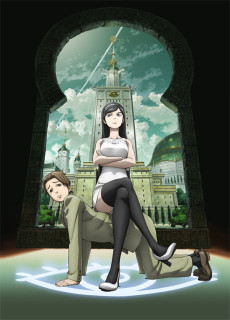
The body as a site of transformation and terror — both push physical boundaries.

The body as a site of transformation and terror — both push physical boundaries.

The body as a site of transformation and terror — both push physical boundaries.

The body as a site of transformation and terror — both push physical boundaries.

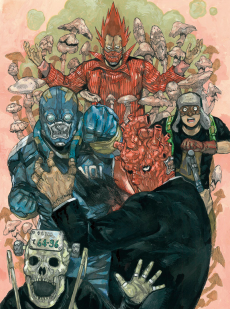
Momo’s spirit medium lineage collides with Okarun’s alien-obsessed theories in a way that mirrors F.E.A.R.’s eerie fusion of psychic horror and military sci-fi—where the uncanny isn’t just supernatural but *biomechanically invasive*. Unlike most occult stories, DAN DA DAN treats body horror not as grotesque spectacle but as intimate, destabilizing transformation—just as F.E.A.R. weaponizes perception itself, warping time and flesh through Alma’s psychic bleed. This shared commitment to *Body Horror & Occult* as psychological rupture—not mere shock—makes their resonance startlingly coherent.

The body as a site of transformation and terror — both push physical boundaries.
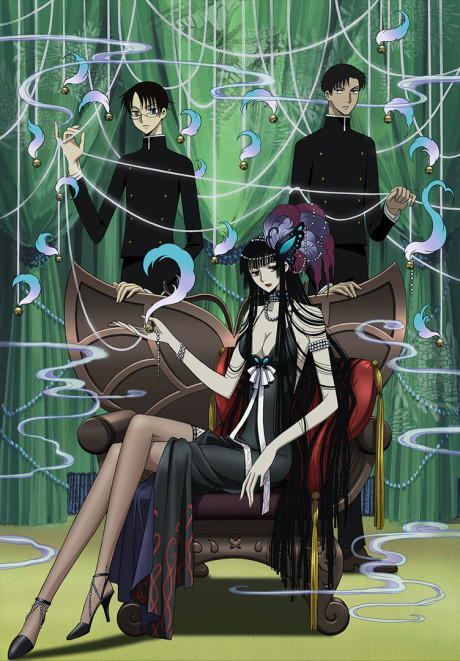
Watanuki’s trembling hands—sweating as he scrubs blood from a shrine floor in *xxxHOLiC◆Kei*’s “The Rainy Day of the Cursed Umbrella”—mirror Point Man’s shaky breath before a flickering fluorescent light cuts out in F.E.A.R.’s abandoned asylum. Unlike most horror pairings, their resonance isn’t just atmospheric—it’s rooted in shared *Body Horror & Occult*: Watanuki’s flesh warping under spiritual debt; Point Man’s reflexes glitching as reality fractures. That mutual dread of the self dissolving into something *other* makes their dark-seinen tension feel eerily reciprocal, not coincidental.

The body as a site of transformation and terror — both push physical boundaries.
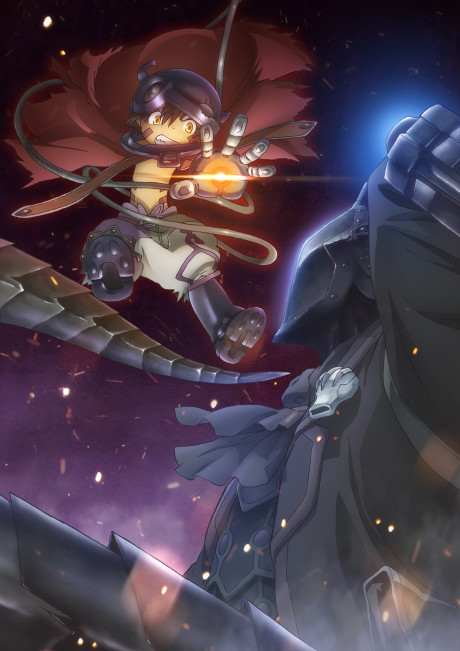
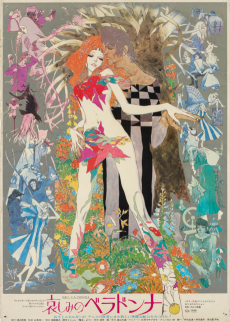
Nanachi’s mutilated, patchwork body—stitched with crude sutures and leaking viscous fluid—echoes Alma’s grotesque, biomechanical transformations in *F.E.A.R.*’s asylum hallucinations. Where *Dawn of the Deep Soul* lingers on the Abyss’s fifth layer as a realm where flesh unravels under psychic pressure and forbidden knowledge, *F.E.A.R.* weaponizes that same dread through flickering corridors and time-distorted body horror. This mutual obsession with **Body Horror & Occult** isn’t just aesthetic—it’s structural: both use physical corruption as the visible scar of violating cosmic boundaries.

The body as a site of transformation and terror — both push physical boundaries.














Match Dimensions Explained
❓Frequently Asked Questions
Why is xxxHOLiC◆Kei considered similar to F.E.A.R. despite being a supernatural anime?
Because both lean hard into eerie, slow-burn dread punctuated by sudden, visceral body horror—like when Kei confronts the 'Sewer Spirit' in episode 4, its distorted limbs and unnatural movement mirroring Alma’s twitchy, stop-motion-like appearances in F.E.A.R.’s asylum sequences. The oppressive occult atmosphere and psychological weight of unseen forces closing in? That’s straight out of F.E.A.R.’s audio design and jump-scare pacing.
Is there an anime adaptation of F.E.A.R.?
No—F.E.A.R. has never been adapted into an anime. But if you’re craving that same blend of tactical FPS tension and surreal occult horror, Mob Psycho 100 II nails it: think Reigen’s fake exorcisms giving way to real psychic carnage in the ‘Claw’ arc, where limbs warp and reality glitches mid-fight—just like F.E.A.R.’s bullet-time dodges syncing with Alma’s hallucinatory intrusions.
How does Malevolent Spirits: Mononogatari compare to DAN DA DAN in capturing F.E.A.R.’s vibe?
Both hit the Body Horror & Occult + Adult & Dark Seinen combo, but Malevolent Spirits leans harder into grounded, ritualistic dread—like the ‘Kudan’ arc where characters physically unravel during failed exorcisms—while DAN DA DAN goes full gonzo sci-fi chaos (think alien parasites bursting from skin *and* time-warped kung fu), matching F.E.A.R.’s blend of military precision and unhinged supernatural escalation.
What’s the best anime like F.E.A.R. for that ‘isolated, claustrophobic combat’ feeling?
Made in Abyss: Dawn of the Deep Soul—it’s got that same suffocating tension: imagine Nanachi cornered in the Abyss’s Sixth Layer, backlit by bioluminescent fungi, fighting off mutated creatures while her own body betrays her—exactly like F.E.A.R.’s tight corridor shootouts where every shadow could hide Alma or a clone, and your shotgun blast echoes like it’s bouncing off concrete walls in the Armacham facility.