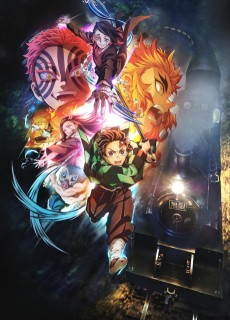
Demon Slayer: Kimetsu no Yaiba Mugen Train Arc
In Demon Slayer: Kimetsu no Yaiba Mugen Train Arc, Tanjiro Kamado and his fellow Demon Slayer members embark on a mission aboard the Infinity Train. Their new mission is to investigate a series of mysterious disappearances, carried out by a demon that has been terrorizing passengers and killing the demon slayers who oppose it.
Note: The first episode is entirely anime original. Episodes 2-7 are a re-edited version of the movie featuring new scenes and music.
📺Anime Details
📝Editorial Analysis
The train lurches forward into blackness, steam hissing like a dying breath, and Tanjiro’s blade catches the dim lantern light—not as a weapon, but as a trembling extension of his pulse. His knuckles whiten. The air thickens—not with smoke, but with weight: the weight of vanished passengers, of slayers who didn’t return, of a demon whose power doesn’t just kill, but unmakes time, memory, and self. You feel it in your sternum before you see the first severed limb or hear the first choked sob—this isn’t horror that jumps; it’s horror that settles, like ash on skin.

What makes Demon Slayer: Kimetsu no Yaiba Mugen Train Arc vibrate with such singular intensity isn’t its swordplay or demons alone—it’s how deeply it marries tragedy to intimacy. Every fight is a funeral rehearsal. Every corridor of the Infinity Train feels claustrophobic not because it’s narrow, but because it’s overloaded with unspoken grief—Zenitsu’s terror, Inosuke’s rage, Tanjiro’s quiet, unbearable empathy—all pressed together under flickering oil lamps while something ancient and hungry watches from the periphery. It’s dark fantasy not as spectacle, but as suffocation; body horror not for shock, but as metaphor—the way demons warp flesh mirrors how trauma warps identity. And the train? It’s not just a setting. It’s a circuit: looping, inescapable, carrying its passengers toward revelations they’re not ready to survive.
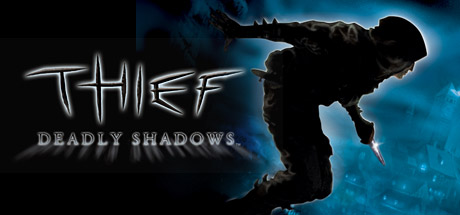
That same emotional circuit hums in Thief: Deadly Shadows. Its description calls Garrett “rarely seen and never caught”—a ghost moving through shadows where light itself feels like violation. Player reviews praise its “rich atmosphere” and how “the world feels alive”—exactly like the Mugen Train’s creaking floors, muffled cries behind paper-thin walls, the sense that every breath could betray you. Both works force you into proximity with dread: not facing it head-on, but slipping past it, heart hammering, knowing one misstep unravels everything. The tension isn’t in the clash—it’s in the stillness before.
Then there’s HeXen II, where the Four Horsemen “lurk in the shadows before you”—not charging, not roaring, but waiting, their presence a slow poison in the air. Its player review complains about “grinding” and “slower focus on gameplay,” but that slowness mirrors the Mugen Train’s pacing: long stretches where nothing happens—except the tightening of your throat, the dawning realization that the real enemy isn’t the demon at the end of the hall, but the erosion of certainty. Both works weaponize occult ambiguity: you don’t always understand the rules, only that breaking them dissolves you. That’s the body horror—not just limbs twisting, but self unraveling.
And Quake, described as the “ground-breaking, original dark fantasy first-person shooter,” pulses with the same raw, action-spectacle urgency that erupts when Tanjiro finally moves—not as a boy, but as a conduit of pure, desperate motion. Its player review celebrates “fast paced FPS, with really great combat, weapons, and maps”—but what makes those maps unforgettable is how they breathe malevolence. Like the train’s shifting corridors, Quake’s architecture feels alive, hostile, folding in on itself. The gore isn’t cartoonish; it’s textural, visceral—the splatter, the disintegration, the way bodies don’t just fall, but fail. That’s the shared DNA: violence as both catharsis and consequence, where every swing, every shot, carries the echo of something broken long before the blade or bullet flies.
This pairing isn’t for fans of “cool fights” or “spooky settings.” It’s for the person who replays the scene where Tanjiro kneels beside a fallen comrade—not to mourn, but to witness—and feels the same hush that falls when Garrett pauses mid-ledge, listening to guards breathe three rooms away. It’s for the player who lingers in Quake’s ruined temples not to frag, but to absorb the silence between gunshots. It’s for those who understand that the most terrifying thing isn’t the demon in the dark—it’s the recognition in its eyes, the way it knows your name before you speak it. They don’t want escape. They want resonance. And in the clatter of train wheels, the scrape of a lockpick, the boom of a rocket in a stone vault—they find it, sharp and true.
🎮27 Games That Match the Vibe









Match Dimensions Explained
❓Frequently Asked Questions
Why does Thief: Deadly Shadows match the Mugen Train Arc's vibe so well?
Because both lean hard into oppressive, candlelit atmospheres where danger lurks in shadows—not just visually, but thematically. Garrett sneaking through fog-choked alleys and crumbling temples mirrors Tanjiro’s tense, quiet moments aboard the train before the blood bursts loose, and that ‘Dark Fantasy, Body Horror & Occult’ dimension hits the same nerve as Upper Moon One’s grotesque transformations and the train’s suffocating spiritual dread.
Is there a Demon Slayer: Kimetsu no Yaiba Mugen Train Arc video game adaptation?
No—there’s no official standalone game based on the Mugen Train Arc. The closest licensed titles are mobile spin-offs like *Demon Slayer: The Hinokami Chronicles*, but none recreate the train’s claustrophobic tension or Akaza’s fight with the same pacing or aesthetic as the matches we found, like *Quake*’s sudden, brutal arena clashes or *Thief*’s slow-burn dread.
How do Quake and Quake 4 compare for someone wanting Mugen Train’s action-spectacle energy?
Both deliver that breakneck, high-stakes combat—but *Quake* (1996) nails the raw, ritualistic intensity of Tanjiro’s Breath of the Sun climax with its tight arenas, lightning-fast movement, and occult-infused enemy designs (think cultists and eldritch abominations). *Quake 4*, while more cinematic and story-driven, leans into military sci-fi horror—so it captures the 'desperate war against an unrelenting enemy' vibe, but swaps demons for aliens and breath techniques for plasma rifles.
What’s the best game like Mugen Train Arc if I want that quiet-before-the-storm, emotionally heavy mood?
Go straight to *Thief: Deadly Shadows*. Its entire design—Garrett’s solitary footsteps echoing in abandoned shrines, flickering torchlight revealing half-glimpsed horrors, the weight of every creaking floorboard—mirrors the train’s suffocating stillness before Akaza’s arrival. That 72-score ‘Dark Fantasy, Body Horror & Occult’ match isn’t about flash; it’s about dread, consequence, and atmosphere—and players consistently praise how ‘the world feels alive’ in exactly the way Mugen Train’s setting does.