
Bleach
Ichigo Kurosaki is a rather normal high school student apart from the fact he has the ability to see ghosts. This ability never impacted his life in a major way until the day he encounters the Shinigami Kuchiki Rukia, who saves him and his family's lives from a Hollow, a corrupt spirit that devours human souls.
Wounded during the fight against the Hollow, Rukia chooses the only option available to defeat the monster and passes her Shinigami powers to Ichigo. Now forced to act as a substitute until Rukia recovers, Ichigo hunts down the Hollows that plague his town.
📺Anime Details
📝Editorial Analysis
Rain slicks the pavement of Karakura Town like oil on black steel. Ichigo Kurosaki stumbles backward, breath ragged, his school uniform torn at the shoulder—blood welling where a Hollow’s claw tore through flesh not his own, but Rukia’s, moments before she shoved her zanpakutō into his chest and flooded him with cold, screaming power. That moment isn’t about strength—it’s about violation: a human body overwritten by death’s grammar, a soul suddenly wired to sense rotting spirits in alleyways, to feel the hollow hunger vibrating behind every flicker of streetlight. His first swing isn’t heroic. It’s clumsy. Desperate. Wrong.
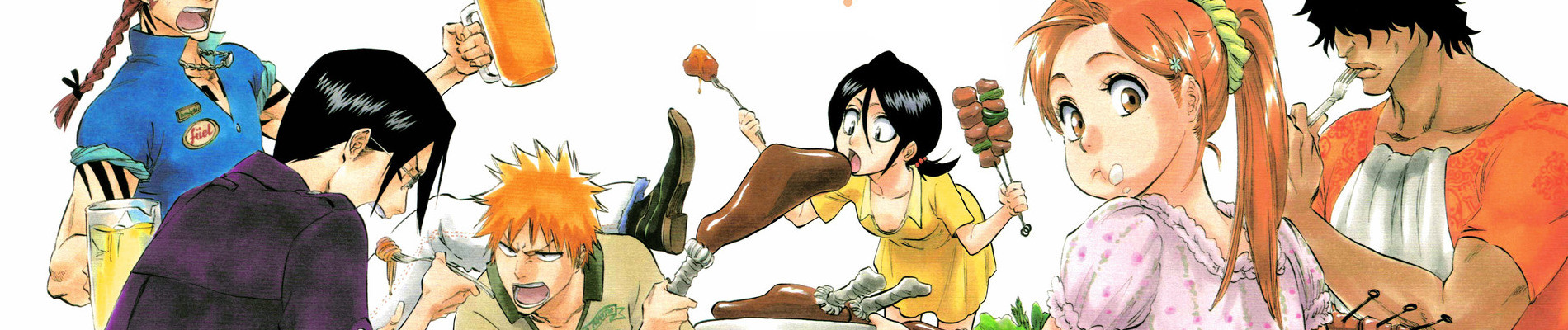
That’s Bleach’s atmosphere—not just swordplay or afterlife lore, but the weight of being unmoored. It makes you feel the dissonance between teenage boredom and cosmic duty, between the smell of rain on concrete and the copper-tang of spiritual blood. It’s urban fantasy that aches: ghosts aren’t metaphors—they’re children crying in bus stops, old men whispering apologies no one hears, Hollows whose masks crack open to reveal faces you almost recognize. The supernatural isn’t distant; it’s leaking—through cracks in reality, through wounds in the soul, through the quiet horror of realizing your best friend has been dead for three days and no one else noticed. It’s not about winning. It’s about holding on while something vast and ancient reshapes you from the inside out.
Which is why DOOM + DOOM II hits with such brutal, resonant clarity. Its description calls it “the definitive, newly enhanced versions” of games where hell itself ruptures into human space—and the player review nails the emotional anchor: “This game was the reason my dad and I built our first computer.” That’s not nostalgia. That’s generational transmission of awe, of shared shock at seeing something break—a 486 processor straining, a Sound Blaster shrieking, demons tearing through walls not as spectacle, but as invasion. Like Rukia bleeding onto Ichigo’s floor, DOOM doesn’t ask permission. It ruptures. Both force you into a body suddenly too fragile, too loud, too alive in the face of overwhelming, grinning, fleshy wrongness—Hollows with jagged teeth, imps with flayed skin, all screaming in the same guttural key.
Then there’s Shank, described as “the cult-classic revival of the sidescrolling beat-em-up… packed to the rim with enemies, bosses, combos, and more.” Its player review admits: “I must have rose tinted glasses back then because I enjoy this in the past.” That wistfulness isn’t about dated graphics—it’s about remembering how physical it felt to be Shank: bones snapping, blades embedding, blood spraying in thick arcs across grimy brickwork. Just like Ichigo’s early fights—where every parry jars his arms, every missed strike leaves him gasping, every Hollow’s roar vibrates in his molars—Shank makes violence tactile, exhausting, human. No invincibility frames, no clean finishers: just sweat, momentum, and the sickening thunk of a cleaver meeting spine. It shares Bleach’s refusal to sanitize consequence—even victory tastes like iron.
And Unreal Tournament 2004: Editor's Choice Edition, with its “ten game modes… team-based and &q”—that ampersand trailing off like a breath cut short—mirrors Bleach’s ensemble chaos. The review says: “Wish I'd played the storyline version of this at release. Was fun 20+ years later, but would have blown my mind at that time.” That longing for first-contact awe is pure Soul Society arc energy—the sheer scale of Seireitei’s architecture, the vertigo of standing before captains who move faster than thought, the way loyalty fractures and reforms mid-battle like shrapnel. UT2004’s arenas don’t just host combat—they frame it: narrow corridors echoing with gunfire like the halls of Squad 13, open plazas where gravity feels thin, just like the inverted skies of Hueco Mundo. Both trust you to learn hierarchy not through exposition, but through impact: who hits hardest, who moves last, who bleeds slowest.
These pairings aren’t for fans of “cool powers” or “epic battles.” They’re for the person who watches Ichigo collapse after his first Hollow fight—not because he lost, but because he survived, and that survival hurts. For the player who still flinches at the sound of a chainsaw revving in DOOM, or who remembers the exact weight shift needed to land Shank’s final combo without stumbling. For the one who boots up UT2004 not for rank, but to stand alone in a silent map, listening to the hum of distant engines, feeling the same dread-tinged wonder Ichigo feels staring up at the Sokyoku hill—knowing something vast, ancient, and hungry is already watching back.
🎮21 Games That Match the Vibe



Match Dimensions Explained
❓Frequently Asked Questions
Why does Quake III Arena feel so much like Bleach's Soul Society battles?
Because both thrive on hyper-fast, high-stakes arena combat where movement *is* offense—think Ichigo dashing across rooftops and dodging Getsuga Tenshō while Quake III’s strafe-jumping and rocket-jumping let you weave through chaos just as fluidly. The alien gladiator premise mirrors Soul Society’s forced tournaments, and the visual intensity—flashing power-ups, explosive knockbacks, and zero downtime—hits that same 'spectacle + occult dread' vibe fans love from Bleach’s Bankai clashes.
Is there a Bleach anime or manga adaptation game that actually captures the Hollow mask aesthetic and body horror?
No official Bleach game nails that exact blend—but Shank comes shockingly close. Its grindhouse art style leans hard into grotesque transformations (like the Butcher’s fleshy, blade-limbed boss fights) and visceral dismemberment, echoing Hollow masks cracking open and Arrancar mutations. Even the over-the-top combo system—chaining chainsaws, shotguns, and dual blades—feels like watching Grimmjow tear through opponents in Hueco Mundo.
Shank vs. Unreal Tournament 2004: which one better matches Bleach’s balance of flashy action and tactical spacing?
UT2004 wins for tactical spacing—its weapon arcs (like the Shock Rifle’s double-shot combo or the Link Gun’s tether) demand precise timing and map control, just like Zanpakutō duels where distance defines who strikes first. Shank’s all about relentless, up-close chaos (think Kenpachi’s brawling), while UT2004’s ten distinct gametypes—including Bombing Run and Assault—mirror Bleach’s shifting battlefield stakes, like defending Seireitei gates or storming Las Noches.
What’s the best ‘Bleach-like’ game if I want that intense, no-breather rush of fighting multiple elite enemies at once—like Ichigo vs. the Espada?
DOOM + DOOM II is your answer. That moment when you’re backpedaling through a Hell corridor, shotgun blasting three Barons of Hell while a Pain Elemental spawns imps? It’s pure Espada-tier overwhelm—fast, brutal, and spatially disorienting. The 1993 engine’s raw speed and enemy density (plus the iconic ‘bfg9000’ payoff) deliver that same adrenalized, outnumbered-but-unbroken energy you get during the Fake Karakura Town arc.