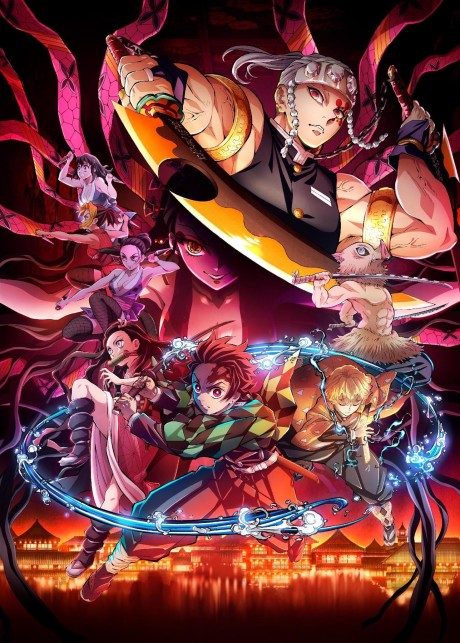
Demon Slayer: Kimetsu no Yaiba Entertainment District Arc
After visiting the Rengoku residence, Tanjirou and his comrades volunteer for a mission within the Entertainment District, a place where desires are sold and demons dwell. They journey alongside the flashy Sound Hashira, Tengen Uzui, in search of a monstrous foe terrorizing the town. Sworn to slay creatures of the night, the hunt continues.
(Source: Funimation)
Note:
The last episode aired with a runtime of ~33 minutes.
📺Anime Details
📝Editorial Analysis
The first time Tanjirou’s blade catches the lantern light in the Entertainment District—gold flickering across blood-slicked cobblestones, his breath ragged, eyes wide not with fear but recognition—you feel it in your ribs. Not just the heat of battle, but the suffocating weight of a place where joy is commodified, grief is masked in perfume, and every smile hides a wound that hasn’t scabbed over yet. That moment isn’t about winning. It’s about witnessing: the oiran’s practiced grace, the way Tengen’s flamboyance cracks just once when he sees what the demon has done to his wives—not as assets, but as people—and how Tanjirou’s voice breaks mid-swing, whispering “I’m sorry” to a corpse he couldn’t save.
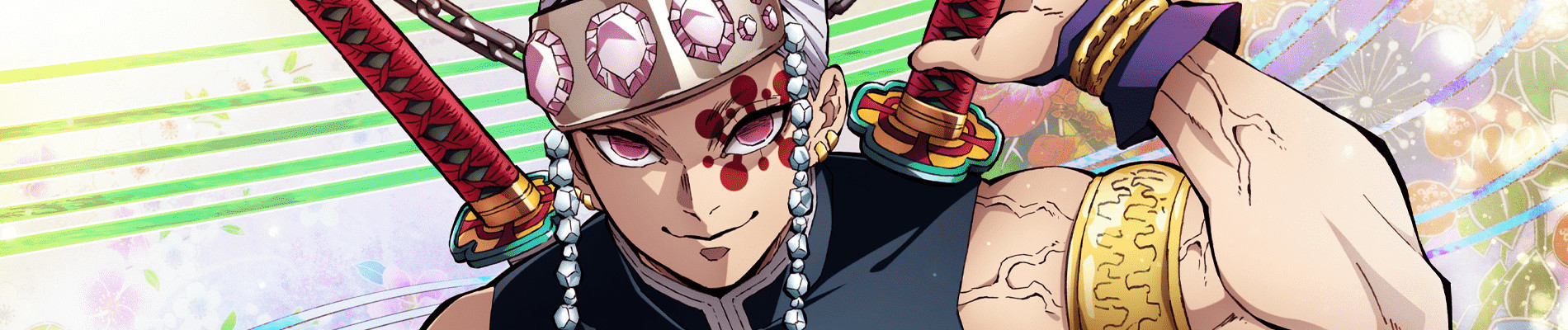
This arc doesn’t trade in catharsis—it trades in resonance. The Entertainment District isn’t just a setting; it’s a pressure chamber of suppressed emotion, where desire and trauma wear the same silk kimono. You don’t walk away from it exhilarated—you walk away trembling, haunted by the quiet dignity of characters who’ve been ground down but refuse to be erased. It’s grief with glitter, rage wrapped in courtesy, love that insists on existing even when the world has already decided it’s too dangerous to name. There’s no clean victory here—just the raw, unvarnished truth that protecting someone means carrying their pain like a second heartbeat.
That emotional DNA—visceral, unflinching, layered with beauty and body horror—finds its echo in Alice: Madness Returns. Its description names “Victorian London” and “the beautiful yet ghastly Wonderland”—exactly the duality of the District: ornate façades hiding rot, elegance stitched over agony. The player review admits the game “kinda works for me (after editing config files manually)”—a telling parallel. Like Tanjirou adjusting his breathing mid-fight or Nezuko pressing her forehead to glass to soothe others, this game demands active, embodied engagement to access its heart. It doesn’t hand you clarity—it makes you tune the system, adjust the lens, lean in closer until the horror and the tenderness resolve at the same focal length.
Then there’s DOOM + DOOM II, described as “definitive, newly enhanced versions” rooted in 1993–94. That vintage weight matters—not nostalgia, but legacy as lived experience. Just as the Entertainment District Arc resurrects Rengoku’s memory not as flashback but as living instruction—his words echoing in Tanjirou’s stance, his fire rekindled in Tengen’s final stand—DOOM’s enduring power lies in how its chaos still lands, decades later, because its core is physical truth: the kick of the shotgun, the rhythm of retreat-and-advance, the way your pulse syncs to the demon’s lunge. A player recalls building a 486 with their father, sound card and all—proof that this isn’t just action; it’s intergenerational transmission, much like Tanjirou inheriting the Breath of the Sun not as technique, but as vow.
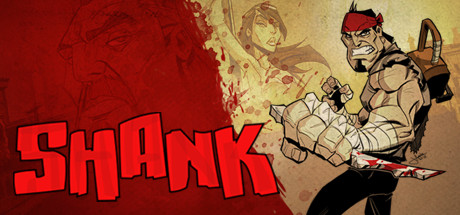
And Shank, the “sidescrolling beat-em-up” packed with “enemies, bosses, combos”, carries the same grindhouse sincerity. Its player review confesses, “I must have rose tinted glasses back then because I enjoy this in the past.” But that’s the point—the Entertainment District Arc refuses rose-tinted glasses. It gives you blood on the tatami, a severed finger still gripping a hairpin, Tengen’s laugh cracking like porcelain. Shank’s over-the-top violence isn’t cartoonish—it’s ritualized exhaustion, the kind that comes from fighting not just demons, but the slow erosion of self. Both understand: sometimes the most defiant act is to keep swinging, even when your knuckles are split and your breath smells like copper.
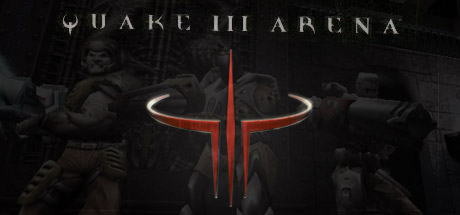
This pairing isn’t for the casual fan. It’s for the person who watches Tanjirou kneel in the rain after the final fight—not because he won, but because he remembered how to weep—and immediately boots up Quake III Arena, not for the servers (though yes, they’re still out there), but for the rhythm of collision, the way bodies fly and reset, again and again, like breath returning after a scream. It’s for the one who hears the clink of sake cups in the anime’s background score and recognizes it as the same sonic texture as the clack of a mechanical keyboard mid-UT3 frag—both sounds marking sacred, fleeting presence. They love stories where tenderness and terror share the same breath, where spectacle never drowns out sorrow, and where the most heroic thing you can do is keep showing up, blade in hand, controller in grip, heart wide open and unprotected.
🎮17 Games That Match the Vibe






Match Dimensions Explained
❓Frequently Asked Questions
Why does Alice: Madness Returns feel like the Entertainment District Arc despite having no demons or swords?
Because both lean hard into surreal, body-horror-tinged psychological tension—like when Nezuko’s bamboo muzzle cracks under stress, Alice’s Wonderland warps with visceral, grotesque transformations (think the Dollmaker’s porcelain limbs snapping and reassembling). The Victorian London scenes mirror the District’s claustrophobic alleyways and hidden dread, while the combat’s rhythmic, high-stakes dodging and environmental storytelling echo Tanjiro’s desperate, fluid fights in the red-light district.
Is there a Demon Slayer: Kimetsu no Yaiba game based on the Entertainment District Arc?
No—there’s no official Demon Slayer game covering that arc specifically. The only licensed titles are mobile games like *Kimetsu no Yaiba: The Hinokami Chronicles* (which stops before the Entertainment District) and *Rumble Garanndoll*, which isn’t Demon Slayer at all. So fans turn to matches like *Shank*, where the grindhouse-style, fast-paced swordplay against hordes of masked enemies (e.g., Shank vs. the Syndicate bosses) channels the arc’s chaotic, visceral energy better than any official adaptation.
How does Shank compare to DOOM + DOOM II for capturing the Entertainment District Arc’s vibe?
Shank nails the *human-scale brutality*—think Obanai’s whip-sword precision or Mitsuri’s frantic, acrobatic strikes—via tight sidescrolling combos and over-the-top finishers against gangs in neon-drenched alleys. DOOM + DOOM II delivers the *overwhelming sensory assault*: its relentless demon hordes, screen-filling gore, and thunderous shotgun blasts mimic the arc’s climax—when Tanjiro’s head-splitting ‘Hinokami Kagura’ barrage overwhelms Daki’s endless ribbon clones in that collapsing theater.
What’s the best game like Demon Slayer’s Entertainment District Arc if I want that intense, stylish, emotionally raw late-night fight vibe?
Go with *Shank*—its gritty, hand-drawn aesthetic, rapid-fire parry-and-counter combat, and morally gray underworld setting (like fighting through the Syndicate’s brothel hideouts) directly echo the arc’s blend of elegance and desperation. You’ll feel that same breathless, heart-pounding rhythm as Tanjiro pushes past exhaustion in the final act—no alien arenas or abstract horror needed, just raw, grounded, blade-to-blade intensity.