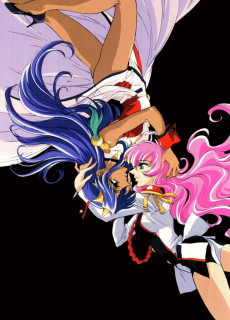
Revolutionary Girl Utena: The Adolescence of Utena
📺Anime Details
📝Editorial Analysis
The rose petals don’t fall—they linger, suspended in air like held breath, as Utena stands barefoot on the cracked black floor of the dueling arena, her school uniform torn at the shoulder, sword trembling—not from fear, but from the unbearable weight of a promise she can no longer name. Her reflection fractures across the mirrored walls, each shard showing a different version: child, warrior, lover, prisoner, ghost. The music doesn’t swell—it stops, mid-note, and for three seconds, there is only silence thick with unspoken confession, grief, and the quiet, devastating click of a lock turning inside her chest.
That silence—that suspended, aching stillness—is what Revolutionary Girl Utena: The Adolescence of Utena is. Not fantasy, not romance, not even psychology—but the visceral, bodily sensation of becoming undone while trying to hold yourself together. It makes you feel the friction between who you were told to be and who you ache to become—especially when that ache is tangled with desire, betrayal, and the terrifying tenderness of seeing someone else’s wound mirror your own. It doesn’t ask “Who am I?”—it makes you taste the question, metallic and raw, like blood on your tongue after biting down too hard on your own lip.
The game matches aren’t about genre overlap—they’re about shared emotional architecture. Amnesia™: Memories, with its Romance & Shoujo and Body Horror & Occult dimensions, resonates because it, too, traps its protagonist—and by extension, the player—in a labyrinth of fractured memory where love and violation wear the same face, where intimacy feels like exposure under surgical light. One player writes of Utena’s final duel as “a ritual dissection of the heart”—and that’s precisely what Amnesia™: Memories does: peels back layers of self not with exposition, but with trembling hands, blurred vision, and the slow, sickening realization that the person you’re reaching for might be the very thing holding you hostage. The Body Horror isn’t gore—it’s the horror of your own skin feeling alien, your voice betraying you, your love curdling into complicity.
Then there’s DOOM + DOOM II, rated 58, tagged Action Spectacle, Body Horror & Occult, Adult & Dark Seinen. Its player review—“This game was the reason my dad and I built our first computer”—lands like a punch. Because Utena isn’t just about duels; it’s about building a world from scratch just to survive inside it. The arena isn’t a stage—it’s a cathedral erected out of desperation, much like that 486 rig cobbled together with Sound Blaster pride. The Body Horror here isn’t viscera—it’s the grotesque stretching of adolescence itself: limbs too long, voice cracking mid-sentence, desire misfiring like corrupted code. And the Occult? It’s the secret language of teenage longing—rituals performed in hallways, incantations whispered into locker doors, sacred geometry drawn in eyeliner. Both DOOM and Utena weaponize absurdity to confront the unspeakable: one with shotguns and hellspawn, the other with roses and revolving staircases—but both scream into the void until the void screams back in their own voice.
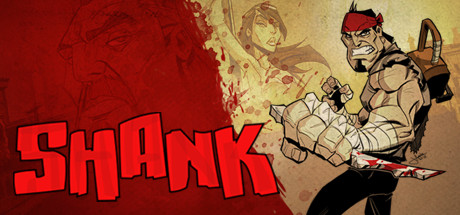
Even Shank, that grindhouse sidescroller dripping with over-the-top violence, shares DNA—not in tone, but in rhythm. Its player admits, “I must have rose tinted glasses back then because I enjoy this in the past.” That wistful, slightly ashamed nostalgia? That’s Utena’s heartbeat. Shank’s combat is all sharp angles and sudden stops—just like Utena’s pauses mid-lunge, her hand hovering over Anthy’s hair, her breath catching before a kiss that never lands. It’s not about winning the fight—it’s about the aftermath: blood on the floor, panting, the adrenaline ebbing into something quieter, heavier. The Action Spectacle isn’t spectacle for spectacle’s sake—it’s the physical manifestation of inner chaos made visible, muscle and bone translating panic, lust, grief into motion.
You’d love these pairings if you’ve ever pressed your forehead against a cold window at 3 a.m., replaying a conversation you wish you’d ended differently—or if you keep old love letters in a shoebox not because you still want them, but because you need proof you felt that intensely once. If your favorite games aren’t escapes, but mirrors—cracked, warped, sometimes bleeding ink—and your favorite anime doesn’t comfort you, but holds your gaze while you unravel. If you recognize longing not as a soft emotion, but as a physical pressure behind your ribs—sharp, insistent, and utterly, beautifully unignorable.
🎮7 Games That Match the Vibe

Match Dimensions Explained
❓Frequently Asked Questions
Why does Amnesia™: Memories show up as similar to Revolutionary Girl Utena?
Because both dive deep into psychological romance and surreal, ritualistic symbolism—Utena’s duels mirror Amnesia’s memory-reconstruction scenes, where emotional truths are literally carved into reality. The game’s 'Romance & Shoujo' + 'Adult & Dark Seinen' dimensions overlap tightly with Utena’s blend of coded desire, identity fragmentation, and gothic-tinged adolescence.
Is there a video game adaptation of Revolutionary Girl Utena?
No official Utena game exists—but fans often point to Amnesia™: Memories (79 score) as the closest spiritual match due to its layered romantic intrigue, symbolic dream logic, and focus on how love reshapes self-perception. It’s not an adaptation, but it *feels* like stepping into Utena’s rose-covered mind.
How do Amnesia™: Memories and Shank compare for someone who loves Utena’s tone?
Amnesia leans into Utena’s poetic melancholy and emotional vulnerability—think Anthy’s quiet intensity or the Rose Bride’s symbolic weight—while Shank channels Utena’s theatrical violence and stylized rebellion (like the sword-fighting choreography or Mamiya’s rage-fueled climax), but swaps metaphor for grindhouse gore and over-the-top combos.
What’s the best game like Utena if I want that haunting, ritualistic, emotionally raw vibe?
Amnesia™: Memories is your strongest match—it nails Utena’s mood with its fragmented narrative, intimate character writing, and recurring motifs of sacrifice, rebirth, and roses blooming in darkness. Unlike Shank or DOOM, it doesn’t rely on action spectacle; instead, it mirrors Utena’s slow-burn tension and the way every glance or silence carries unbearable weight.