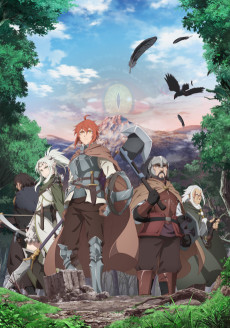
The Faraway Paladin: The Lord of Rust Mountains
The second season of Saihate no Paladin.
Two years had passed since he left the City of the Dead, and Will was seventeen by count. As a lord, he developed "Torch Port, a river port of light", and gradually the people's activities and smiles returned to "Beast Woods". However, out-of-season flowers bloom profusely, and an abnormality is discovered in the forest. Will and his friends head into the depths of the forest to solve this problem, and receive an ominous prophecy from the king of the forest.
"In the Iron Rust Mountains, the 'Fire of Black Calamity' will occur. The fire will spread, or it will burn everything in this land."
What is the calamity that sleeps in the ruined dwarven city of Tetsusabi Sanmyaku...!?
(Source: Crunchyroll)
📺Anime Details
📝Editorial Analysis
The scent of iron-rich soil and crushed petal hangs thick in the air—not sweet, not rotting, but wrong. Will stands at the forest’s edge, spear resting easy in his grip, watching out-of-season blossoms tremble on branches bare two months ago. His breath is steady, but his knuckles are white where they meet the shaft. This isn’t battle-readiness—it’s recognition: the world has bent, and he’s the one who must hold it upright without breaking.
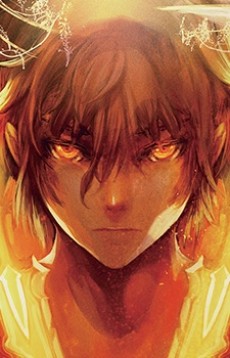

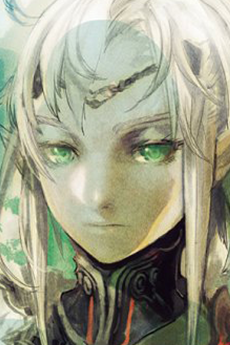
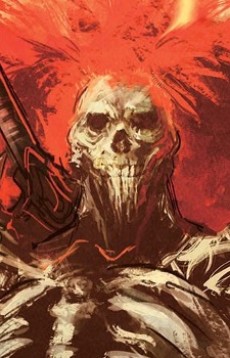
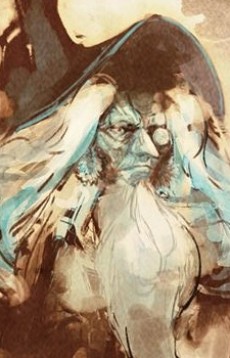
That quiet dread—this weight of stewardship—is what makes The Faraway Paladin: The Lord of Rust Mountains vibrate differently from other fantasy anime. It’s not about conquest or ascension. It’s about tending. Torch Port glows, Beast Woods hums with returning life—but beneath that renewal pulses something unmoored: flowers blooming in winter, prophecy arriving like a bruise, gods and dragons not as distant idols or monsters, but as environmental forces, as real and indifferent as rainfall or rust. You don’t just watch Will grow into lordship—you feel the ache of responsibility settling into your own shoulders. It’s psychological not through trauma dumps, but through silence between actions, through the way light falls on a riverbank he rebuilt, then flickers unnaturally over petals that shouldn’t exist. It makes you think about care as labor, about magic as ecology, about heroism as continual repair.
Which is why Rise of the Argonauts lands with such eerie resonance. Its description frames Jason not as a conqueror but as a king undone by loss, then remade by vow—“he vowed to do anything to restore her life.” That same desperate, grounded gravity lives in Will’s walk through Beast Woods: no grand monologue, just boots sinking into damp earth, eyes scanning for imbalance. And the player review nails it: “If you love games based on ancient history this one does it right…” Not flashy myth-as-spectacle, but myth as living architecture—gods with agendas tied to land, sea, and season. Like Will hearing prophecy not from a throne-room oracle, but from the forest itself, whispering through warped bloom and trembling root.
Then there’s Loki, whose description promises “a fantasy voyage through the great mythologies,” with heroes drawn from distinct traditions—Norse, Egyptian, Slavic, Greco-Roman. But the player review cuts deeper: “Good, similar to Diablo… but filled with annoying glitches and game crashes… Ending is also anticlimactic since nothing happens…” That dissonance—the gap between mythic scale and human-scale consequence—mirrors the anime’s emotional DNA. Will doesn’t defeat a god in a blaze of light; he interprets omens, negotiates with elven elders, calibrates irrigation channels while tracking magical decay. Loki’s broken execution echoes how The Faraway Paladin refuses cathartic spectacle: its stakes are measured in harvest yields and children’s laughter returning to Torch Port—not in shattered thrones or fallen titans.
Even the raw, unvarnished DOOM + DOOM II, with its 1993-era urgency and player review (“This game was the reason my dad and I built our first computer…”), shares something vital: tactile immediacy. Not lore-dense, not psychologically layered—but physical, urgent, grounded in sensation. Will’s spearplay isn’t choreographed ballet; it’s weight, friction, fatigue. When he pushes through undergrowth toward the forest’s heart, it’s not cutscene drama—it’s the same bodily insistence as moving Doomguy through blood-slick corridors: forward, now, because the air is wrong and your lungs know it before your mind does.
Who would love these pairings? Someone who keeps a notebook open beside their controller—not for lore dumps, but to sketch the shape of a rusted gate hinge, or transcribe the sound of wind through warped leaves. Someone who replays the moment Will kneels to test soil moisture before checking his sword, or who pauses mid-Quake III frag to stare at how light fractures across a pixelated ceiling. They’re drawn not to power fantasies, but to presence: the quiet pride in rebuilding a dock, the unease of a flower opening too soon, the way myth settles into muscle memory—not as story, but as weather.
🎮26 Games That Match the Vibe



Match Dimensions Explained
❓Frequently Asked Questions
Why is Rise of the Argonauts listed as similar to The Faraway Paladin when it's set in ancient Greece?
Great question—it’s not about the setting matching, but how both lean into mythic weight and tragic, adult-toned storytelling. Like The Faraway Paladin’s Rust Mountains arc where Will faces moral decay and divine consequence, Jason’s quest in Rise of the Argonauts hits that same 'dark seinen' vibe: his fiancée’s murder on their wedding day, the morally grey choices aboard the Argo, and the grim cost of resurrection all echo Will’s struggles with faith, rust, and corruption. Plus, both games treat mythology as lived-in worldbuilding—not just backdrop.
Is there a manga or anime adaptation of Loki that ties into The Faraway Paladin’s tone?
No—Loki here isn’t the Marvel or Norse-myth anime adaptation; it’s the 2007 action-RPG where you play one of four myth-based heroes (like the Norse fighter or Slavic witch) across realms full of crumbling temples and divine betrayals. It shares The Faraway Paladin’s reverence for folklore-as-cosmology, but its execution is rougher: players report frequent crashes and an anticlimactic ending where ‘nothing happens’—so don’t expect polished adaptation energy, just raw, glitchy mythic ambition.
How does Quake III Arena compare to DOOM + DOOM II for someone who loves The Faraway Paladin’s intense, fast-paced combat scenes?
Both deliver that relentless, spectacle-driven action—but Quake III Arena leans harder into precision movement (rocket-jumping, strafe-dodging) and arena-style duels, like the high-stakes sparring between Will and the Rust Knight in Chapter 12. DOOM + DOOM II, meanwhile, matches the visceral, demon-slaying rhythm of Will’s early dungeon crawls—especially with its chunky shotgun feedback and oppressive, claustrophobic levels. Neither has story, but both nail the *feeling* of being a lone warrior in a hostile, rule-bent cosmos.
What’s the best game like The Faraway Paladin if I want that brooding, myth-soaked atmosphere without heavy grinding?
Rise of the Argonauts—it’s got zero loot grinds or endless leveling, just tight melee combos, branching dialogue with gods and monsters, and that same weighty, melancholic tone as Will walking through the rust-choked ruins of the Old Kingdom. You’ll feel it in Jason’s quiet moments aboard the Argo, staring at the sea while flashbacks of his murdered fiancée haunt him—very much like Will’s silent vigils before the rust altar. And unlike Loki (which crashes mid-quest), it holds up cleanly.