
Ghost in the Shell
2029: A female cybernetic government agent, Major Motoko Kusanagi, and the Internal Bureau of Investigations are hot on the trail of “The Puppet Master,” a mysterious and threatening computer virus capable of infiltrating human hosts. Together with her fellow agents from Section 9, Kusanagi embarks on a high-tech race against time to capture the omnipresent entity.
(Source: Lionsgate Films)
📺Anime Details
📝Editorial Analysis
Rain slicks the neon-drenched streets of 2029, not with sound, but with silence — a low, humming void beneath the city’s pulse. You’re watching Major Motoko Kusanagi stand motionless on a rooftop, her optical sensors scanning the grid below: flickering holograms, drone traffic, the faint thermal bloom of a thousand bodies in sealed apartments. Her reflection fractures across a rain-streaked window — not just her face, but the ghost behind it: the quiet, unblinking awareness that asks, If every neuron can be replaced, what remains when the shell is flawless? That moment isn’t action. It’s stillness charged with ontological weight.
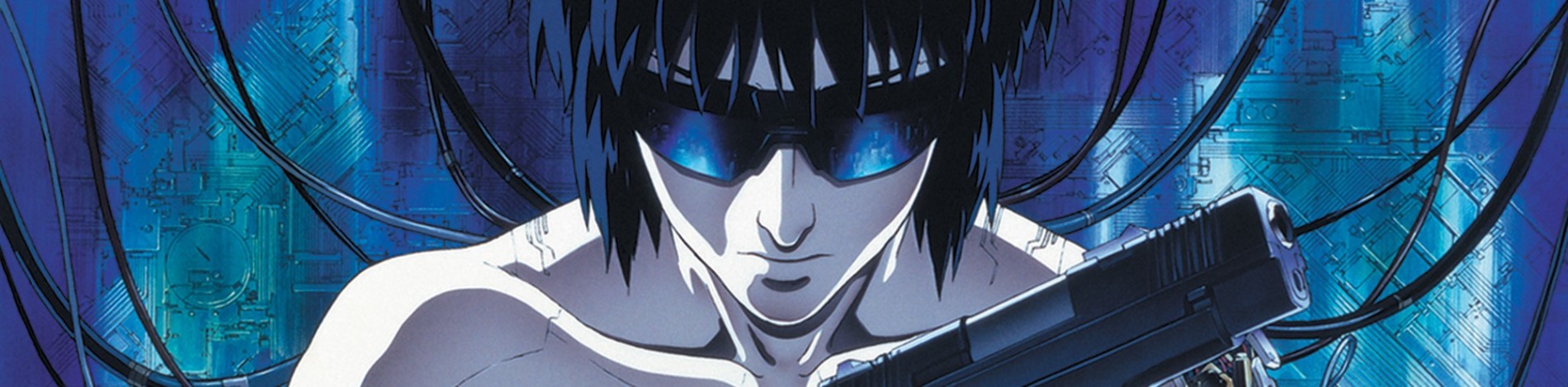
What makes Ghost in the Shell unlike any other cyberpunk story isn’t its tech — it’s how deeply it withholds. There are no exposition dumps about neural lace or quantum encryption; instead, you feel the cold friction between consciousness and code in the way Kusanagi’s voice never rises, even when her body is torn apart. The urban landscape isn’t backdrop — it’s a breathing, indifferent organism: wet concrete, static-laced broadcast noise, the hollow echo inside a cybernetic skull. It makes you feel vertiginous, not from speed or spectacle, but from the slow, inescapable realization that identity isn’t anchored — it’s negotiated, second by second, in the gap between input and self. This isn’t dystopia as oppression — it’s dystopia as ambient uncertainty, where the most dangerous threat isn’t violence, but the erosion of the question “Am I me?”
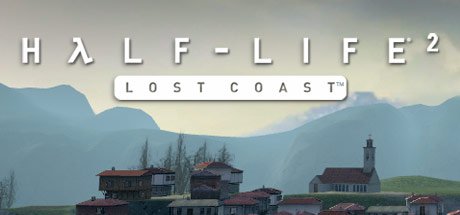
That same quiet dread, that same adult stillness amid systemic decay, lives in Half-Life 2: Lost Coast — not in its plot (there isn’t one), but in its texture. As the player review says, launching it feels like opening “a tiny time capsule” — and that’s exactly the resonance. Like Kusanagi gazing at her fractured reflection, Lost Coast is a deliberate, almost meditative pause: a single, luminous corridor lit by HDR lighting that didn’t just render shadows — it rendered presence, the weight of light falling on abandoned infrastructure. Its brevity — “less than an hour” — mirrors the anime’s refusal to over-explain. Both trust you to sit with atmosphere, to feel the hollowness of a world built for function, not meaning. No dialogue, no lore dump — just light, geometry, and the hum of something vast and unseen operating just beyond frame.
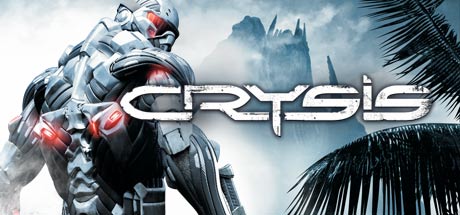
Then there’s Crysis, whose description promises adaptation in “an ever-changing environment,” and whose player review praises the original’s enduring graphics — not for flash, but for integrity. That phrase — “Adapt to Survive” — lands with the same quiet gravity as Kusanagi’s line, “I am what I do.” In Crysis, the nanosuit doesn’t make you invincible; it makes you contingent. One moment you’re sprinting across frozen jungle canopy, the next you’re crouched in zero-grav debris, recalibrating your entire sense of physics — just as Kusanagi recalibrates her sense of self each time she dives into the net, each time she questions whether her memories were implanted. The “Neon Noir” dimension listed matches Ghost in the Shell’s visual grammar: not garish color, but chromatic ambiguity — blues bleeding into greys, reflections that don’t quite resolve, light that reveals only enough to deepen doubt.
These aren’t pairings about lasers or cyborgs. They’re about people who linger — who notice the dust motes in a sunbeam cutting through a ruined office, who hear the silence between radio transmissions, who feel the weight of their own breath inside a sealed helmet. They’re for viewers who rewatch the tank chase not for the choreography, but for the five seconds after, when Kusanagi wipes rain from her visor and stares — not at the enemy, but at the surface of her own perception. For players who boot up Lost Coast not to “complete” it, but to stand in that hallway and watch light pool on cracked tile, feeling the same aching precision as Kusanagi tracing the edge of her own ghost. Not for fans of action — but for those who know the most electric moment in any story is the one where the world holds its breath, and you realize — you’re still here, thinking, questioning, unmoored and awake.
🎮11 Games That Match the Vibe
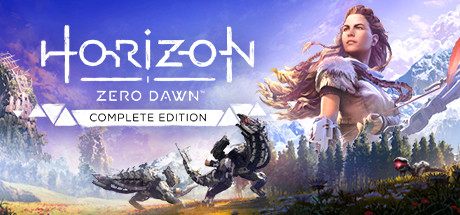
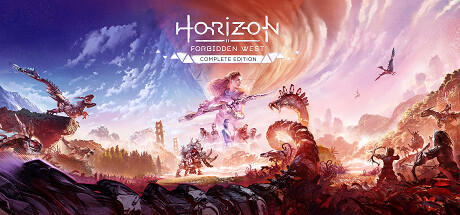

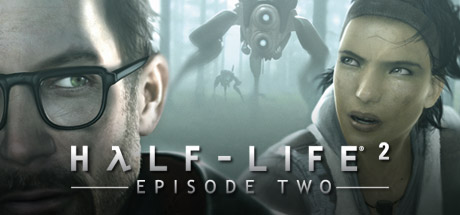


Match Dimensions Explained
❓Frequently Asked Questions
Why does Crysis keep coming up when I search for Ghost in the Shell games?
Crysis shares that same 'augmented soldier in a collapsing world' vibe—especially when you're toggling your Nanosuit’s armor, strength, and cloak modes mid-firefight, just like Motoko Kusanagi switching between tactical stealth and full-body combat. The frozen jungle battlefields and shifting geopolitical tension (North Korea vs. U.S. forces) echo GitS’s themes of identity erosion and military-industrial control, and players consistently note how its neon-noir lighting and adult, dark seinen tone hit similar emotional beats.
Is there a Ghost in the Shell video game adaptation?
No official Ghost in the Shell video game adaptation exists—not from Bandai Namco, Manga Entertainment, or Production I.G. The closest licensed tie-in was the 2004 PS2 game *Ghost in the Shell: Stand Alone Complex*, which got mixed reviews and isn’t on modern platforms. So when fans seek that GitS feeling, they lean into tonal matches like *Crysis* (for its military-cybernetic dread) or *Half-Life 2: Lost Coast* (for its quiet, rain-slicked dystopian unease and brief, atmospheric tech showcase).
Crysis vs. Half-Life 2: Lost Coast—which is better for Ghost in the Shell vibes?
If you want GitS’s cerebral tension and quiet surveillance-state dread, go with *Half-Life 2: Lost Coast*: its HDR-lit, rain-soaked urban decay and oppressive silence while navigating abandoned buildings feel like stepping into a scene from the 2004 film’s opening Hong Kong sequence. But if you crave GitS’s physical embodiment theme—cybernetic agency, tactical augmentation, and body-as-weapon—you’ll get more mileage from *Crysis*, where suit-modulation and enemy scanning mirror Motoko’s constant self-assessment and battlefield improvisation.
What’s the best Ghost in the Shell–like game if I want that lonely, rain-soaked cyberpunk mood?
Hands down *Half-Life 2: Lost Coast*—it’s short (under an hour), but every frame drips with that GitS aesthetic: flickering neon signs reflecting off wet asphalt, oppressive silence broken only by distant radio chatter and your own footsteps, and that unmistakable sense of being a lone operative in a decaying, hyper-technologized city. Players call it a 'tiny time capsule' because it captures the exact same melancholy, high-tech isolation as the Major walking through Niihama’s rain-slicked streets.