
Inazuma Eleven GO
Matsukaze Tenma, a first year who loves soccer, has exceptional dribbling skills, but still has lots of room for improvement. The story starts with him entering Raimon Jr. High ten years after the first Football Frontier International, where Raimon has become famous for its soccer. However, an organization called Fifth Sector has taken control of soccer over the years, and the passion that Raimon once had for soccer is no longer there.
📺Anime Details
📝Editorial Analysis
The first time Tenma kicks the ball at Raimon Jr. High, it doesn’t soar—it stutters. His foot connects, but the ball wobbles sideways, skidding off the cracked asphalt of a half-abandoned field where goalposts lean like tired sentinels and the net hangs in tatters. No crowd. No cheers. Just the low hum of a distant drone—Fifth Sector’s surveillance eye glinting on a lamppost—and the hollow echo of his own breath. That moment isn’t about failure. It’s about recognition: the shock of loving something so deeply while standing inside its hollowed-out shell.
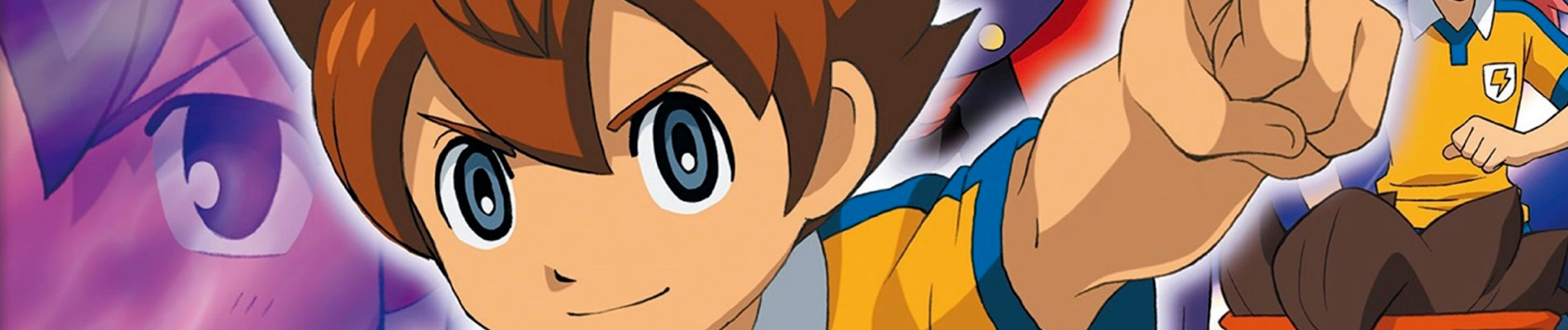
Inazuma Eleven GO doesn’t trade in nostalgia as comfort—it treats it as evidence. The weight of Raimon’s legacy isn’t a warm memory; it’s a cold archive, locked behind Fifth Sector’s polished rhetoric and sterile regulations. You feel the absence before you understand the conspiracy: no graffiti on locker rooms, no scuffed cleats left by the door, no shouted arguments over tactics at lunch—just quiet compliance and football reduced to timed drills, metrics, and sanctioned “performance windows.” What makes this atmosphere singular isn’t the supernatural techniques or the school setting—it’s the grief for passion that’s been bureaucratically dissolved. You don’t just root for Tenma to score—you ache for the sound of unscripted laughter mid-game, for the messiness of kids arguing over formations in chalk-dusted hallways, for the sheer uncontainable joy that Fifth Sector has methodically airlocked. It’s sports as elegy—and resurrection.
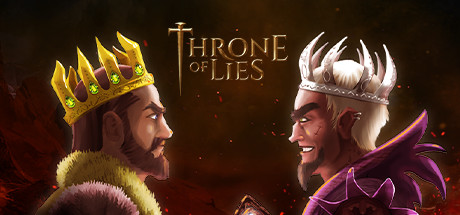
That emotional DNA pulses strongest in Ricochet, where competitive spirit isn’t abstract—it’s battled for, physically and politically. Its description calls it a “futuristic action game” with “one-on-one and team matches played in a variety of futuristic battle arenas”—but read between the lines: those aren’t neutral stages. They’re contested zones, engineered spaces where agility and aim are survival skills against systems that demand conformity. A player review nails it: “Truly a life changing experience all should play… Ricochet combines the drama of a soap opera and the tense atmosphere of a horror movie all in o…” That fragmented, breathless awe? It mirrors Tenma’s first confrontation with Fifth Sector’s enforcers—not because they wield lasers, but because their authority feels inescapable, institutional, and quietly terrifying. Like when Fifth Sector officials arrive at Raimon not with threats, but with clipboard audits and “efficiency assessments,” turning soccer into a compliance report. Ricochet’s tension isn’t just about dodging fire—it’s about moving freely inside a structure designed to restrict movement, just as Tenma must dribble not just past defenders, but past permission slips, curfews, and rewritten rules.
And then there’s the cute girls doing cute things tag—not as fluff, but as quiet resistance. When Fifth Sector bans spontaneous practice sessions, the girls of Raimon’s support club don’t protest loudly. They bake bento boxes shaped like soccer balls, stitch hidden team emblems into uniform hems, and leave hand-drawn maps of forbidden training grounds under library books. Their gentleness is tactical. It’s the same soft, stubborn warmth that lives in Ricochet’s player review’s “soap opera” layer—not melodrama, but the human scale of loyalty persisting under pressure. You feel it in how Tenma listens, really listens, to his teammates’ doubts—not to fix them, but to hold space for them. That’s the heartbeat Ricochet shares: not just winning, but witnessing each other amid the noise.
This pairing isn’t for fans of “sports anime” or “competitive games” as categories. It’s for the kid who still keeps a worn notebook full of hand-sketched plays, the adult who pauses mid-commute to watch street football through rain-streaked glass, the player who lingers in Ricochet’s lobby not to queue—but to watch teammates adjust headsets, share water, laugh at a misfire. It’s for anyone who’s ever loved something so fiercely they felt its erosion in their bones—and who, against all odds, still believes in the stutter before the sprint, the silence before the chant, the single kick that refuses to be contained.
🎮2 Games That Match the Vibe

Match Dimensions Explained
❓Frequently Asked Questions
Why does the final match in Inazuma Eleven GO feel so different from Ricochet's championship round?
Inazuma Eleven GO's final match leans hard into emotional character arcs—like Tenma's 'Cosmic Boost' moment with the Chrono Stone activating mid-kick—while Ricochet's championship round is a high-stakes, zero-gravity arena duel where you dodge laser nets and time your ricochet shots off rotating plasma walls. The vibe shift comes from Ricochet prioritizing split-second aim precision and environmental physics over narrative cutscenes, even though both games score 81/100 for intensity.
Is there an anime adaptation of Ricochet like there is for Inazuma Eleven GO?
No—Ricochet has never been adapted into an anime. Unlike Inazuma Eleven GO, which got three full TV seasons plus movies, Ricochet remains exclusively a game, praised by fans for its 'soap opera meets horror movie' tension but never expanded into animated form. That’s why players drawn to GO’s serialized storytelling often pivot to Ricochet for its raw, uncut competitive spirit instead.
How does Ricochet compare to Inazuma Eleven GO in terms of team-building mechanics?
Inazuma Eleven GO lets you recruit characters like Tsurugi Kyosuke or Kageyama Ryo through story-driven events and friendship levels that unlock special combo moves (e.g., 'Darkness Storm'). Ricochet ditches recruitment entirely—you pick one pre-built team per tournament (like the 'Neon Vipers' or 'Crimson Echo') and upgrade their abilities via skill chips earned in matches, making it way more about tactical loadout tuning than relationship-based progression.
What’s the best game like Inazuma Eleven GO if I want that hype-but-heartfelt sports energy without anime cutscenes?
Ricochet is your best bet—it nails the 'hype-but-heartfelt' vibe through intense one-on-one duels and team matches in futuristic arenas, where every successful ricochet shot triggers crowd chants and slow-mo lens flares just like GO’s 'Majin The Hand' moments. Reviewers call it 'a life-changing experience' precisely because it swaps anime dialogue for visceral, physics-driven drama—no cutscenes needed.