
NieR:Automata Ver1.1a
The distant future, 5012.
The sudden aerial invasion of Earth by <Aliens> and
their creations <Machine Lifeforms>led mankind to the brink of extinction.
The surviving number of humans who took refuge on the moon to organize a counterattack using
<android> soldiers to recapture Earth.
However, the war reaches a stalemate as the <Machine Lifeforms> continue to multiply infinitely.
In turn, humanity deploys anew unit of android soldiers as an ultimate weapon: <YoRHa>
Newly dispatched to Earth <2B> joins<9S>, the analyst currently stationed there, where amid their mission, they encounter a myriad of mysterious phenomena...
This is the story of these lifeless <androids> and their endless fight for the sake of mankind.
(Source: NieR:Automata Ver1.1a Official USA Website)
Note: Episodes 9, 10, 11, 12 aired back-to-back on July 23, 2023.
📺Anime Details
📝Editorial Analysis
The silence after the explosion isn’t empty. It’s thick—dust motes hanging in fractured light, a broken android’s arm twitching once, then still, its optical sensor flickering blue like a dying star over scorched earth. No music swells. No triumphant score. Just wind scraping across rusted girders and the low, guttural hum of something still alive in the ruins. That moment—when 2B kneels not to mourn, but to check whether the machine she just dismantled was mimicking pain or truly feeling it—that’s where NieR:Automata Ver1.1a lives. Not in victory. Not in clarity. In the trembling space between certainty and doubt.
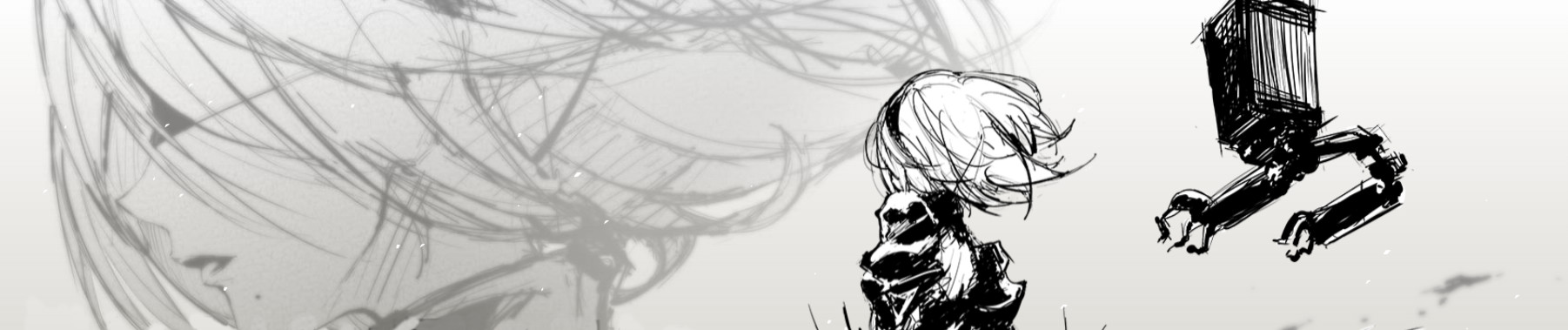
What makes this anime ache so deeply isn’t its post-apocalyptic setting or its swordplay—it’s how relentlessly it withholds. You’re never told if humanity is really on the moon. You’re never shown their faces. You’re handed fragments: corrupted logs, glitching transmissions, a child’s voice singing over static—and asked to hold them like holy relics. It makes you feel unmoored, yes—but more precisely, it makes you feel responsible for meaning. Every pause, every cut to black, every time a machine recites poetry before lunging—it forces you to ask: Is this tragedy? Or is it rehearsal? The atmosphere isn’t bleak because the world is ruined. It’s devastating because consciousness itself feels like a wound that keeps reopening—tender, fragile, aching with questions no one can answer.
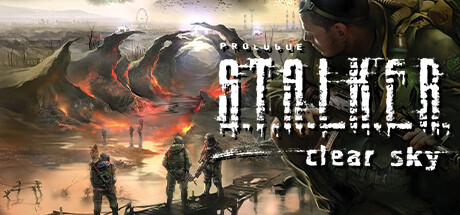
That emotional DNA pulses strongest in S.T.A.L.K.E.R.: Shadow of Chernobyl, where survival isn’t about skill—it’s about listening. Like NieR:Automata Ver1.1a, it drops you into a place already haunted: “a very dangerous place, where you fear not only the radiation, anomalies and deadly creatures, but other S.T.A.L.K.E.R.s.” There’s no exposition dump—just whispers on the radio, half-buried journals, and landscapes that breathe unease. A player review nails it: “The story is also really good, I'm intrigued in the whole thing.” Not “I understand it”—intrigued. That’s the shared pulse: both works refuse to resolve mystery into answers. They let ambiguity linger, making wonder feel like weight.
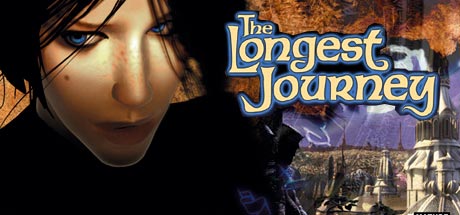
Then there’s Dreamfall: The Longest Journey, whose player review cuts straight to the heart: “It's less a long journey than a long drama. And somehow, the drama is compelling enough that you keep watching scene after scene.” Notice the verb—watching, not playing. Like NieR:Automata Ver1.1a, Dreamfall leans into stillness, into dialogue that circles philosophy like smoke around a flame. Its sci-fi isn’t about tech specs—it’s about identity splintered across worlds, about what “real” means when memory glitches and bodies change. Both treat emotion not as ornament, but as architecture: the scaffolding holding up entire civilizations—and the first thing to collapse when belief falters.
Even BioShock™, with its “revolutionary” impact, shares that same quiet horror of self-deception. Its description calls it “a shooter unlike any you've ever played,” but what lingers isn’t the plasmids or the Big Daddies—it’s the slow dawning that your choices were never yours. A player calls it “one of the most revolutionary games ever!”—but revolution here isn’t triumph. It’s rupture. Like 2B discovering her own memory wipes, like YoRHa’s command structure dissolving into recursive lies—BioShock and NieR:Automata Ver1.1a both trap you inside systems that claim to protect you while hollowing you out from within. The dread isn’t external. It’s recursive, inescapable, inescapably human.
This pairing isn’t for fans of clean arcs or cathartic battles. It’s for the person who replays a single line of dialogue three times because the tremor in the voice suggests more than the script admits. For the one who walks away from a game not with a trophy, but with a question they can’t shake—What if the enemy is just us, mirrored and multiplied? What if love is just another protocol waiting to crash? It’s for those who don’t seek escape—but resonance. Who want stories that don’t end, but reverberate: low, persistent, and utterly unforgiving in their beauty.
🎮21 Games That Match the Vibe





Match Dimensions Explained
❓Frequently Asked Questions
Why does S.T.A.L.K.E.R.: Shadow of Chernobyl keep showing up in 'games like NieR:Automata Ver1.1a' lists?
Because both dive deep into existential dread in decaying, layered worlds—think 2B’s quiet moments staring at ruined cityscapes versus your lone stalker trudging through the overgrown Pripyat ruins, radiation meters ticking down as you hear distant mutant howls. The Zone’s oppressive mystery and fragmented storytelling (like the Whispering Woods or X-18 lab) mirror Automata’s themes of isolation and fractured identity, not just the cyberpunk surface.
Is there an anime adaptation of Unreal Tournament or Tribes: Ascend like there is for NieR:Automata?
Nope—neither Unreal Tournament nor Tribes: Ascend has an official anime adaptation. Unlike NieR:Automata Ver1.1a (which reimagines the game’s story with new character beats, like 9S’s breakdown in Episode 10 or A2’s rain-soaked duel in Episode 13), these are pure legacy shooters: UT’s 1999 GOTY Edition is all about arena fragging with shock rifles and translocators, while Tribes: Ascend leans into jetpack-fueled flag captures and that addictive 'ping' sound before a ski-slide takedown.
How does BioShock compare to NieR:Automata Ver1.1a in terms of philosophical depth and tone?
Both weaponize philosophy—but BioShock drops you into Rapture’s drowned Art Deco halls to confront objectivism via Andrew Ryan’s ‘No gods or kings’ speech and the Little Sisters’ haunting lullabies, while Ver1.1a uses androids like 2B and 9S to explore consciousness through dialogue-heavy scenes (e.g., the forest chapel confessions or Pascal’s village arc). BioShock’s adult, dark seinen vibe hits harder in moral choice mechanics; Ver1.1a leans into melancholic spectacle—but both make you question what ‘human’ even means.
What’s the best game like NieR:Automata Ver1.1a if I want that same lonely, rain-soaked, emotionally heavy vibe?
Dreamfall: The Longest Journey—it nails that slow-burn, rain-lashed melancholy. Think April Ryan walking through the neon-drenched, perpetually drizzling city of Casablanca, her voiceover echoing like 9S’s logs, or the quiet devastation of the ‘Stark’ vs. ‘Arcadia’ duality mirroring YoRHa’s war. It’s less action, more emotional narrative pacing—just like Ver1.1a’s quieter episodes where the weight lands between frames, not during boss fights.