
Danganronpa 3: The End of Hope’s Peak High School - Future Arc
Makoto Naegi, the Ultimate Hope who defeated the Ultimate Despair, Junko Enoshima, is under suspicion of treason against the Future Foundation for harboring the Remnants of Despair who carried on her will. As top members of the Future Foundation, including Makoto's former classmates Kyoko Kirigiri, Aoi Asahina, and Yasuhiro Hagakure, are brought together to decide on Makoto's punishment, they are all imprisoned by Monokuma, who forces everyone to participate in a final killing game. They must try to find the traitor among them who will kill them in their sleep, while also trying to avoid being mortally poisoned by personalised forbidden actions. Thrust into a game where no one can trust each other, Makoto's ideals of hope are pushed to their very limits.
(Source: IMDB, edited)
Aired alongside of Danganronpa 3: Zetsubou-hen, with Mirai-hen starting first.
📺Anime Details
📝Editorial Analysis
The fluorescent lights flicker—once, twice—then die. In the sudden dark of the Future Foundation’s sterile conference room, Makoto Naegi doesn’t scream. He breathes. A shallow, ragged inhale, chest rising under his unbuttoned blazer, as Monokuma’s laugh erupts—not from a speaker, but from inside the walls, vibrating through the floor grating. Kyoko Kirigiri’s hand hovers over her knife sheath. Aoi Asahina’s fingers tremble—not with fear, but with the muscle memory of swimming laps she’ll never finish. This isn’t the start of a battle. It’s the unspooling of trust, second by slow, suffocating second.
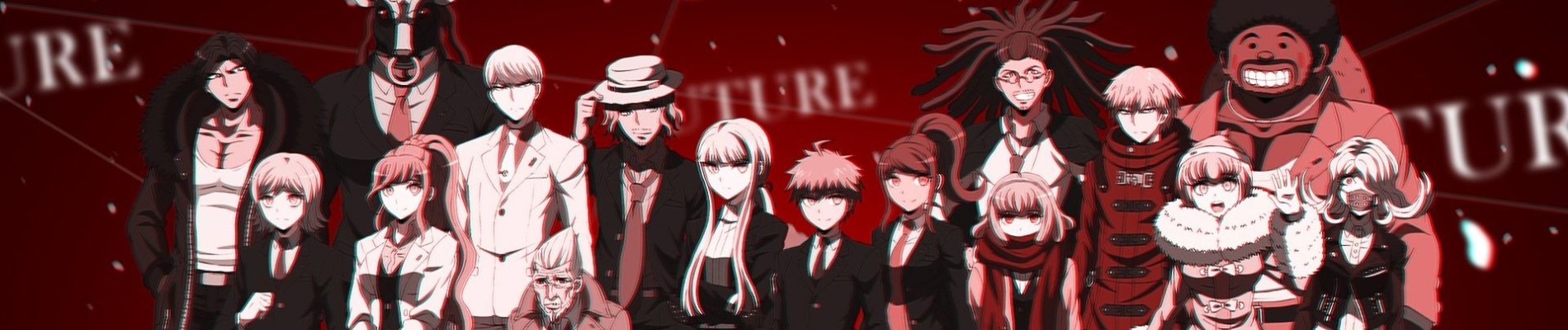
That’s the feeling Danganronpa 3: The End of Hope’s Peak High School - Future Arc lives inside: dread that tastes like nostalgia. Not the warm kind—the kind that curdles, where every familiar face carries the weight of what they’ve survived and what they’ve done to survive it. It’s not dystopia as spectacle, but as architecture: white corridors that echo too long, security feeds blinking red like infected eyes, the hum of unseen servers beneath floor panels. You don’t just watch characters unravel—you feel the floorboards groan under the weight of their own histories. It makes you question hope not as an ideal, but as a liability. What does it cost to keep believing when every proof points to betrayal? When loyalty is the first thing dissected in the autopsy of trust?
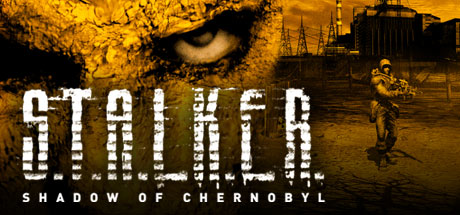
That emotional DNA—claustrophobic intimacy, moral erosion disguised as procedure, a world where safety is a lie told by the walls themselves—resonates sharply with S.T.A.L.K.E.R.: Shadow of Chernobyl. Its Zone isn’t just dangerous terrain; it’s a place where radiation, anomalies, and other S.T.A.L.K.E.R.s all feed the same gnawing uncertainty: who is the real threat—the environment, the monsters, or the person sharing your shelter? Like the Future Foundation’s sealed compound, the Zone forces proximity under duress, turning every encounter into a calculus of risk and memory. A player review nails it: “you fear not only the radiation, anomalies and deadly creatures, but other S.T.A.L.K.E.R.s.” That’s the Future Arc’s heartbeat—Makoto surrounded by friends who know exactly how many lies he’s told, and how many he’s kept buried. The dread isn’t external. It’s shared, reciprocal, inescapable.
Then there’s Rust, where survival isn’t abstract—it’s tactile, exhausting, relentless. The description says it plainly: “The only aim in Rust is to survive. Everything wants you to die—the island’s wildlife, other inhabitants, the environment, and other survivors.” No grand ideology, no monologues—just the raw arithmetic of threat. That’s the Future Arc stripped bare: no courtroom, no trial, just locked doors, dwindling time, and the unbearable weight of knowing someone you love will choose to kill you—or be killed by you. A Rust player confesses: “I’ve never played a game that simulates emotional damage this accurately. Rust is less of a survival game and more of a full-time job where everyone…” —and that ellipsis? That’s the silence after Monokuma drops the rules. That’s the pause before Kyoko’s voice cracks asking, “Makoto… did you really protect them?” It’s the exhaustion of caring in a system designed to make care fatal.
Even Space Quest™ Collection, with its twisted, consequence-laden absurdity, shares the DNA—not in tone, but in structure of collapse. Its description calls it “a blast from the past with the complete, completely twisted” experience, and one player loves how “you could pretty much do anything you, weather or not there were consequences.” That’s the Future Arc’s tragic irony: every character acts, chooses, reaches for meaning—but the system has already pre-written the fallout. Makoto’s hope, Kyoko’s logic, Aoi’s optimism—they’re all valid inputs in a machine calibrated for despair. The “twist” isn’t a plot reveal. It’s the horrifying realization that agency itself is the trap.
This pairing isn’t for fans of clean catharsis or heroic arcs. It’s for the ones who linger on the last frame of a dying light, who replay conversations searching for the exact syllable where faith cracked, who feel relief—not joy—when a character finally stops pretending. It’s for players who inventory their rusted tools at 3 a.m. and whisper, “What if I’m the anomaly?” It’s for viewers who watch Makoto’s hands shake—not from weakness, but from the sheer, terrifying weight of still choosing to hold on.
🎮28 Games That Match the Vibe






Match Dimensions Explained
❓Frequently Asked Questions
Why is S.T.A.L.K.E.R.: Shadow of Chernobyl listed as similar to Danganronpa 3: Future Arc when it’s a shooter and not a visual novel?
It’s not about genre—it’s about that oppressive, paranoid atmosphere where trust crumbles fast, just like in Future Arc’s Class Trials or the despair-fueled betrayals around Ryota Mitarai’s arc. Both lean hard into dystopian dread, moral ambiguity, and a world where even allies might be hiding lethal secrets—S.T.A.L.K.E.R.’s Zone mirrors Hope’s Peak’s crumbling social order, with radiation anomalies standing in for psychological landmines.
Is there an anime or game adaptation of Chains that captures Danganronpa 3’s emotional intensity?
No—Chains is purely a physics-driven match-3 arcade game (think bubble-linking with gravity and bounce), and its emotional narrative dimension comes from minimalist storytelling between levels, not character arcs like Makoto Naegi’s quiet resolve or Hajime Hinata’s identity crisis. Player reviews call it ‘connect 4 in a nutshell’—so while it shares the ‘Emotional Narrative’ tag, it delivers feels through pacing and restraint, not monologues or trial twists.
How does Rust compare to Danganronpa 3: Future Arc in terms of tension and group betrayal?
Rust nails the *vibe* of constant suspicion—like when Kazuo Tengan manipulates the Future Foundation or when Fuyumi gets framed—except here, every player you meet could grief your base, steal your meds, or ambush you at midnight. One reviewer said Rust simulates ‘emotional damage this accurately,’ which echoes Future Arc’s exhaustion and isolation, especially during the final stretch where hope feels physically heavy, just like hauling scrap through a thunderstorm in Rust.
What’s the best game like Danganronpa 3: Future Arc if I want that slow-burn dread + philosophical weight but without anime visuals?
Space Quest™ Collection—it’s got the absurdist mystery framing, fourth-wall-breaking detective work, and tonal whiplash (dark satire one minute, existential dread the next) that mirrors Future Arc’s balance of gallows humor and crushing stakes. You’ll recognize the vibe in moments like when Roger Wilco stumbles into a bureaucratic hellscape that’s oddly reminiscent of the Future Foundation’s hollow bureaucracy—or when choices have wildly unpredictable consequences, just like voting in a Class Trial gone sideways.