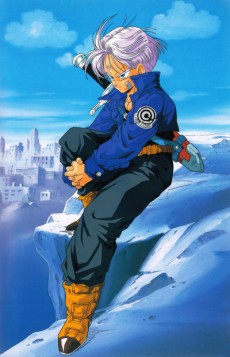
Dragon Ball Z: The History of Trunks
It has been thirteen years since the Androids began their killing rampage and Son Gohan is the only person fighting back. He takes Bulma's son Trunks as a student and even gives his own life to save Trunks's. Now Trunks must figure out a way to change this apocalyptic future.
(Source: Anime News Network)
📺Anime Details
📝Editorial Analysis
The sky isn’t just gray—it’s ash-thick, low and suffocating, pressing down on the cracked asphalt where a single rusted car frame lies half-buried. Trunks kneels beside Gohan’s body—not in shock, but in silence so heavy it vibrates. His teacher’s hand is still warm. His ki is gone. The Androids’ laughter echoes from somewhere distant, not as sound but as weight—a reminder that this world doesn’t pause for grief. That moment isn’t about power levels or final blows. It’s about the unbearable lightness of being the last student left standing after the master falls—not in glory, but in quiet, exhausted sacrifice.

What makes Dragon Ball Z: The History of Trunks ache so deeply isn’t its post-apocalyptic setting alone, but how it withholds catharsis. There’s no triumphant roar when Trunks finally powers up. No crowd cheering his arrival in the past. Just the hollow clink of Bulma’s wrench against metal as she builds a time machine in near-total silence, her eyes red-rimmed but dry—because tears won’t reboot the world. This isn’t shounen escalation; it’s shounen erosion. Every punch lands with fatigue. Every flashback to Goku’s smile feels like salt in a wound that never scabs. You don’t feel hope here—you feel urgency, raw and unvarnished, and beneath it, something quieter: the terror of carrying someone else’s unfinished life.
That emotional DNA pulses strongest in BioShock Infinite, where Booker DeWitt isn’t chasing vengeance—he’s fleeing memory, bargaining with time itself to erase consequence. The description calls him “indebted to the wrong people, with his life on the line”—just as Trunks is indebted to Gohan’s death, his entire future mortgaged to one desperate jump across years. A player review admits, “I know that some people are still bitter about the Bioshock Infinite we could have gotten.” That phrase—the one we could have gotten—mirrors Trunks’ core tragedy: he doesn’t fight for the world as it is, but for the world as it should have been, the version where Gohan lives, where Vegeta trains instead of dies, where hope isn’t rationed like oxygen. Both stories coil around the same devastating truth: time travel doesn’t fix the past—it just makes you witness its fragility again and again.
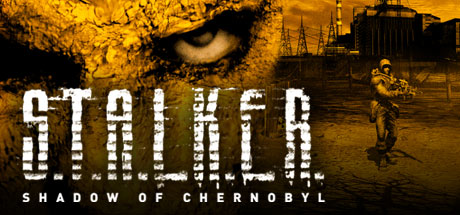
Then there’s S.T.A.L.K.E.R.: Shadow of Chernobyl, where survival isn’t heroic—it’s granular, exhausting, intimate. The description says you fear “radiation, anomalies and deadly creatures, but other S.T.A.L.K.E.R.s,” and that duality—threat from environment and from fellow survivors—is pure Trunks’ future. He doesn’t just dodge Android 17’s blasts; he scavenges batteries from dead Capsule Corp drones, patches his jacket with frayed synth-fiber, listens for footsteps in ruined subway tunnels where even allies might be feral or broken. A player review captures it: “Would have never thought that I'd enjoy a shooter so much… The story is also really good, I'm intrigued in the whole thing.” That slow-burn intrigue? It’s the same pull Trunks exerts—not through spectacle, but through the sheer, staggering effort of persisting in a world that has already ended.
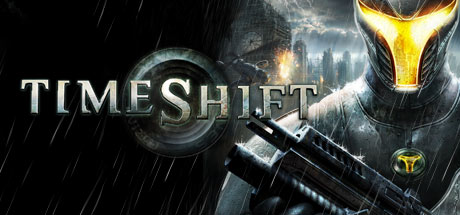
And TimeShift™, though brief, shares the anime’s obsession with causality as both weapon and wound. Its description states Dr. Krone’s “reckless act” births a “disturbing alternate reality”—not a better one, not a cleaner one, but a fractured one, where time isn’t a river to swim in but glass to walk across barefoot. Trunks doesn’t arrive in the past as a savior; he arrives as a temporal anomaly, his very presence destabilizing everything. The player review calls it “a blast, but it takes a little work to get it into a playable state.” That friction—the need to tinker, to stabilize, to force coherence from chaos—is Trunks’ daily reality: recalibrating the time machine, relearning ki control without Gohan’s voice, lying to his father about what he’s seen. Both demand patience with broken systems.
This pairing sings for the viewer who watches Trunks stare at his reflection in a shattered window—not to admire his Super Saiyan hair, but to check if his eyes still hold enough light to carry two lifetimes. For the player who reloads not to win, but to remember what was lost. Not fans of power fantasies—but lovers of weight: of legacy, of silence after violence, of the terrible, beautiful burden of being the one who remembers how it used to be.
🎮38 Games That Match the Vibe





Match Dimensions Explained
❓Frequently Asked Questions
Why does the Trunks vs. Frieza fight in History of Trunks feel so different from other DBZ games?
Because it leans hard into time-disrupted tension and tragic inevitability—not just flashy combos. That’s why TimeShift™ hits similar notes: you’re literally rewinding, freezing, and layering time mid-combat to survive impossible odds, just like Trunks scrambling to dodge Frieza’s Death Ball while memories of Future Gohan flicker in his head. It’s not about power scaling—it’s about agency collapsing under temporal weight.
Is there a Dragon Ball Z: The History of Trunks anime or game adaptation with actual time-travel mechanics?
No official DBZ game replicates *History of Trunks*’s exact time-loop tragedy—but TimeShift™ is the closest spiritual match: Dr. Krone’s reckless jump fractures reality into a dystopian alternate timeline, complete with fragmented memories and irreversible consequences—just like Trunks returning to a ruined future where even his own past actions couldn’t save Gohan. It’s not DBZ-themed, but the emotional and mechanical DNA is unmistakable.
How does S.T.A.L.K.E.R.: Shadow of Chernobyl compare to History of Trunks in terms of atmosphere and stakes?
Both trap you in a broken, irradiated world where every step feels haunted—Trunks walks through rubble-strewn wastelands littered with corpses and silent Capsule Corp ruins; STALKER drops you in the Zone, where anomalies warp space and mutated creatures stalk you like the Androids hunted Trunks. Neither offers easy hope—just survival, dread, and moments of quiet horror that linger long after the screen fades.
What’s the best game like History of Trunks if I want that grim, desperate, lone-warrior-in-a-dying-world vibe?
S.T.A.L.K.E.R.: Shadow of Chernobyl—hands down. You’re alone, low on ammo, scanning for radiation spikes and invisible anomalies while listening to distant gunfire and mutant shrieks, just like Trunks scavenging the ruins of West City with nothing but rage and a sword. No cutscenes spoon-feed the despair; it’s baked into the wind, the silence between footsteps, and the way your Geiger counter clicks faster as the world literally decays around you.