
Danganronpa: The Animation
A group of 15 elite high school students are gathered at a very special, high class high school. To graduate from this high school essentially means you'll succeed in life, but graduating is very difficult. The school is presided over by a bear called Monokuma, and he explains to them that their graduation hinges around committing a murder. The only way to graduate is to kill one of your classmates and get away with it. If the other classmates discover the identity of the killer, the killer is the only one executed. However, if they fail to catch the killer, only the killer graduates and the others are annihilated. Which of the 15 will survive the bloodbath to come?
📺Anime Details
📝Editorial Analysis
The fluorescent lights of Hope’s Peak Academy flicker—not with power failure, but malice. Monokuma’s paw slams the podium. A gunshot cracks—not in anger, but ceremony. Blood blooms on the floor like ink spilled on a test paper. And then silence: fifteen students frozen, breaths shallow, eyes locked not on the corpse, but on each other’s hands. That silence isn’t empty. It’s charged—with suspicion, with calculation, with the sickening realization that trust isn’t just broken—it’s now evidence.
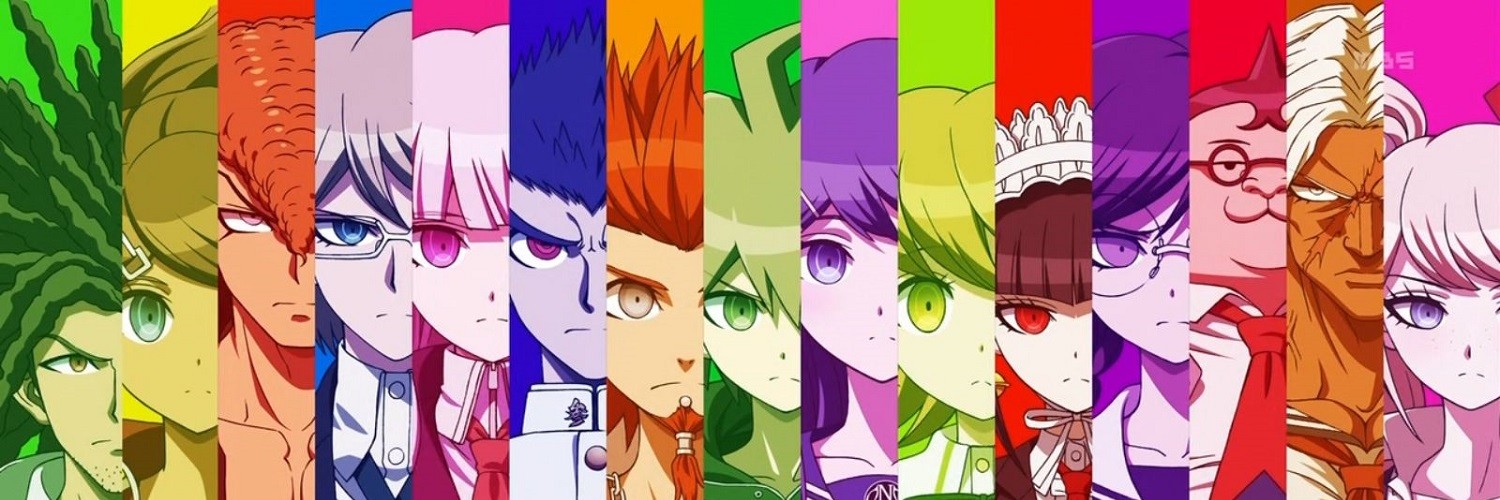
That’s the core feeling of Danganronpa: The Animation: not dread of death itself, but the erosion of self under relentless moral pressure. It’s the way a laugh curdles mid-sentence when someone glances too long at your notebook. It’s the weight of every unspoken thought you bury because saying it might get you voted off—or worse, make you the next killer. This isn’t dystopia as backdrop; it’s dystopia as interrogation room, where the walls are classmates’ faces and the only escape is either murder or being murdered. You don’t just watch survival—you taste the metallic tang of paranoia, feel the vertigo of memory manipulation warping truth into something slippery and subjective. It makes you question not just who did it—but whether you, in that room, with that pressure, would still recognize your own conscience.
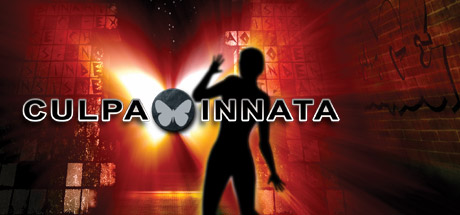
Culpa Innata shares that same suffocating architecture of control—where “the World Union” sells perfection as inevitability, just as Hope’s Peak sells hope as graduation. Both weaponize systemic certainty: one promises utopia through science, the other promises success through elite status—until both reveal their foundations are built on erasure and enforced compliance. The player review griping about “every location, run, run, run” echoes the anime’s claustrophobic pacing: no real escape, no meaningful outside world—just looped corridors, repeated interrogations, and the exhausting performance of normalcy while everything collapses inward.
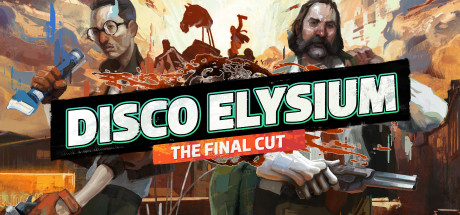
Disco Elysium - The Final Cut lives in that same fractured headspace. Its detective doesn’t just solve crimes—he negotiates with his own skill voices, each one a splintered ideology shouting over the others. Like Danganronpa’s trials, every dialogue choice is a referendum on identity: do you lean into cynicism? Idealism? Nihilism? The review quoting “Capital has the ability to subsume all critiques into itself” nails the shared despair—the sense that even resistance becomes complicit, that questioning the system only deepens your entanglement in it. Both works force you to perform coherence while your mind frays at the edges.
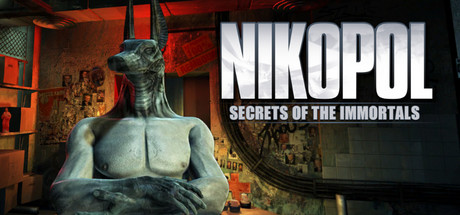
Nikopol: Secrets of the Immortals trades Hope’s Peak’s neon-lit classrooms for a cyberpunk Paris ruled by religious dogma—and yet the emotional gravity lands identically. A pyramid ship hovers above the city like Monokuma’s classroom looms over the students: an alien, unblinking authority imposing arbitrary rules on human lives. The review praises its “cyberpunk atmosphere” and “interesting story”—but what makes it resonate is how deeply it commits to moral exhaustion. Nikopol isn’t fighting villains—he’s navigating layers of deception, amnesia, and ideological coercion, much like Danganronpa’s characters who wake up stripped of memory, forced to reconstruct themselves from fragments others have planted.
None of these pairings work because they’re “dark” or “mystery-adjacent.” They work because they all trap you inside a thinking heart—a consciousness under siege, trying to hold onto ethics while the ground dissolves into paradox and spectacle. They demand you sit with discomfort—not as spectacle, but as condition.
This is for the person who watches Monokuma’s grin and feels their stomach drop—not because he’s scary, but because he’s right: the game is rigged, the logic is circular, and the most terrifying part isn’t dying—it’s realizing how easily you could justify staying alive by breaking someone else. It’s for the player who reloads a save not to win, but to see if this time, they’ll choose empathy instead of expediency—and who feels a quiet, aching relief when the game lets them grieve, not just survive.
🎮78 Games That Match the Vibe






























Match Dimensions Explained
❓Frequently Asked Questions
Why is Culpa Innata listed as similar to Danganronpa when it’s so different in tone and pacing?
Great question—it’s not about tone, but shared DNA in structure and themes: both drop you into a tightly controlled, seemingly utopian society hiding grotesque moral rot (Culpa Innata’s World Union vs. Hope’s Peak Academy), and force you to investigate layered conspiracies through dialogue-heavy scenes and environmental clues. The ‘trial’-like tension comes from unraveling lies under systemic pressure—not courtroom battles, but psychological dissection, like when you confront Dr. Kaelen in the Bioethics Lab and realize every 'perfect' statistic hides coercion.
Is there an anime adaptation of Disco Elysium like there is for Danganronpa?
No—Disco Elysium has no anime adaptation, and likely never will. Its narrative is deeply tied to internal monologue, skill-check-driven branching thoughts (like your 'Logic' or 'Empathy' skills arguing mid-conversation with Cuno in Martinaise), and slow-burn existential dread that doesn’t translate to episodic anime pacing. Fans keep hoping, but even the devs have said it'd lose its soul without the player's active, messy participation in Harry Du Bois’s unraveling mind.
How does Nikopol: Secrets of the Immortals compare to Danganronpa in terms of mystery and atmosphere?
Both lean hard into oppressive, stylized dystopias where truth is buried under dogma—but Nikopol trades Danganronpa’s claustrophobic school setting for rain-slicked Paris under a theocratic regime, and replaces class trials with haunting point-and-click investigations (like piecing together the pyramid ship’s origin via fragmented broadcasts and forbidden archives). The mood is more melancholic and surreal—think Makoto’s quiet despair meeting Nikopol’s ghostly, hand-drawn cutscenes and that eerie, echoing cathedral interrogation scene.
What’s the best Danganronpa-like game if I want that intense, emotionally raw, character-driven mystery vibe—no combat, just heavy dialogue and moral ambiguity?
Disco Elysium is your absolute best match—especially for that gut-punch emotional weight. It’s all dialogue, internal conflict, and morally grey choices: imagine Kyoko’s sharp intellect meets Harry Du Bois’s self-destructive brilliance, with skill checks like 'Authority' or 'Inland Empire' literally arguing *inside your head* during conversations with characters like Kim Kitsuragi or Evrart. Critics nailed it—the 78 Metacritic score reflects how few games make you *feel* the weight of every lie, every compromise, like Danganronpa’s darkest chapters do.