
I'm Quitting Heroing
After saving humanity from the despicable Demon King, Leo Demonhart does not earn a hero’s standing. Instead, he is regarded with suspicion and hostility by those he fought to protect. Treated as a pariah with nowhere else to turn, exiled Leo seeks a position in the army of his former nemesis! But the army is not what it once was before its defeat at Leo’s hands, so to maintain his new position, Leo must whip the forces back into fighting shape.
(Source: Sentai Filmworks)
📺Anime Details
📝Editorial Analysis
The first time Leo Demonhart stands alone in the rain outside the capital’s gates—his hero’s cloak torn, his magic flaring not in battle but in quiet, exhausted frustration as a child throws a rock and shouts “Monster!”—you feel it in your molars. Not rage. Not despair. That low, sour humiliation of being discarded by the very world you bled to save. His knuckles whiten around the hilt of a sword he no longer needs to draw. The rain doesn’t wash anything clean. It just makes the mud cling harder.
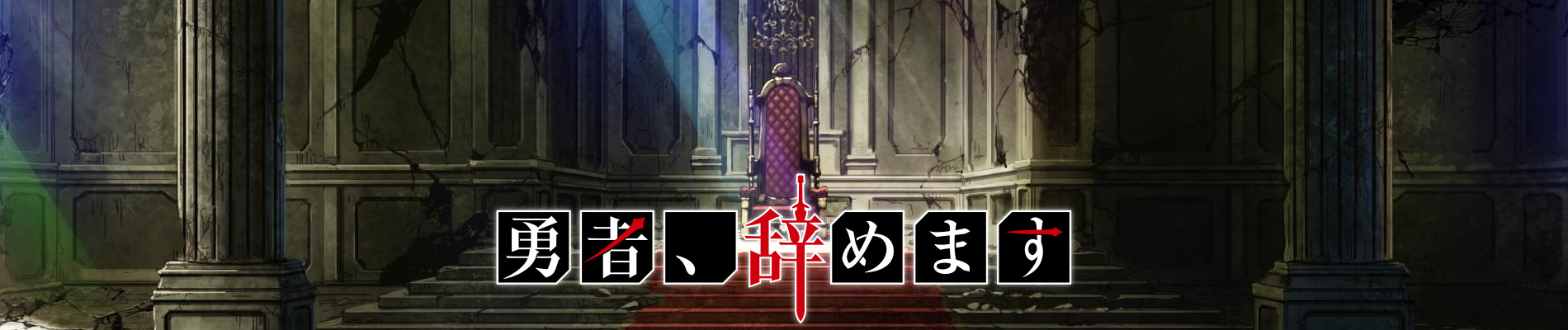
That’s the atmosphere—not post-apocalyptic as spectacle, but post-victory exhaustion. It’s the weight of surviving your own triumph. Everyone else got closure; Leo got paperwork, whispers, and a boot to the back. The ruined cities aren’t rubble from war—they’re monuments to gratitude’s expiration date. The demons aren’t lurking in shadows; they’re in the way villagers cross the street when he walks by. The magic isn’t flashy—it’s tired, precise, pragmatic, like sharpening a knife before breakfast because you know today’s training will break three more recruits’ ribs. This isn’t about saving the world again. It’s about rebuilding something smaller, quieter: trust, discipline, maybe just a single morning where no one flinches when he enters the mess hall. It makes you think about loyalty without fanfare, strength without applause, and how dignity becomes the hardest thing to defend when nobody’s watching you earn it.
S.T.A.L.K.E.R.: Shadow of Chernobyl hits that same nerve—not with heroes or villains, but with silence between breaths. Its Zone isn’t evil. It’s indifferent. Like Leo’s homeland, it rewards competence, punishes sentimentality, and remembers every mistake you make in the dark. The player review nails it: “you fear not only the radiation, anomalies and deadly creatures, but other S.T.A.L.K.E.R.s”—just as Leo fears not demons, but the suspicion in a lieutenant’s eyes when he corrects a formation. Both ask: what do you do when the system you saved has no use for you, and the only order left is the one you impose on yourself?
Rust doesn’t offer lore or catharsis—it offers emotional damage as physics. The review says it outright: “I’ve never played a game that simulates emotional damage this accurately.” Leo doesn’t rage-quit heroing. He processes it—same way Rust forces you to process betrayal, theft, hunger, the slow erosion of goodwill. You don’t “win” Rust; you endure long enough to craft better armor, then better walls, then maybe—maybe—a shared fire with someone who hasn’t stabbed you yet. Leo’s army isn’t rebuilt with speeches. It’s rebuilt through cold drills, ration logs, and the quiet satisfaction of a recruit holding a shield steady for ten seconds longer than yesterday. Both understand that resilience isn’t heroic—it’s arithmetic, repetition, the stubborn refusal to let entropy win today.
Dystopia, though its servers are dead, lives in its premise: “Playing as either Punk mercenaries, or Corporate security forces…” There’s no righteous side—just roles, contracts, consequences. Leo joins the demon army, not out of irony, but because its chain of command is clearer than the kingdom’s. Its hierarchy has logic, even if that logic is written in blood and old treaties. Like Dystopia’s tense combat in high-tech lobbies and server farms, Leo’s battles are less about good vs. evil and more about who controls the gate, who calibrates the wards, who knows where the weak mortar is in the barracks wall. The review calls it “not a bad mod”—and that’s the tone: competent, unglamorous, built on systems, not saviors.
This pairing is for the person who rewatched Ghost in the Shell: Stand Alone Complex not for the philosophy, but for the way Section 9 eats lunch in silence after a botched op. For the player who spent three hours in Rust not to win, but to finally get a working furnace—and felt proud, not triumphant. For the reader who underlined “the army is not what it once was” and thought, neither am I—and that’s okay. They don’t want redemption arcs. They want retraining. They crave stories where healing looks like calluses, not confessions; where loyalty is measured in shared rations, not oaths; where the most radical act is showing up—tired, wary, and still holding the line—for people who haven’t earned your faith yet. That’s not cynicism. That’s care, forged in the quiet aftermath.
🎮25 Games That Match the Vibe


Match Dimensions Explained
❓Frequently Asked Questions
Why does I'm Quitting Heroing feel so similar to S.T.A.L.K.E.R.: Shadow of Chernobyl?
Both lean hard into that lonely, oppressive survival vibe — like when you're scavenging the Zone's abandoned labs in S.T.A.L.K.E.R., dodging anomalies and listening to radio static, it hits the same exhausted, 'I just want to retire' energy as our hero hiding in his apartment after a botched mission. The slow-burn dread, environmental storytelling (think the X-Lab bunker vs. the Hero Association's crumbling HQ), and how every resource feels scarce? That’s why S.T.A.L.K.E.R. (82 score, Survival & Crafting + Cyberpunk & Dystopia) is the top match — players even call its map 'big and beautiful' while feeling constantly hunted, just like our burnt-out hero.
Is there an anime or manga adaptation of RAGE or Nuclear Dawn?
Nope — neither RAGE nor Nuclear Dawn has been adapted into anime or manga. RAGE (78 score) was a standalone id Software FPS with vehicle combat and wasteland exploration, but it never expanded beyond games. Same for Nuclear Dawn (74 score): it stayed a niche FPS/RTS hybrid with dead servers and zero licensed adaptations. If you're craving that gritty, post-apocalyptic storytelling *with* anime pacing, S.T.A.L.K.E.R. actually inspired unofficial fan manga and countless YouTube lore deep dives — but nothing official exists for either.
How does Rust compare to Dystopia for cyberpunk vibes?
Rust (73 score) trades neon-lit megacorps for raw, sun-bleached brutality — think rusted shipping containers and bear attacks instead of chrome implants and netrunners. Dystopia (71 score) nails the cyberpunk aesthetic with Punk mercenaries hacking corporate grids and tactical CQC in rain-slicked server farms, but its online is dead. Rust delivers dystopia through emotional exhaustion ('a full-time job where everyone...') while Dystopia leans into high-tech faction warfare — so if you want *style*, go Dystopia; if you want *survival-as-trauma*, Rust’s your game.
What’s the best game like I'm Quitting Heroing if I just want to feel emotionally drained but weirdly satisfied?
Rust (73 score) is your answer — it’s the only one where players straight-up say it 'simulates emotional damage this accurately.' That mix of paranoia, betrayal, losing your base at 3 a.m., then slowly rebuilding while whispering 'I’m not quitting... yet' mirrors the manga’s tone perfectly. Unlike RAGE’s flashy but hollow action or Nuclear Dawn’s abandoned servers, Rust’s relentless, human-driven struggle — where every campfire feels earned and every betrayal stings — lands that bittersweet, 'heroing is exhausting but I’ll keep going' vibe better than any other on the list.