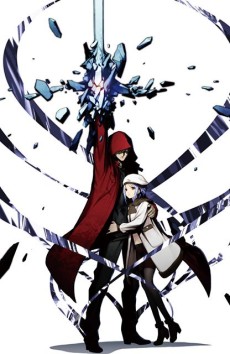
Guilty Crown: Lost Christmas
📺Anime Details
📝Editorial Analysis
Rain lashes the skeletal remains of Tokyo Tower, not in sheets but in slow, greasy drizzle—oil-slicked and cold. A boy kneels in the rubble, fingers trembling over a cracked phone screen showing a single, frozen video message: “I’m sorry I couldn’t hold on.” No music swells. No flashback cuts. Just static hiss, distant sirens swallowed by fog, and the weight of breath held too long. That silence—not emptiness, but presence—is where Guilty Crown: Lost Christmas lives.
It doesn’t scream dystopia. It settles into it—the way damp concrete smells after rain, how streetlights flicker with exhausted patience, how a child’s drawing taped to a boarded-up window feels more devastating than any explosion. This isn’t about the pandemic as plot device; it’s about the aftermath of collapse as texture: the grit under fingernails, the way hope curdles into duty, how love becomes a liability when every touch risks contagion or betrayal. You don’t watch it to escape—you watch it to recognize that hollow ache behind your ribs when the world stops making sense, and you’re left holding someone else’s last words like a relic no one taught you how to bury.
That same resonance hums through The Last of Us™ Part II Remastered, where player reviews describe an emotional narrative so raw it rewrites your relationship to vengeance and mercy—not through exposition, but through Ellie’s hands shaking as she reloads, through the silence between footsteps in abandoned malls, through the unbearable weight of a guitar left leaning against a bedframe. Like Guilty Crown: Lost Christmas, it refuses catharsis; it gives you grief with fingerprints still on it. Both force you to carry consequence—not just in choices, but in the silence after the choice, in the way light falls across a ruined staircase, in the tremor of a voice trying not to break.
Then there’s S.T.A.L.K.E.R.: Shadow of Chernobyl, where the Zone isn’t just dangerous—it’s alive with absence. The description names radiation, anomalies, creatures—but what lingers is the player review’s awe at how “the map is big and beautiful…” while you fear “other S.T.A.L.K.E.R.s”. That duality—beauty and dread coiled together—is pure Guilty Crown: Lost Christmas: the haunting elegance of snow falling on collapsed train stations, the eerie calm before a quarantine zone breach, the way danger feels less like threat and more like gravity, pulling you toward ruin even as you step carefully. Neither offers safety maps or quest markers—just atmosphere thick enough to choke on, and decisions that echo because they’re made in fog, not clarity.
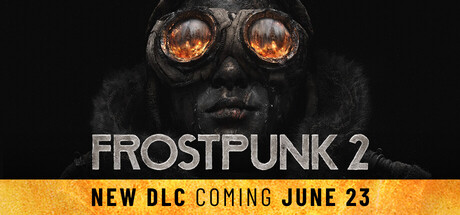
And Frostpunk 2, with its survival & crafting, emotional narrative, and cyberpunk & dystopia dimensions, lands with the same gut-punch precision. Here, leadership isn’t heroic—it’s exhausted, bureaucratic, morally frayed. You draft children not for battle, but for furnace shifts. You pass edicts knowing they’ll fracture families—and then stare at the snow piling against your office window, wondering if warmth is worth the cost of conscience. That’s the core ache of Guilty Crown: Lost Christmas: not “what power should I use?” but “what part of myself do I erase to keep breathing?” Both measure tragedy not in body counts, but in the quiet erosion of belief—in systems, in people, in the idea that tomorrow might be softer than today.
This pairing isn’t for fans of spectacle or resolution. It’s for the ones who pause mid-gameplay to reread a journal entry, who linger in empty rooms just to hear the wind whistle through broken glass, who feel guilt as a physical sensation—not because they did something wrong, but because they survived while others didn’t. It’s for people who understand that the most devastating line in any story isn’t shouted—it’s whispered, half-drowned in rain, and left hanging in the air like breath on a frozen pane.
🎮28 Games That Match the Vibe



Match Dimensions Explained
❓Frequently Asked Questions
Why is The Last of Us Part II Remastered listed as similar to Guilty Crown: Lost Christmas?
Because both hit that same gut-punch emotional rhythm—like when Mika’s final sacrifice mirrors Ellie’s raw, quiet devastation after Abby’s cabin scene. The cyberpunk-dystopia layer isn’t neon-lit Tokyo but a decaying, morally gray world where survival forces brutal choices, and the narrative leans hard into grief, betrayal, and fragile human connection—exactly what Lost Christmas does with Shu’s guilt and the Crown’s cost.
Is there a Guilty Crown: Lost Christmas game adaptation?
No—Lost Christmas was a standalone OVA film, not a game, and there’s never been an official video game adaptation. But if you loved its tone—desperate hope in a collapsing world, tragic powers with heavy consequences—Frostpunk 2 nails it: managing a steam-powered city under eternal winter while making soul-crushing decisions like sacrificing dissenters for heat, just like Shu weighing lives against the Crown’s power.
How does S.T.A.L.K.E.R.: Shadow of Chernobyl compare to Horizon Zero Dawn Remastered for Guilty Crown fans?
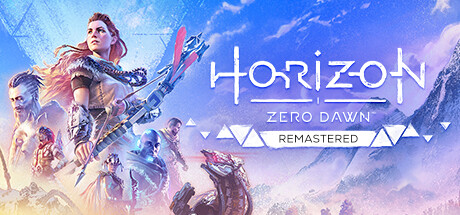
Horizon gives you awe and mythic scale—Aloy’s journey echoes Shu’s reluctant heroism, especially during the ruins-of-civilization flashbacks—but S.T.A.L.K.E.R. matches Lost Christmas’s oppressive dread more closely: that moment you’re crouched in Pripyat’s rain-slicked ruins, Geiger counter clicking, knowing something unseen just warped space behind you? That’s the same breathless tension as the Crown’s first unstable activation in the ruined cathedral.
What’s the best game like Guilty Crown: Lost Christmas if I want that melancholy, rain-soaked, emotionally heavy vibe?
Frostpunk 2—hands down. Picture the opening: snow falling on your generator’s dying glow, citizens whispering prayers as frost creeps up the walls… it’s *exactly* that same somber, reverent despair as Lost Christmas’s final train sequence. And like Shu grappling with legacy and loss, you’re constantly choosing between compassion and cold pragmatism—no easy outs, just weighty silence and consequence.