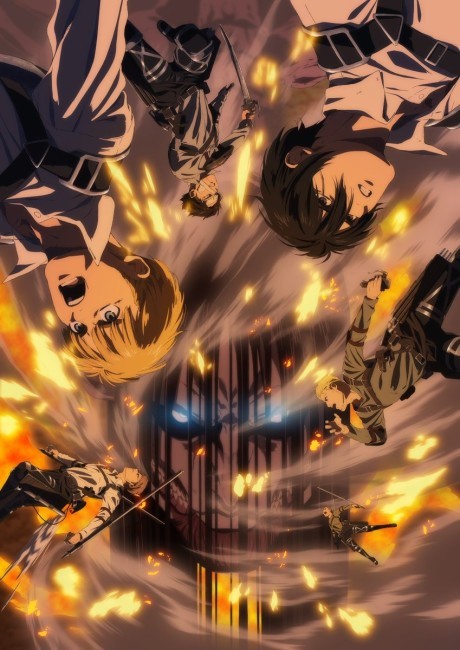
Attack on Titan Final Season THE FINAL CHAPTERS Special 1
The fate of the world hangs in the balance as Eren unleashes the ultimate power of the Titans. With a burning determination to eliminate all who threaten Eldia, he leads an unstoppable army of Colossal Titans towards Marley. Now a motley crew of his former comrades and enemies scramble to halt his deadly mission, the only question is, can they stop him?
(Source: Crunchyroll)
📺Anime Details
📝Editorial Analysis
The ground doesn’t shake—it unmakes. Not with a boom, but with a slow, sickening tear as the first Colossal Titan’s heel lifts from the earth and comes down again, not on stone or steel, but on the very idea of distance. You see it in the dust plume rising over the horizon—not smoke, not fire, but silence made visible, thick and suffocating, as if the air itself has gone numb watching Eren’s army march toward Marley. No music swells. Just wind, grit, and the low, wet groan of tectonic bone grinding against sky.
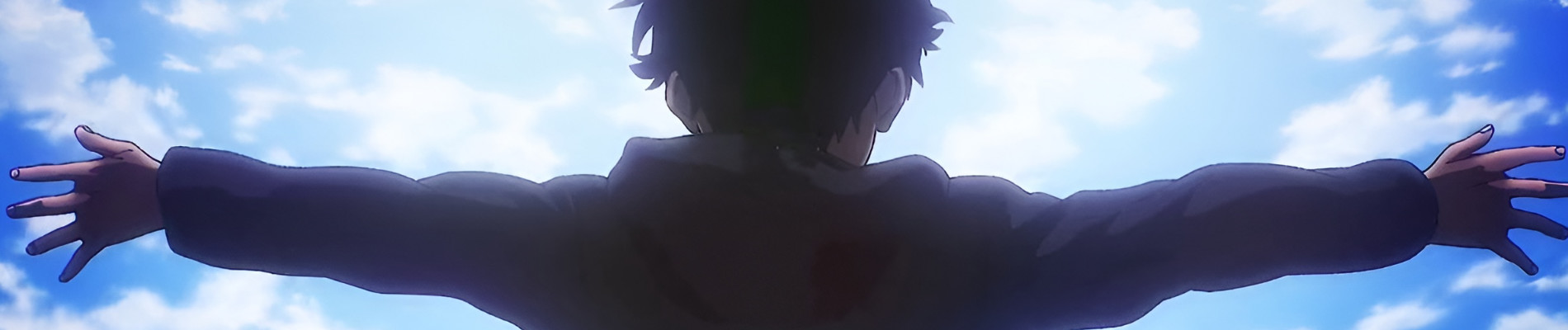
That’s the feeling Attack on Titan Final Season THE FINAL CHAPTERS Special 1 lives inside: inescapable momentum. It’s not dread like horror—it’s grief wearing armor, conviction sharpened to a blade so fine it cuts through loyalty, memory, and even time. This isn’t survival as endurance; it’s survival as witnessing. Every frame hums with the weight of irreversible choices—Eren’s fire, Mikasa’s trembling hand, Armin’s voice cracking mid-strategy—not because they’re weak, but because they’re still human in a world that’s already decided what humanity costs. The tragedy isn’t that people die. It’s that they keep speaking, keep reaching, keep remembering names, even as the ground dissolves beneath them. That’s the psychological gravity: you don’t just watch the fall—you feel your own moral center tilting, vertiginous and silent.
Which is why S.T.A.L.K.E.R.: Shadow of Chernobyl hits like a physical echo. Its Zone isn’t just dangerous—it’s indifferent, radiating anomalies and mutated life with the same eerie calm as Eren’s Titan footsteps across the plains. The description says you fear “not only radiation, anomalies and deadly creatures, but other S.T.A.L.K.E.R.s”—and that duality mirrors the anime’s core tension: the real threat isn’t the Titans’ power, but what happens when former friends become collateral in each other’s convictions. A player review calls the map “big and beautiful,” and yes—it is—but its beauty is desolate, layered with ruins and half-buried truths, just like Paradis’ forests now littered with titan bones and broken oaths. You don’t fight to win. You fight to understand what you’re walking through—and whether you’ll recognize yourself at the end.
Then there’s BioShock Infinite, where Booker DeWitt rescues Elizabeth “in a world where debt is paid in blood and memory.” The description hints at something deeper than plot—it’s about systems collapsing under their own logic, identities fracturing under ideology. Like Eren’s “freedom” warping into annihilation, Columbia’s utopia curdles into slaughter, all wrapped in ornate, suffocating grandeur. A player review mentions “the Bioshock Infinite we could have gotten”—a line that aches with the same sorrow as watching Armin stand before Eren, knowing every word he speaks might be the last bridge between them. Both works force you to hold two truths at once: the villain’s pain is real, and their solution is monstrous. There’s no catharsis—only the quiet, shattering clarity of seeing your own reflection in someone else’s ruin.
And though Chains seems worlds away—a match-3 arcade game—the player review nails it: “link adjacent bubbles… the challenge comes from increasingly difficult physics-driven logic.” That’s the anime’s emotional architecture too: simple rules (loyalty, duty, love) colliding in escalating, unpredictable ways until the board reconfigures itself around loss. It’s not about flashy combat—it’s about pattern recognition in grief: how one choice pulls three others into its orbit, how a single chain reaction unravels everything you thought was fixed.
This pairing isn’t for fans of “epic battles” or “cool powers.” It’s for the person who replays the final five minutes of an episode just to hear the silence after Mikasa’s breath hitches. For the player who lingers in S.T.A.L.K.E.R.’s abandoned labs, not for loot, but to read the scribbled notes on the wall—because someone was here, thinking, hoping, failing. For the one who closes BioShock Infinite and stares at the ceiling, not angry at the twist, but shaken by how familiar the despair feels. These aren’t stories about saving the world. They’re about holding onto a name—even as the ground tears open beneath you.
🎮70 Games That Match the Vibe











Match Dimensions Explained
❓Frequently Asked Questions
Why does S.T.A.L.K.E.R.: Shadow of Chernobyl feel like the Final Season’s ‘Shiganshina basement’ scene?
Because both trap you in oppressive, decaying spaces where danger lurks just out of sight — in S.T.A.L.K.E.R., it’s the Zone’s anomalies and silent stalker encounters in abandoned labs or flooded tunnels, mirroring that suffocating dread when Eren descends into the basement with only flickering light and whispered truths. The survival mechanics — managing radiation sickness, scavenging ammo from corpses, hearing distant mutant shrieks — replicate the same visceral tension as watching characters navigate moral collapse amid crumbling walls and buried history.
Is there a game adaptation of Attack on Titan Final Season THE FINAL CHAPTERS Special 1?
No — there’s no official game adaptation of *THE FINAL CHAPTERS Special 1*. The closest licensed games are older titles like *Attack on Titan* (2016) and *Attack on Titan 2*, neither of which cover the Final Season’s plot twists, Eren’s Rumbling arc, or the underground basement revelations. So if you’re craving that specific tone and weight, you’ll need to look to tonally aligned games like *BioShock Infinite*, where Booker and Elizabeth’s fractured timeline and morally gray choices echo the Final Season’s themes of memory, inevitability, and catastrophic consequence.
How does BioShock Infinite compare to Warhammer 40,000: Dawn of War - Anniversary Edition for fans of the Final Season’s political dread?
Both nail oppressive worldbuilding, but *BioShock Infinite* leans into intimate, character-driven psychological horror — think the Lighthouse reveal or Songbird’s betrayal — matching the Final Season’s focus on ideological corruption and personal cost. *Dawn of War*, meanwhile, delivers grand-scale dystopian warfare across ruined planets, with Ork hordes and Space Marine purges echoing the Rumbling’s scale — but it lacks the tight narrative intimacy of Eren and Mikasa’s final confrontations. If you want *voice*, *memory*, and *moral ambiguity*, go Infinite; if you want *armies clashing under a dying sky*, Dawn of War fits better.
What’s the best game like Attack on Titan Final Season for that heavy, quiet-before-the-storm mood?
Go with *Chains* — yes, really. Don’t let the match-3 label fool you: its slow, deliberate pacing, melancholic piano score, and emotionally resonant story about connection and loss (told through subtle UI shifts and fading dialogue snippets) mirrors the Final Season’s hushed intensity — like the moments before the Rumbling starts, or Mikasa’s stillness after the basement truth drops. It’s not action-packed, but its emotional narrative dimension and 'Adult & Dark Seinen' weight (per its match profile) hit that same somber, reflective nerve as the Special 1’s quieter, more devastating beats.