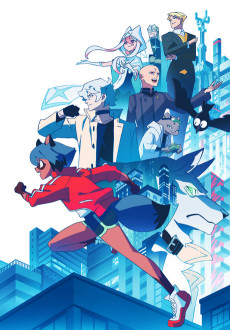
BNA
In the 21st century, the existence of animal-humans came to light after being hidden in the darkness of history. Michiru lived life as a normal human, until one day she suddenly turns into a tanuki-human. She runs away and takes refuge in a special city area called "Anima City" that was set up 10 years ago for animal-humans to be able to live as themselves. There Michiru meets Shirou, a wolf-human who hates humans. Through Shirou, Michiru starts to learn about the worries, lifestyle, and joys of the animal-humans. As Michiru and Shirou try to learn why Michiru suddenly turned into an animal-human, they unexpectedly get wrapped up in a large incident.
(Source: Anime News Network)
Note: The TV broadcast ended on June 25, 2020.
📺Anime Details
📝Editorial Analysis
The smell of rain on hot asphalt, the sticky press of a crowded Anima City bus, and Michiru’s fingers trembling as she stares at her own reflection—her tanuki ears twitching unbidden, not cute, not cartoonish, but alive, urgent, betraying her before she’s even learned how to breathe in this new skin. That moment isn’t transformation as spectacle—it’s disorientation as politics. Her body is no longer private. It’s evidence. It’s jurisdiction.

What makes BNA’s atmosphere singular isn’t its kemonomimi charm or its action set-pieces—it’s the weight of being perpetually misread. Every glance in Anima City carries subtext: suspicion disguised as curiosity, solidarity laced with exhaustion, bureaucratic kindness that smells like containment. This isn’t urban fantasy as escapism. It’s urban fantasy as interrogation—of belonging, of legitimacy, of who gets to define “normal” when normal was always a contract written in someone else’s ink. You don’t just watch Michiru navigate prejudice—you feel the low hum of surveillance in streetlights, the fatigue in Shirou’s silence when a human officer calls him “sir” without irony, the way laughter in a bar feels like resistance because it’s unpoliced, for once. It makes you think about citizenship not as a right, but as a performance—and what happens when your body refuses to rehearse.
That emotional DNA pulses strongest in Disco Elysium - The Final Cut, whose description names it outright: a Political Thriller, a Mystery & Detective story where the city itself is both crime scene and suspect. Like Michiru stumbling into Anima City’s layered contradictions—its utopian branding versus its gated districts, its slogans about coexistence versus its quiet surveillance infrastructure—Disco Elysium forces you to parse ideology in real time. Its player review nails the resonance: “Capital has the ability to subsume all critiques into itself. Even those who would critique capital end up reinforcing it instead.” That’s Shirou’s rage—not just at humans, but at systems that absorb dissent and repackage it as policy; that turn Michiru’s very existence into data for risk-assessment algorithms; that let cults flourish because they fill voids left by hollow institutions. Both BNA and Disco Elysium trap their protagonists inside architectures of power so total, so ambient, that rebellion begins not with a shout—but with noticing how the floor tilts.
There’s also the shared ache of inherited trauma made visible. In BNA, Michiru’s tanuki form isn’t chosen—it erupts, uninvited, a biological truth that overwrites her legal identity. Similarly, Disco Elysium’s detective doesn’t just solve cases—he wrestles with memories that rewrite his own origin story, with skills that whisper colonial violence or socialist longing depending on which neural pathway fires first. Neither character gets clean answers. They get context: the kind that doesn’t absolve, but clarifies why the ground keeps shifting beneath them.
This pairing isn’t for fans of “funny animal antics” or “gritty noir.” It’s for the person who watches Michiru flinch when a news ticker flashes “ANIMAL-HUMAN CRIME SURGE” and feels their own throat tighten—not because they fear tanuki, but because they recognize the grammar of dehumanization. It’s for the player who spends three hours debating whether to trust a union organizer not because of plot stakes, but because they’ve lived the calculus of choosing between betrayal and complicity. It’s for those who understand that distrust isn’t paranoia when the system’s design includes blind spots by intention, and that hope isn’t optimism—it’s the stubborn, daily act of naming the tilt. These aren’t stories about saving the world. They’re about staying legible to yourself while the map redraws itself every time you blink.
🎮4 Games That Match the Vibe
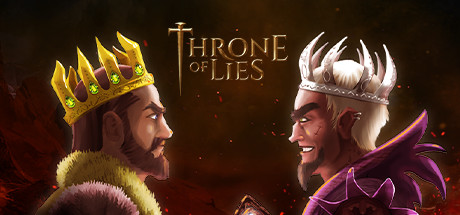
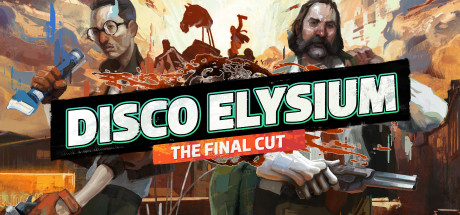
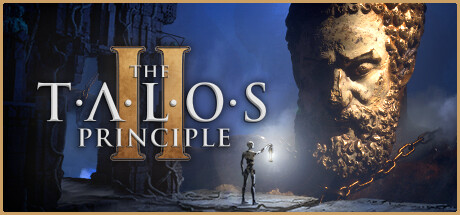
Match Dimensions Explained
❓Frequently Asked Questions
Why is Disco Elysium often compared to BNA?
Because both dive deep into identity, societal marginalization, and political tension through morally messy, character-driven stories—BNA’s Michiru grappling with her tanuki identity in a human-dominated world mirrors Disco Elysium’s Harry Du Bois wrestling with addiction, amnesia, and systemic corruption in Revachol. The ‘Political Thriller’ and ‘Mystery & Detective’ dimensions of Disco Elysium (78 score) echo BNA’s layered worldbuilding where every faction—from the Beastars-inspired beast community to the shady government agency—feels ideologically charged and emotionally consequential.
Is there an anime or manga adaptation of Disco Elysium?
No—Disco Elysium has no official anime or manga adaptation (and no plans announced). Unlike BNA, which was originally a Netflix anime series, Disco Elysium remains a purely interactive narrative experience: you *are* the detective in Revachol, rolling skill checks like Logic or Empathy to interrogate suspects or talk yourself out of jumping off a balcony. Its storytelling power comes from player agency—not animated cutscenes.
How does Disco Elysium compare to BNA in terms of tone and emotional weight?
Both hit hard—but differently: BNA balances hope, body-horror comedy, and earnest found-family warmth (think Michiru’s goofy bond with Nazuna or the chaotic charm of Anima City), while Disco Elysium leans into bleak, philosophical exhaustion—like when Harry stares at the decaying wharf and his own shattered psyche, hearing inner voices debate capitalism’s cruelty. If BNA is a vibrant, defiant shout in a crowded street, Disco Elysium is a whispered monologue in an empty, rain-slicked alley—and both are unforgettable for it.
What’s the best game like BNA if I want something equally weird but more grounded in real-world politics?
Disco Elysium — The Final Cut is your match: it swaps BNA’s anthropomorphic beasts for a crumbling post-war city where labor strikes, colonial guilt, and housing crises aren’t backdrop—they’re plot points you argue about with union organizers, fascist cops, and your own traumatized brain. Its ‘Political Thriller’ dimension (78 score) delivers that same urgent, socially-charged energy as BNA’s beast rights activism—but with zero fantasy escape, just raw, brilliant, uncomfortable truth-telling.