
Bunny Drop
Going home from his grandfather's funeral, thirty-year-old Daikichi is floored to discover that the old man had an illegitimate child with a younger lover. The rest of his family is equally shocked and embarrassed by this surprise development, and not one of them wants anything to do with the silent little girl, Rin Kaga. In a fit of anger, Daikichi decides to take her in himself. As Daikichi nurtures Rin, he started to understand the struggle while at the same time the joy of parenting.
(Source: Anime News Network)
📺Anime Details
📝Editorial Analysis
The kettle whistles—low, insistent, just loud enough to cut through the quiet hum of a Tokyo apartment at 6:47 a.m. Daikichi stands barefoot on cool linoleum, stirring miso soup while Rin sits at the table in oversized pajamas, knees drawn up, watching steam curl from the bowl he’ll soon set before her. She doesn’t speak. He doesn’t prompt. He just waits, spoon hovering, until she blinks—once—and reaches for the chopsticks he’s already laid out, perfectly aligned. That silence isn’t empty. It’s full: of unspoken trust, of time measured not in deadlines but in breaths, in spoonfuls, in the slow, deliberate unfurling of two lives learning how to hold each other without breaking.
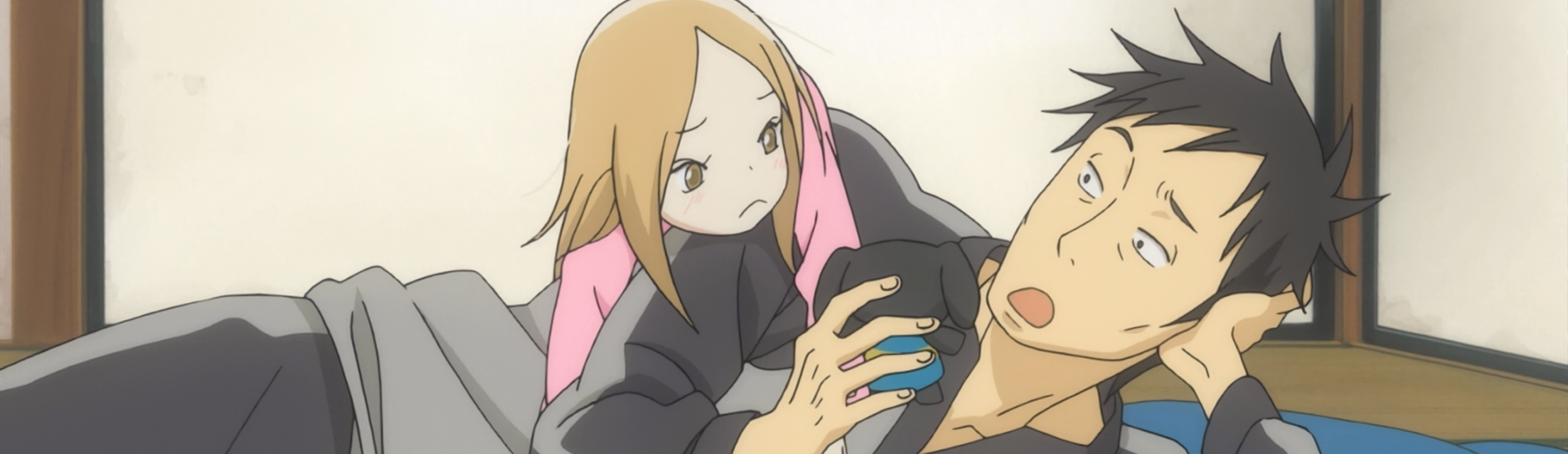
What makes Bunny Drop singular isn’t its premise—it’s the weight of its stillness. Not melancholy, not tension, but the profound, almost sacred slowness of care made visible: the way Daikichi learns to fold Rin’s tiny socks with the same focus he once reserved for quarterly reports; how her first hesitant “Okaa—” slips sideways into “Daikichi-san” and he doesn’t correct it, just nods, throat tight. This is iyashikei not as aesthetic, but as practice—the healing that arrives not in catharsis, but in repetition: packing lunch, adjusting a backpack strap, reading the same picture book three nights running. It asks you to feel the gravity of small things—the warmth of a child’s hand in yours after a fever breaks, the quiet pride in a crayon drawing taped to the fridge—not because they’re extraordinary, but because they’re enough. Because enough is where love lives when it stops performing.
That emotional DNA pulses in Chains, a game whose entire architecture mirrors Bunny Drop’s gentle insistence on presence over pace. Its description calls it “a relaxing arcade match 3 casual game” built on linking adjacent bubbles—simple, tactile, physics-driven. No timers, no penalties, just color, connection, and consequence unfolding at its own rhythm. A player review nails it: “Reminds me of connect 4 in nutshell. Basically link 3 or more of the same color and clear enough till you can proceed and hit the next stage.” That “till you can proceed”—not “before time runs out,” not “before the boss appears,” but till you’re ready—echoes Daikichi learning to braid Rin’s hair, his fingers fumbling, her patient stillness, the shared breath when the first uneven braid holds. Both ask you to inhabit the process, not race the outcome. The satisfaction isn’t in victory, but in the clean pop of alignment—just as joy in Bunny Drop lives in the quiet click of a lunchbox snapping shut, done right.
This resonance isn’t accidental. It’s in the shared reverence for intentional slowness—the kind that lets meaning accumulate in micro-moments. Where Bunny Drop finds profundity in the ritual of folding laundry together, Chains finds it in the deliberate pause before selecting the next bubble, the slight resistance of physics as colors settle. Neither demands grand gestures. Both reward attention—not as labor, but as love made kinetic. You don’t “win” parenthood. You don’t “beat” a level of Chains. You simply stay, link by link, day by day, until the pattern holds.
This pairing sings to the person who keeps a thermos of tea warm for hours just to sip it slowly, who saves voice memos of a child’s off-key singing, who replays a quiet scene in Bunny Drop not for plot, but to feel the weight of Daikichi’s hand resting, light and certain, on Rin’s shoulder as she pedals her bike for the first time—wobbly, fearless, utterly ordinary. It’s for the player who opens Chains not to climb leaderboards, but to watch bubbles drift, collide, and bloom in silent, satisfying harmony—because sometimes, the deepest healing isn’t found in fixing, but in holding space. In choosing, again and again, the soft, stubborn, luminous act of staying.
🎮2 Games That Match the Vibe


Match Dimensions Explained
❓Frequently Asked Questions
Why does Chains feel so much like Bunny Drop even though it's a match-3 game?
It’s all about that slow-life, healing vibe—Chains doesn’t rush you: you gently link bubbles while soft music plays and pastel visuals unfold, just like watching Rina care for her little brother in Bunny Drop’s quiet morning scenes. The emotional narrative pacing and emphasis on gentle progression (not speed or competition) mirror how Bunny Drop builds warmth through small, meaningful moments—not flashy action.
Is there an anime or manga adaptation of Chains?
Nope—Chains is an original game with no anime or manga tie-ins. Unlike Bunny Drop, which started as a manga and got a full anime series, Chains stands alone as a self-contained healing experience. Its storytelling is subtle and environmental, told through color shifts and serene transitions—not voice acting or character arcs.
Chains vs. Stardew Valley: which is better for unwinding after a stressful day?
If you want zero pressure and pure tactile calm, Chains wins hands-down—it’s literally about linking soft bubbles with forgiving physics, no chores, no deadlines, no inventory stress. Stardew has heart and warmth too, but Chains’ 85-scored Healing & Slow Life focus (and its ‘connect 4 in a nutshell’ simplicity) makes it the gentler reset button—like sipping tea while watching rain, not tending crops.
What if I love Bunny Drop’s found-family warmth but hate puzzle mechanics?
Then Chains might still surprise you—it’s not about ‘solving’ puzzles, but about rhythmic, meditative linking that feels more like doodling than strategizing. One player nailed it: ‘Reminds me of connect 4 in nutshell’—it’s intuitive, forgiving, and emotionally anchored in the same healing, slow-life dimensions that make Bunny Drop’s Rina-and-Koichi moments so tender.