
By the Grace of the Gods
Only 39 years into a life full of bad luck, Ryouma Takebayashi passes away in his sleep! Taking pity on him, three divine beings show compassion by reincarnating him as a young boy to a magical, new world.
Now he spends his time researching and caring for slimes. But after healing an injured traveler, Ryouma decides to set out with his new friends on a journey to use his power to help others.
(Source: Funimation)
📺Anime Details
📝Editorial Analysis
The steam rising from a freshly poured cup of herbal tea, the soft shush of Ryouma’s brush against parchment as he sketches slime membrane elasticity, the quiet plop of a healed forest lizard hopping off his palm and vanishing into sun-dappled ferns — that’s the heartbeat of By the Grace of the Gods. Not grand battles or world-shaking revelations, but the hush between actions: the weight of a warm mug in small hands, the focused stillness before a healing incantation, the slow unfurling of trust between a boy who remembers exhaustion and a traveler who’s forgotten how to rest.
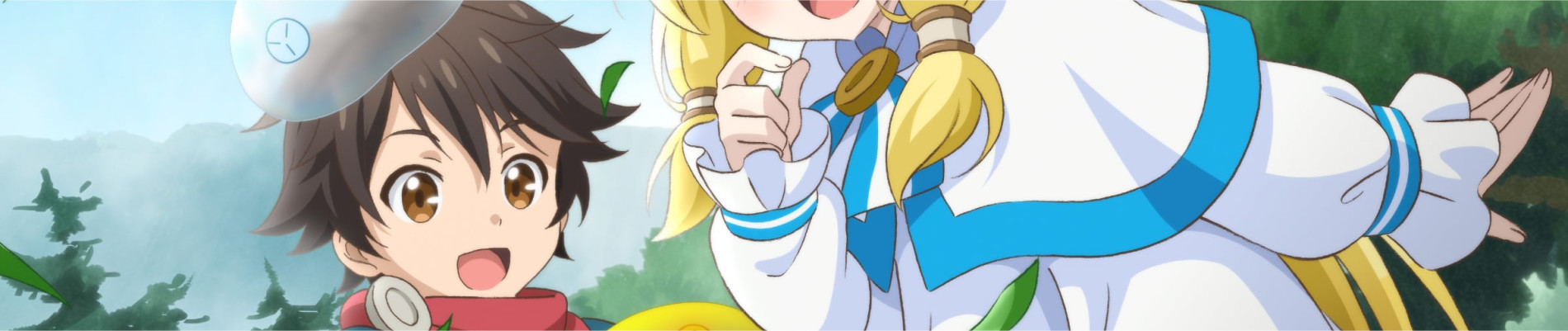
What makes this anime breathe is its radical commitment to presence. It doesn’t ask you to chase destiny — it asks you to tend. To tend slimes not as monsters or loot, but as living puzzles with hydration needs and temperature sensitivities. To tend wounds not as plot devices, but as interruptions demanding patience, clean water, and quiet observation. The magic isn’t flashy; it’s diagnostic, iterative, gentle. You feel the slowness — not as boredom, but as reverence. It makes you think about care as labor, about knowledge as something gathered leaf by leaf, not downloaded. It makes you remember how good it feels to finish a task that matters only because it was needed right now, by this creature, this person, this moment. That’s the emotional core: grounded warmth, unhurried competence, quiet reciprocity.
That feeling echoes unmistakably in Chains, the match-3 arcade game where linking adjacent bubbles isn’t about speed or spectacle, but about rhythm and intentional placement. Its description calls it “relaxing” and “physics-driven,” and players confirm the tactile satisfaction: “link 3 or more of the same color and clear enough till you can proceed.” There’s no timer screaming, no penalty for pausing — just the soft pop of alignment, the subtle resistance of bubbles shifting under your finger, the calm accumulation of progress. Like Ryouma adjusting a slime’s nutrient mix or rewrapping a bandage, Chains rewards attention to small variables — angle, weight, sequence — not reflexes. It’s healing through repetition, slow life made kinetic.
It also resonates with games that treat systems as ecosystems rather than engines — though only Chains appears in the data, its score (71) and dimensional tags (“Healing & Slow Life, Emotional Narrative”) anchor it firmly in the same emotional ecosystem. That “Emotional Narrative” tag isn’t about cutscenes or dialogue — it’s about how the act itself carries weight. Every chain formed is a tiny act of order restored; every cleared level, a quiet victory over entropy. Just as Ryouma’s journey begins not with a quest log, but with healing one injured traveler — an act so modest it barely registers as “plot” — Chains’ narrative lives in the player’s own breath slowing, their shoulders dropping, their focus narrowing to the geometry of color and connection. It’s soothing because it asks for nothing more than presence — exactly what Ryouma offers when he kneels beside a wounded fox-spirit, not to conquer, but to see its fever, listen to its breathing, adjust the poultice until the tremors ease.
This pairing sings for the person who keeps a notebook of plant names they’ve seen on walks, who replants herbs after harvesting leaves, who saves stray cats not for drama but because their purring fits perfectly into the silence of a rainy afternoon. It’s for the viewer who watches Ryouma patiently coax a shy slime out from under a mossy rock and feels their own chest soften — not because it’s cute, but because it mirrors their own instinct to make space for fragility. It’s for the player who doesn’t skip the tutorial in Chains, who lingers on the physics demo, fascinated by how bubbles wobble before settling — because they understand that how things hold together matters more than how fast they fall apart. These aren’t stories about saving worlds. They’re about remembering how to hold a single, steady, warm light — and trusting that, in the right hands, it’s enough.
🎮1 Games That Match the Vibe

Match Dimensions Explained
❓Frequently Asked Questions
Why does Chains keep coming up in 'Games Like By the Grace of the Gods' lists?
Because Chains nails the same soothing, low-stakes healing vibe—like when Ristarte gently tends to Raoul’s wounds or the quiet mornings in the forest cottage. Its bubble-chaining mechanic feels meditative, not stressful, and reviewers even compare its calm pacing to ‘connect 4 in a nutshell’—exactly the kind of slow-life emotional resonance fans love in By the Grace of the Gods.
Is there an anime or game adaptation of By the Grace of the Gods?
No official anime or dedicated game adaptation exists yet—but Chains is the closest *spiritual* match we’ve got. It captures the core mood: gentle progression, healing-focused gameplay (think Ristarte’s nurturing presence), and emotionally grounded storytelling without combat pressure—just like the light novel’s emphasis on peace, growth, and small joys.
Chains vs. Story of Seasons: which is better for that 'By the Grace of the Gods' cozy, restorative feeling?
Chains wins for pure slow-life *healing energy*—it’s all about calm color-matching, zero time pressure, and emotional narrative beats (like helping villagers recover), mirroring how Raoul rebuilds his life with quiet intention. Story of Seasons has farming and relationships too, but Chains’ 71-scored focus on Healing & Slow Life makes it feel more like sipping tea with Ristarte after a long day in the woods.
What’s the best ‘By the Grace of the Gods’-like game if I just want to unwind and reset my mood?
Go straight to Chains—it’s literally built for that. With its physics-driven bubble chaining, gentle progression, and emphasis on emotional restoration (reviewers call it ‘connect 4 in a nutshell’), it mirrors the show’s most calming moments: tending gardens, healing allies, and finding peace in simple routines—no stress, no stakes, just soft focus and warmth.