
Cautious Hero: The Hero Is Overpowered but Overly Cautious
The goddess Rista summons a hero to help her hard mode video game-like world. The hero, Seiya, is exceptional in every way, but he is incredibly cautious to the point of buying three sets of armor (one to wear, a spare, and a spare for the spare) and going full power against weak slimes (just in case).
📺Anime Details
📝Editorial Analysis
The clank of triple-layered plate armor shifting as Seiya takes a single step forward—then pauses, recalculates wind resistance, checks his spare-spare’s buckle tension, and mutters a prayer to Rista before stepping onto the mossy stone bridge. Not because the bridge is crumbling. Not because there’s a monster nearby. It’s just moss. And moss, in Seiya’s calculus, could be camouflage for a mimic, a slip hazard masking a pressure plate, or—worst case—a sentient fungal intelligence that prefers overprepared heroes as hors d’oeuvres.
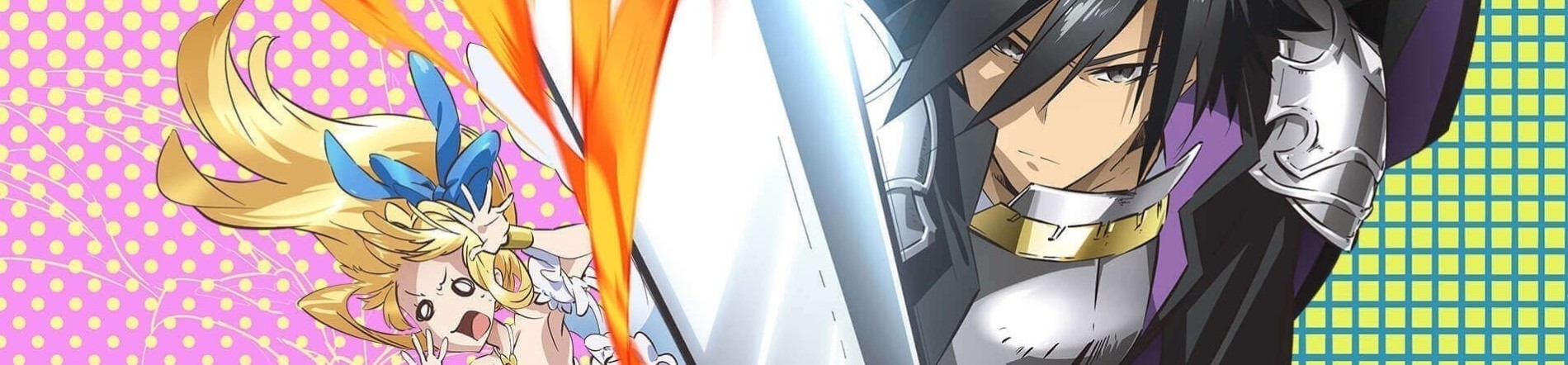
That’s the heartbeat of Cautious Hero: not danger, but the weight of anticipation. It’s the emotional hum of living inside a save file you’ve loaded 47 times—not because you died, but because you might have. The anime doesn’t trade in dread like gothic horror or adrenaline like shonen spectacle. It trades in hyper-vigilance as devotion: every redundant shield, every pre-emptive mana barrier, every “just one more reconnaissance loop” isn’t paranoia—it’s love letter written in contingency plans. You feel it in your shoulders. You think about your own grocery list and wonder if you should’ve bought backup batteries for the backup batteries.
That feeling—the quiet, grinding, almost sacred exhaustion of preparing for a world that might betray you—is why The Witcher 3: Wild Hunt resonates so deeply. Its description calls it a “war-torn, monster-infested continent you can explore at will”—but what sticks isn’t the scale, it’s Geralt’s posture: hand never far from steel, eyes scanning every flicker of torchlight, knowing Ciri’s fate hinges on choices made in rain-slicked alleyways where no quest marker glows. The player review says the DLC arrived 11 years later—a testament to how long the game lingers in the mind, not as escapism, but as emotional infrastructure. Like Seiya’s armor sets, Geralt’s journal entries, alchemy notes, and witcher senses are all layers of readiness against a narrative that refuses to guarantee safety—even when you’re overpowered, even when you’ve won.
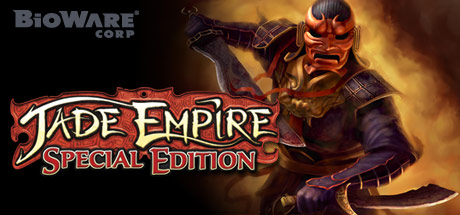
Then there’s Jade Empire™: Special Edition, where you “step into the role of an aspiring martial-arts master and follow the path of the open palm or the closed fist.” That binary isn’t just gameplay—it’s philosophy-as-preparation. Every stance, every chi flow, every decision to show mercy or strike first echoes Seiya’s ritualized caution: both are systems built to contain consequence. The player review mentions needing Reddit instructions to launch the game—a real-world echo of Seiya’s absurd prep work. You don’t boot Jade Empire expecting smooth sailing; you boot it knowing you’ll need to patch, adjust, relearn, and trust nothing—not the UI, not the lore, not even your own muscle memory. That shared friction—the respect for process over outcome—is where their souls sync.
And The Witcher 2: Assassins of Kings Enhanced Edition, with its description of “mighty forces clashing behind the scenes” and armies “not enough to stop a b…” (the sentence cuts off, just like Seiya’s breath before he scans a corridor twice)—that incompleteness is the point. The game feels designed, not just built—every branching path weighted, every ally’s loyalty conditional, every victory laced with fallout. The player review calls it “more thoughtfully designed than the next entry”—a quiet nod to craftsmanship that refuses to assume competence. Like Seiya refusing to fight a slime at 98% HP, The Witcher 2 refuses to let you win cleanly. It makes you earn the right to relax—and then denies it anyway.
This pairing isn’t for the thrill-seeker or the lore-binger. It’s for the person who saves before opening a chest, who reads patch notes like scripture, who keeps a notebook beside their controller not for spoilers—but for contingencies. It’s for the viewer who watches Seiya polish his third set of greaves and thinks, Yes. I, too, have rehearsed my apology to a toaster. They’re the ones who don’t just play games—they curate survival. Who don’t watch anime for catharsis, but for recognition: that fierce, tender, exhausting love of being ready, even when the world hasn’t asked you to be.
🎮6 Games That Match the Vibe

Match Dimensions Explained
❓Frequently Asked Questions
Why does The Witcher 3 keep coming up in 'Games Like Cautious Hero' lists when Geralt isn’t overly cautious?
Great question — it’s not about Geralt tiptoeing around monsters like Seiya, but how the game mirrors Cautious Hero’s *narrative tension*: Geralt constantly weighs risks before acting (like delaying the fight with Imlerith to gather intel first), and the emotional weight of every choice echoes Seiya’s trauma-driven caution. Plus, that 60-score Dark Fantasy + Emotional Narrative combo hits the same vibe as Seiya over-prepping for a goblin raid — just with more witcher signs and fewer 'I need three contingency plans' monologues.
Is there an anime or manga adaptation of Jade Empire that captures its martial-arts-overcaution energy?
Nope — Jade Empire has never been adapted into anime or manga, despite its rich Mythology & Folklore worldbuilding and that open-palm/closed-fist moral tension that feels *so* Seiya-adjacent (imagine your protagonist bowing *twice* before drawing their weapon). Fans have begged for it since the 2005 release — hence why it shows up on 'Cautious Hero-like' lists: it’s got the same deliberate pacing, reverence for preparation, and emotional stakes, even if it’s stuck in its glorious, unadapted Special Edition form.
How does The Witcher 2 compare to The Witcher 3 for someone who loves Seiya’s tactical overthinking?
If you love Seiya analyzing every exit route before entering a dungeon, go straight to The Witcher 2 — its branching paths and consequence-heavy choices (like sparing or executing Aryan La Valette) demand *real* pre-battle deliberation, and players consistently praise it as 'more thoughtfully designed' than the sequel. The Witcher 3 gives you freedom; Witcher 2 forces you to *earn* every advantage — much like Seiya triple-checking his anti-dragon wards before stepping into the boss room.
What’s the best 'Cautious Hero'-like game if I want that nervous-excitement vibe before a big confrontation?
The Witcher: Enhanced Edition Director's Cut — seriously. That OG moment where Geralt faces the Leshen in Chapter I? You’re *supposed* to scout, craft oils, and prep signs *first*, and the game’s clunky-but-intentional combat makes every misstep feel consequential (just ask anyone who forgot Igni against a fire-resistant foe). It’s got that same 'heart-in-throat' tension as Seiya whispering 'Okay… okay… okay…' before peeking behind the curtain — plus the player review’s nod to team Yenn vs. team Tress proves how deeply those early choices stick with you.