
Demon Lord, Retry! R
📺Anime Details
📝Editorial Analysis
The smell of ozone and burnt gunpowder hangs thick in the air—not from a battlefield, but from a quiet forest clearing where he reloads with deliberate calm, smoke curling from the barrel of a custom-forged revolver. His ears twitch—kemonomimi, sharp and alert—as a stray wind carries the scent of approaching magic-users. He doesn’t flinch. Doesn’t shout. Just exhales, checks his ammo count aloud like it’s inventory in a spreadsheet, and pivots to fire three precise shots that shatter incoming ice shards before they coalesce into spears. No fanfare. No monologue. Just economics of motion, magic, and muzzle velocity—all operating at the same frequency.
That’s the heartbeat of Demon Lord, Retry! R: not chaos, but calculated intensity. It’s the feeling of watching someone treat world-ending stakes like a quarterly review—where swordplay flows into supply-chain logistics, where a demon lord negotiates trade tariffs mid-combat, and where “anti-hero” isn’t about moral ambiguity but about operational efficiency. You don’t feel awe—you feel recognition. Like seeing your own spreadsheet-driven anxiety mirrored in a guy who just disarmed a god-tier mage by exploiting inflation rates in enchanted ore markets. It’s fantasy with spreadsheets open in the background, action with receipts attached, comedy that lands because the math checks out. There’s no escapism here—it’s recontextualization: taking the weight of power, responsibility, and consequence, and grounding it in systems you’ve actually wrestled with—budgets, loadouts, cooldown timers, resource sinks.
Which is why STAR WARS™ Jedi Knight - Jedi Academy™ resonates so deeply—not because of lightsabers or lore, but because of its tactical warfare dimension and the visceral, player-driven shaping of capability. The description says you “forge your weapon and follow the path of the Jedi”—but the real magic is in how that forging matters. You’re not handed a preset build; you choose stances, force powers, saber forms, and combos as tools for specific problems, just like the protagonist in Demon Lord, Retry! R chooses between a silenced pistol for stealth negotiation or a rune-etched katana for public deterrence. A player review notes how the Padawan is “thrust into a Galaxy-spanning adventure to hel…”—that ellipsis feels intentional, like the story pauses mid-sentence because you decide how the next clause unfolds. That’s the same energy: agency as architecture, not spectacle.
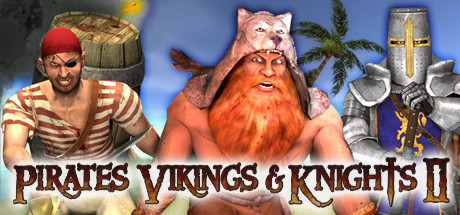
Then there’s Pirates Vikings & Knights II, where the description frames it as “the ultimate three-way war for honor, glory, and gold,” but the player review cuts deeper: “u gotta join the discord and connect to actual servers to get a good round.” That line isn’t about bugs—it’s about infrastructure. About knowing the system isn’t self-contained; it’s alive in the margins, sustained by community coordination, balance patches, server stability—economics of play. Just like Demon Lord, Retry! R, where magic isn’t just flashy—it’s licensed, taxed, regulated, and subject to inter-kingdom trade agreements. Both treat conflict not as raw emotion, but as a managed ecosystem, where victory depends as much on who controls the docks (or the mana conduits) as on who swings hardest.
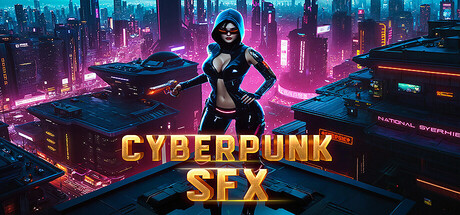
And Cyberpunk SFX, though sparse in detail, shares the action spectacle + tactical warfare duality—where style and strategy aren’t opposed, but synchronized. Its name alone suggests sound design as narrative: the crack of a railgun isn’t just noise—it’s feedback, timing, threat assessment. Same as when the Demon Lord times a spell interruption to the millisecond of an enemy’s chant cadence, or swaps ammo types mid-duel based on observed resistance patterns. It’s not “cool for cool’s sake.” It’s auditory calculus—where every effect serves a readout.
This pairing isn’t for fans of power fantasies or wish-fulfillment arcs. It’s for the player who paused Jedi Academy to tweak their saber’s damage-per-second against Force-resistant armor. For the viewer who smiled when the Demon Lord cited export quotas while parrying lightning. For the person who joined the PVK II Discord not for memes—but to cross-check patch notes against server latency logs. They love systems that breathe, worlds that account, and stories where the most heroic act isn’t slaying the dragon—but auditing its hoard, reclassifying its loot, and filing the VAT return. They don’t want to escape reality. They want to refine it—sword in one hand, spreadsheet in the other, and a revolver loaded with precision.
🎮3 Games That Match the Vibe

Match Dimensions Explained
❓Frequently Asked Questions
Why does Demon Lord, Retry! R feel so similar to Jedi Academy in its boss fights?
Because both lean hard into Action Spectacle with cinematic, high-stakes duels—like when you face off against Darth Maul in Jedi Academy’s final duel (lightsaber clash + Force push combos), it mirrors Demon Lord’s arena-style showdowns where timing and flashy abilities matter more than pure stats. The tactical positioning and environmental awareness in Jedi Academy’s Ruins of Korriban map also echo how Demon Lord stages its key story battles.
Is there an anime or manga adaptation of Demon Lord, Retry! R like there is for Jedi Academy?
No—unlike STAR WARS™ Jedi Knight: Jedi Academy, which spawned official animated series, novels, and comics (including the ‘Dark Forces’ saga), Demon Lord, Retry! R remains strictly a web novel/light novel series with no anime, manga, or live-action adaptations announced or in production.
How does Pirates Vikings & Knights II compare to Demon Lord, Retry! R in terms of party-based combat?
It doesn’t—PVK II is pure class-based PvP chaos (think Viking berserker vs. Pirate cannonball spam vs. Knight shield-wall tactics), while Demon Lord, Retry! R focuses on single-character progression and story-driven encounters. That said, PVK II’s over-the-top Action Spectacle—like getting yeeted off a ship by a Viking’s axe throw—captures the same joyful absurdity as Demon Lord’s ‘I’m the villain but also kinda lovable’ tone.
What’s the best game like Demon Lord, Retry! R if I want that mix of tactical magic duels and self-aware humor?
Cyberpunk SFX nails that vibe—it layers Tactical Warfare (think cover-based targeting + skill-tree synergy) with tongue-in-cheek cybernetic one-liners and absurd setpieces, like hacking a drone swarm mid-battle while your AI sidekick roasts your fashion choices. It’s got the same blend of strategy and smirk that makes Demon Lord feel fresh instead of grimdark.