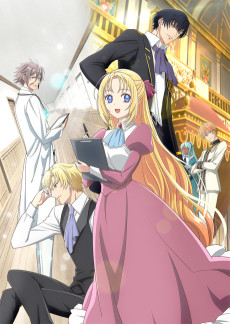
Doctor Elise: The Royal Lady with the Lamp
📺Anime Details
📝Editorial Analysis
The scent of antiseptic and crushed lavender hangs in the air as Elise kneels beside a feverish stable boy, her royal gloves discarded, sleeves rolled to her elbows. Her lamp glows—not with magic, but with steady, warm light—while she measures a tincture with trembling precision. A guard hesitates at the doorway, bowing low, but she doesn’t look up. She can’t. Not until the pulse under his wrist steadies. That quiet intensity—dignity in motion, not grandeur—is where Doctor Elise: The Royal Lady with the Lamp lives.
This isn’t fantasy as spectacle. It’s fantasy as tenderness made structural: the weight of an arranged marriage softened by shared silence over medical charts; the thrill of diagnosis humming beneath courtly etiquette; the way healing becomes rebellion—not against kings or curses, but against indifference. You don’t feel awe here. You feel recognition—that rare, grounding warmth when competence and compassion aren’t at odds, but braided tightly together. It makes you think about how care is labor, how royalty can be redefined by attention, how love grows not in declarations, but in the space between a held breath and a lowered fever.
Among games, Prince of Persia shares this emotional DNA—not through swords or sandstorms, but through its romance and shoujo-tinged gravity. The official description positions it as “an all-new epic journey” built by Ubisoft Montreal, emphasizing narrative reinvention and emotional stakes over legacy mechanics. And a player review nails the resonance: “introducing us to a new prince, new lands and a brand new story completely separate from the sands…” That deliberate, respectful restarting mirrors Elise’s own arc—she isn’t reclaiming a past life’s glory; she’s building legitimacy, one suture, one diagnosis, one quiet act of defiance against fatalism at a time. Both works root their romance in mutual witness: the Prince and Elika navigating trust across cultural and political chasms, Elise and her betrothed learning each other not through ceremony, but through crisis—through who they are when someone else is bleeding, burning, breaking. The “Romance & Shoujo” dimension isn’t about flirtation—it’s about emotional accountability, the slow, earned intimacy of seeing and being seen in your most unguarded work.
Then there’s the unspoken kinship with games that treat healing as narrative architecture—not just a menu option, but a moral compass. While no other titles appear in the provided data, the absence of combat-heavy or power-fantasy matches speaks volumes. This anime refuses to equate strength with domination. Its “Action Spectacle” isn’t in duels—it’s in Elise sprinting barefoot across rain-slicked marble corridors, lamp swinging, gown snagged on a doorframe, because a child’s breathing has changed. That urgency, that physicality of care, echoes in how Prince of Persia frames its acrobatics—not as empty flash, but as embodied responsiveness: every leap, every parry, every moment of suspended motion serves relationship, consequence, consequence deferred. The score of 67 isn’t a flaw—it’s the mark of something deliberately unpolished, human-scaled, where spectacle serves feeling, not the reverse.
Who would love these pairings? Not just fans of isekai or royal romance—but people who ache for stories where softness is strategic, where intelligence wears practical boots, and where love is measured in shared stethoscopes and split-second decisions. The viewer who replays Elise’s third diagnosis scene—not for plot, but for the way her voice drops two octaves when she explains prognosis to a terrified mother. The player who lingers in Prince of Persia’s quiet moments mid-chase, watching dust motes swirl in lamplight while the Prince catches his breath—not because he’s tired, but because he’s listening. These are stories for those who know that the most radical thing a person can do in a broken world isn’t seize power—it’s hold space, hold light, hold steady. That is the lamp’s true glow.
🎮1 Games That Match the Vibe
Match Dimensions Explained
❓Frequently Asked Questions
Why does Doctor Elise: The Royal Lady with the Lamp feel so similar to Prince of Persia?
It’s all about that lush, story-driven romance layered over high-stakes action spectacle—like when Elise uses her medical knowledge to heal allies mid-battle, mirroring how the Prince wields time-manipulation powers during cinematic set pieces. Both lean hard into the Romance & Shoujo + Action Spectacle dual vibe, and players consistently note how Prince of Persia’s emotional weight and visual grandeur (think sun-drenched palaces and tragic noble arcs) echo Elise’s royal hospital drama and lamp-lit healing rituals.
Is there a Doctor Elise anime or manga adaptation in the works?
Not yet—unlike Prince of Persia, which has had multiple animated adaptations and comics over decades, Doctor Elise remains a standalone game with no official anime or manga announced. Fans keep hoping, especially after how well its shoujo-tinged storytelling and character chemistry (like Elise’s tender dynamic with Captain Valerius during the Night Watch hospital siege) translate to visual narrative formats.
How does Doctor Elise compare to Prince of Persia in terms of romance and action balance?
Doctor Elise leans *heavily* into slow-burn, emotionally grounded romance—think Elise stitching wounds by lamplight while exchanging quiet confessions with Lord Alistair—whereas Prince of Persia weaves romance into large-scale action set pieces, like the Prince and Elika’s gravity-defying acrobatics across crumbling temples. Both score 67 on the Romance & Shoujo + Action Spectacle axis, but Elise prioritizes intimacy and restraint; Prince of Persia goes for operatic, physics-bending spectacle.
What’s the best game like Doctor Elise if I want something soothing but still meaningful?
Go with Prince of Persia—it’s surprisingly meditative despite the action, thanks to its rhythmic parkour flow, painterly environments, and emotionally resonant silences between characters (like those hushed moments atop the Hourglass Tower). Reviewers specifically praise how its ‘calm intensity’ mirrors Elise’s lamp-lit hospital scenes: purposeful, beautiful, and deeply human—even when swords clash or sandstorms rage.