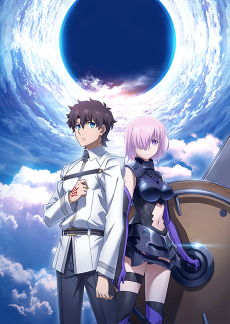
Fate/Grand Order: First Order
The story is set in the year 2015, during the final era over which magic still held sway. The humanity survival and security organization Chaldea was established to observe the world that can only be seen by magic and the world that can only be measured by science — as well as to prevent the final extinction of mankind.
Thanks to the efforts of many researchers, the path of human history has been ensured for 100 years into the future. However, without warning, the realm of the future that was under constant observation by Chaldea vanished. The extinction of humanity in 2017 was observed — no, confirmed.
The apparent cause of the extinction was in the Japanese city of Fuyuki in 2004. In that city, there was an "unobservable realm" which had never existed until now.
Chaldea issued the Grand Order for a "Holy Grail Expedition," to investigate, uncover, and possibly destroy the singularity that apparently will cause the extinction of humanity.
(Source: Anime News Network)
📺Anime Details
📝Editorial Analysis
The air in Chaldea’s command center doesn’t just hum—it cracks, thin and brittle, like ice over deep water. You feel it in your molars: the static weight of 2015, the last year magic still breathes before it fades entirely. Not with fanfare, not with fire—but with a quiet, administrative dread as researchers monitor timelines that shouldn’t exist, as the protagonist stands silent beside a bow he hasn’t yet drawn, staring at data streams that spell extinction. That silence—not the explosions, not the archery or swordplay—is the first heartbeat of Fate/Grand Order: First Order.
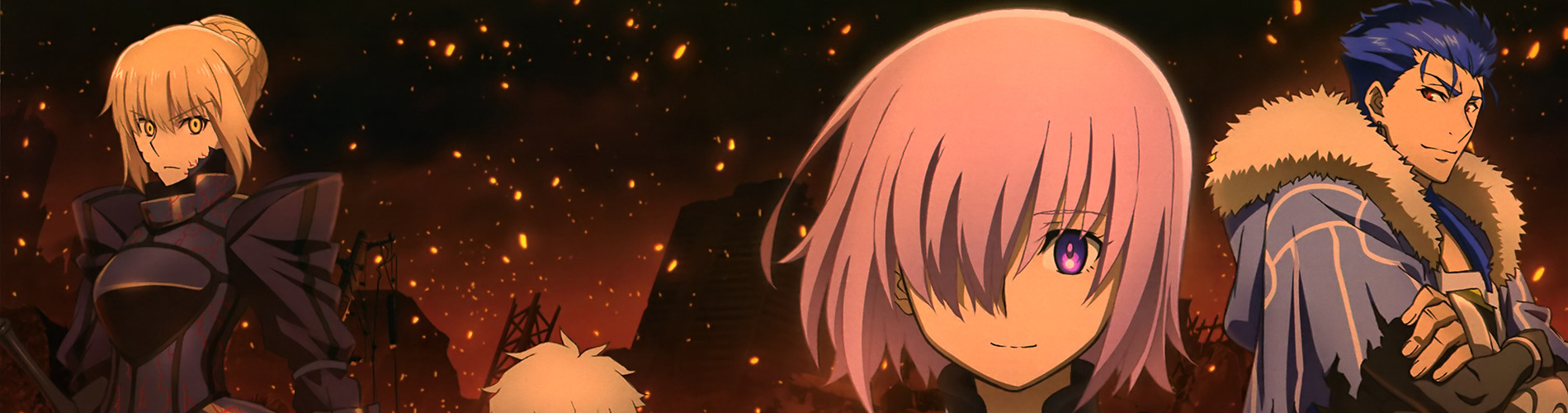
What lingers isn’t spectacle, but pressure. The pressure of stewardship without precedent: an organization built to observe both the measurable and the magical, knowing full well that one will outlive the other—and that humanity’s survival hinges on reading the grammar of both worlds at once. It’s urban fantasy stripped of glamour: fluorescent lights over arcane schematics, coffee-stained reports next to summoning diagrams. There’s no triumphalism here—only the weight of responsibility shouldered by people who’ve never held a sword, guided by a protagonist whose strength is endurance, not flair. You don’t feel heroic watching it. You feel accountable. Like you, too, might be asked to log a timeline anomaly at 3 a.m., heart pounding not from adrenaline, but from the sheer, unblinking scale of what’s at stake.
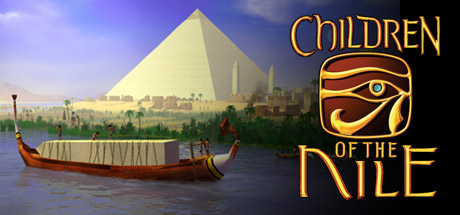
That same gravity lives in Children of the Nile: Enhanced Edition, where you don’t conquer—you sustain. As Pharaoh, you guide your people across millennia, not through battles won, but through granaries filled, temples maintained, labor allocated with surgical care. Its description calls it “a unique gem… unparalleled in both grandeur and attention to detail”—and that precision mirrors Chaldea’s own meticulous, almost bureaucratic vigilance. The player review says: “I can’t describe in words how many hours I have lost to this game and how painful it is for me to play right now…” That ache? It’s the same one you get watching Chaldea’s staff cross-reference mythological distortions against quantum decay models—not because it’s fun, but because not doing it means erasure. Both ask you to love something fragile—civilization, history, magic—not as a backdrop, but as a trembling, breathing thing you hold in your hands.
And though no other games are listed in the data, the resonance is precise: Children of the Nile: Enhanced Edition shares Fate/Grand Order: First Order’s emotional DNA not through shared mechanics or aesthetics, but through shared ethos. Both treat mythology not as costume, but as infrastructure—gods as systemic variables, rituals as calibrated interventions. Both embed war not in clash, but in consequence: tactical warfare here isn’t about flanking armies—it’s about allocating scarce resources across collapsing timelines, just as the game’s “Tactical Warfare” tag reflects not combat choreography, but the slow, grinding calculus of survival. The “Mythology & Folklore” dimension isn’t flavor text; it’s the operating system. When Chaldea traces a distortion back to a misaligned Heracles legend, it’s no different than adjusting irrigation to appease Hapi—the logic is identical: myth is material cause.
This pairing isn’t for fans of power fantasies or lore dumps. It’s for the person who replays the same city layout in Children of the Nile: Enhanced Edition three times—not to optimize, but to honor the rhythm of harvest and flood. It’s for the viewer who watches Fate/Grand Order: First Order, not waiting for the hero to shout a vow, but holding their breath when the protagonist finally adjusts his glasses and says, “Let’s begin the analysis.” That’s the moment—the quiet pivot where duty becomes devotion. These aren’t stories about saving the world. They’re about refusing to look away while it unravels—and choosing, deliberately, to measure every fracture.
🎮3 Games That Match the Vibe

Match Dimensions Explained
❓Frequently Asked Questions
Why is Children of the Nile: Enhanced Edition listed as similar to Fate/Grand Order: First Order?
It’s not about turn-based combat or summoning—FGO First Order is a visual novel anime adaptation, while Children of the Nile is a deep city-builder—but both dive headfirst into rich, lore-dense mythological worlds where divine figures (like Ra, Isis, or Osiris) shape society and narrative. Fans who loved FGO’s reverence for ancient myths, layered religious symbolism, and slow-burn worldbuilding often find the same immersive gravitas in managing a Nile-side empire where gods demand worship and intervene in daily life.
Is there an anime or visual novel adaptation of Children of the Nile: Enhanced Edition?
No—Children of the Nile has never been adapted into an anime, manga, or visual novel. It’s purely a single-player historical city-builder with no voiced storylines or character-driven cutscenes like FGO First Order’s dramatic reenactment of the Holy Grail War. That said, its atmospheric storytelling—like watching priests process toward Karnak at dawn or witnessing a plague ripple through your city—gives it a quiet, cinematic weight fans of FGO’s mood often appreciate.
How does Children of the Nile: Enhanced Edition compare to Fate/Grand Order: First Order in terms of gameplay?
They’re almost opposites: FGO First Order is a linear, voice-acted anime film with zero interactivity, while Children of the Nile is a complex, sandbox-style city sim where you assign jobs, manage grain storage, and watch citizens pray at temples dedicated to real Egyptian deities. If you loved FGO’s mythological depth but craved hands-on world-shaping—not just watching heroes fight—you’ll recognize that same reverence for antiquity here, just expressed through zoning tools instead of Noble Phantasms.
What’s the best game like Fate/Grand Order: First Order if I want something slow, atmospheric, and steeped in ancient myth?
Children of the Nile: Enhanced Edition is your top pick—it scores 70 on Metacritic and nails that contemplative, myth-saturated vibe. You’ll spend hours watching your city breathe: farmers harvesting along the Nile, scribes copying hymns in the House of Life, or festivals erupting when Amun’s statue is paraded through streets you designed. It doesn’t have Servants or Command Spells, but if you got chills from FGO’s opening shot of the Hanging Gardens or its ritualistic tone, this delivers that same hushed, sacred awe—just in 3D terrain instead of cel animation.