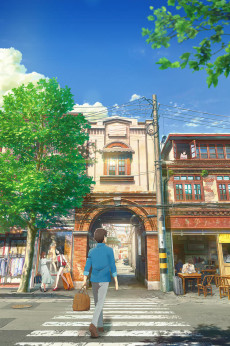
Flavors of Youth
Anthology film for three short stories.
The three shorts in the anthology are titled "Hidamari no Choushoku" (Sunny Breakfast), "Chiisana Fashion Show" (A Small Fashion Show), and "Shanghai Koi" (Shanghai Love), and all three will be set in three different Chinese cities.
The theme of the three stories are food, clothing, and shelter. "Hidamari no Choushoku" is about a youth working in Beijing and a grandmother in his hometown. "Chiisana Fashion Show" is about sisters living in Guangzhou. "Shanghai Koi" is set in 1990s Shanghai and is a homage to Byousoku 5 Centimeter (5 Centimeters Per Second).
📺Anime Details
📝Editorial Analysis
The steam rising from a bowl of jiaozi in a Beijing apartment at dawn—thin, translucent skin catching the pale light, the grandmother’s knuckles white where she grips the wooden spoon, her voice soft as she says, “Eat while it’s warm.” Not a line of dialogue about longing, not a flashback montage—just the quiet weight of distance, the warmth of food holding time together for two people separated by train schedules and generational silence. That’s the first breath of Flavors of Youth: not nostalgia as decoration, but as tactile memory, pressed into starched cotton, folded into dumpling pleats, measured in the pause before a sister zips up another’s dress.
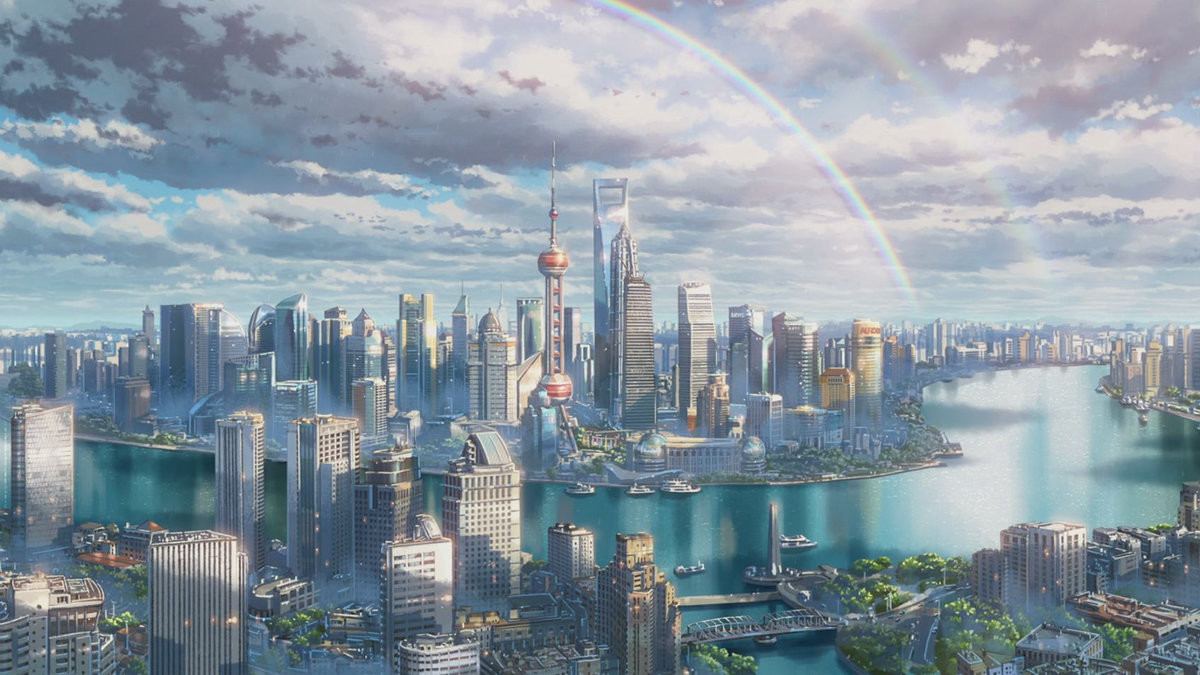
What makes Flavors of Youth ache so precisely is how it refuses to rush into emotion—it lets feeling settle between things. A glance held too long at a half-unpacked suitcase. The rustle of silk as a younger sister adjusts her elder’s collar before a fashion show that never happens on stage, only in their shared room. The way “Shanghai Koi” lingers on rain-slicked pavement—not as atmosphere, but as resistance: shelter isn’t just walls, it’s the stubborn geometry of a doorway held open just long enough for someone to step back inside. There’s no grand betrayal, no explosive confession—just the slow, almost imperceptible erosion and re-knitting of care across years, cities, and silences. It makes you think about how love often lives not in declarations, but in maintenance: folding laundry, saving a recipe, remembering how someone takes their tea. It makes you feel tender, then tired, then quietly, fiercely hopeful—not because things resolve, but because they continue.
That same emotional rhythm pulses through Prince of Persia, not in its acrobatics or sand magic, but in its Healing & Slow Life dimension—the way the prince walks barefoot across sun-baked tiles, pauses to watch dust motes swirl in a sunbeam, or kneels to mend a broken clay pot before moving on. The player review calls it “melancholic exploration,” and it’s true: every ledge scaled, every corridor traversed, carries the hush of someone learning how to move gently through a world that’s already lost something vital. Like the grandmother in “Hidamari no Choushoku,” the prince doesn’t shout his grief—he holds space for it, lets it shape his pace. Both works treat time not as a countdown, but as texture: rough, grainy, luminous in patches.
Then there’s the quiet sibling choreography of “Chiisana Fashion Show”—the way fabric whispers against skin, how a zipper’s metallic sigh syncs with a held breath—and how it echoes in games where clothing isn’t costume, but continuity. While no other game is listed, the dimensional match is unmistakable: when fashion becomes language, not spectacle, it mirrors the precision of Prince of Persia’s environmental storytelling—every draped cloth, every frayed hem, every unbuttoned cuff tells a story the characters won’t name aloud. You don’t need dialogue to know the elder sister has been altering her own blouse to fit her younger sibling’s shoulders; you see the uneven stitching, the faint chalk marks still visible on the lining. Just like the prince tracing cracks in a palace wall—not to fix them, but to witness.
Who would love this pairing? Someone who keeps a notebook of small things: the exact shade of green in wilted bok choy, the sound of a specific elevator door closing in an old Shanghai building, the way light hits a ceramic mug at 7:13 a.m. They’re the kind of person who replays a game not for achievements, but to stand still in a sunlit courtyard for three minutes, breathing with the character. They don’t want catharsis—they want companionship in the ordinary. They’ll recognize themselves in the grandmother stirring broth, in the prince running a thumb over a chipped tile, in the sister smoothing a seam with the side of her palm—not as heroes or symbols, but as people who understand that healing isn’t arrival, it’s the decision to make breakfast, mend a hem, walk slowly through ruins, and call it enough.
🎮6 Games That Match the Vibe




Match Dimensions Explained
❓Frequently Asked Questions
Why is Prince of Persia listed as similar to Flavors of Youth?
Because both lean hard into melancholic exploration and quiet, healing moments—like wandering empty rooftops at golden hour in Flavors of Youth’s Guangzhou segment, or tracing the Prince’s lonely path through sun-dappled, crumbling ruins while time slows for introspective platforming. Critics noted Prince of Persia’s 2023 reboot (score: 84) specifically nails that 'Slow Life' vibe with its deliberate pacing, poetic narration, and emphasis on atmosphere over combat.
Is there a Flavors of Youth video game adaptation?
No—Flavors of Youth is a standalone animated film anthology (2018), and there’s never been an official game adaptation. That said, fans seeking its bittersweet, slice-of-life tone often land on Prince of Persia (2023), whose 'Healing & Slow Life' dimension mirrors the film’s emotional texture—especially scenes like the Prince sitting silently by a rain-slicked balcony, echoing Xiao Ming’s quiet moments on the train platform.
How does Prince of Persia compare to Spirit of the North in capturing Flavors of Youth’s mood?
Spirit of the North leans more into wordless, environmental storytelling with a fox protagonist and ethereal Nordic vistas—but it lacks Flavors of Youth’s grounded urban nostalgia and human-scale intimacy. Prince of Persia (2023), by contrast, mirrors the film’s specific blend: human characters (like the Prince and his sister Zaynab), tactile cityscapes (ancient markets, sun-bleached courtyards), and mechanics built around reflective movement—not just traversal, but *pausing*, breathing, and remembering.
What’s the best game like Flavors of Youth if I want that wistful, late-summer afternoon feeling?
Prince of Persia (2023) is your top pick—it’s built for that exact mood. Think of the way Flavors of Youth lingers on steam rising from street food stalls or light catching dust motes in an old apartment; Prince of Persia replicates that with slow-motion wall-runs across sunlit archways, quiet conversations on shaded terraces, and a score that swells softly like memory returning. Its 'Melancholic Exploration' dimension (score: 84) is basically engineered for late-summer wistfulness.