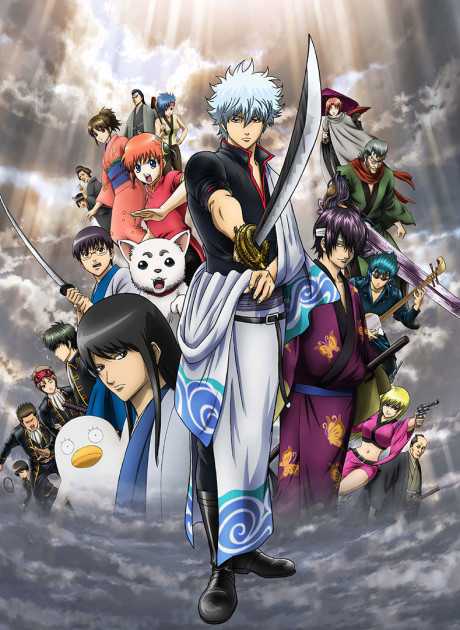
Gintama - The Movie
Odd Jobs Gin has taken on a lot of odd work in the past, and when you're a Jack of All Trades agency based in a feudal Japan that's been conquered and colonized by aliens, the term "Odd Jobs" means REALLY ODD jobs. But when some more than slightly suspicious secrets from the shadows of Gintoki Sakata's somewhat shady former samurai past and a new pair of odd jobs collide, the action is bound to get so wild and demented that only a feature film will do it justice!
(Source: Sentai Filmworks)
📺Anime Details
📝Editorial Analysis
The smell of burnt sugar and ozone hangs in the air—Gintoki’s wooden sword shatters mid-swing against a beam of alien plasma, splinters flying like startled sparrows, while he’s yelling something about tax deductions and why the hell did they put the vending machine behind the collapsing wall? That split-second—the absurdity of physics bending just enough to let comedy land, the gore smeared across a joke, the sheer weight of history cracking open beneath a lazy shrug—that’s Gintama - The Movie.
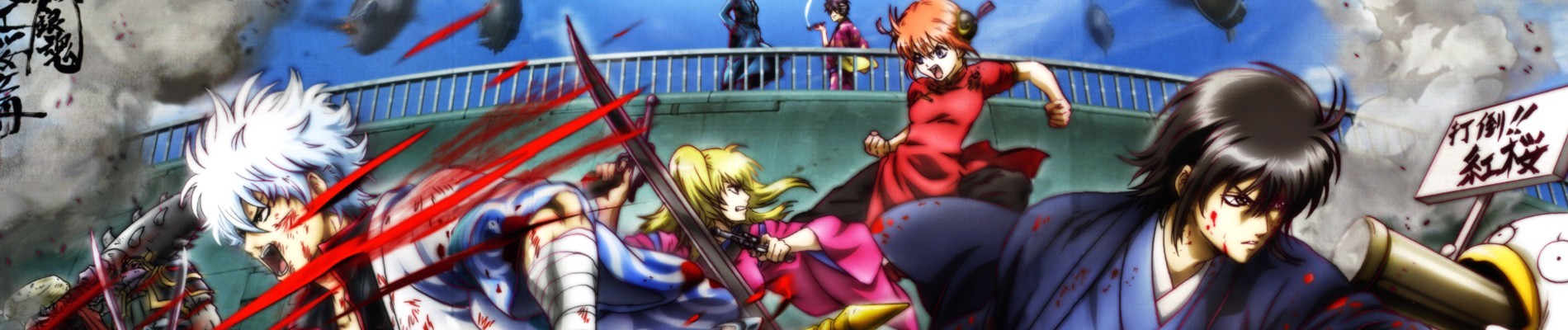
It doesn’t feel like watching a story unfold. It feels like stepping into a bar where the floorboards are loose, the sake is lukewarm, and every patron has seen too much war but still cracks a joke about the bartender’s terrible wig. There’s no tonal safety net—just velocity: one frame you’re choking on laughter at a pirate captain trying to file a complaint with the Shogunate bureaucracy, the next you’re holding your breath as Gintoki’s knuckles split open on a rusted katana, his voice dropping so low it vibrates in your molars. It’s not balance between comedy and pathos—it’s compression. Like pressing grief, satire, and swordplay into the same cramped alleyway until they start bleeding into each other. You don’t process the emotion—you absorb it, sticky and warm, like spilled miso soup on tatami.
That’s why Overlord II hits with such eerie familiarity. Its description calls it “Bigger, badder and more beautifully destructive”—and yes, but what lingers is how its Dark Master sighs while ordering an entire village flattened, then pauses to critique the Minions’ choreography mid-chaos. Player reviews call it “a real treat” and “unique… haven’t had anything like them since,” which nails it: like Gintama - The Movie, it weaponizes parody as emotional infrastructure. When the Overlord monologues about bureaucratic inefficiency in the underworld while casually vaporizing a dragon, it’s not mockery for mockery’s sake—it’s the same exhausted, affectionate rage Gintoki directs at a corrupt government that still insists on issuing parking tickets during an alien invasion. Both works treat absurdity not as escape—but as armor, worn so thin it’s nearly transparent.
Then there’s Alice: Madness Returns, where Victorian London’s grime bleeds into Wonderland’s “beautiful yet ghastly” decay—and the player review admits it only runs after editing config files manually. That friction—between broken systems and stubborn devotion—is pure Gintama DNA. Gintoki doesn’t fix the world; he patches it with duct tape, bad jokes, and whatever spare change he finds in his sleeves. Alice doesn’t heal cleanly—she reconfigures her trauma into jagged, glittering spectacle. Both demand the audience lean in, tinker, adapt—not because the work is flawed, but because brokenness is part of the grammar. The review’s frustration (“You have to edit the FPS cap manually”) mirrors how Gintama - The Movie forces you to recalibrate your emotional reflexes mid-scene: laugh then flinch then ache, all before the next line of dialogue lands.
Even Sacred Gold, buried under player complaints about “jank, bugs and… not very stable on modern systems,” resonates—not despite its flaws, but because of them. Its description promises battle against “blood-thirsty orcs & lumbering ogres,” and that raw, unpolished clunk of combat echoes Gintama’s fight choreography: swords snag, kicks miss, characters trip over their own cloaks mid-leap. There’s no cinematic polish—just sweat, noise, and the visceral thrill of something barely holding together. That instability isn’t failure—it’s authenticity. Like Gintoki’s ragtag agency, these games run on duct tape, nostalgia, and sheer, defiant momentum.
This isn’t for someone who wants clean arcs or seamless immersion. It’s for the person who rewatches the same scene three times—not to catch plot details, but to savor how Gintoki’s voice cracks just so when he says “I’m not a hero” while standing ankle-deep in alien blood and stray dango wrappers. It’s for the player who boots up Overlord II on a cracked laptop, laughs when the UI glitches mid-apocalypse, and feels seen. For the one who edits config files at 2 a.m. just to hear Alice’s whisper echo one more time in that warped, grieving world. They love the grit under the gloss, the way humor and heartbreak share the same cracked teacup—and how, against all logic, it still somehow works.
🎮1 Games That Match the Vibe
Match Dimensions Explained
❓Frequently Asked Questions
Why is Overlord II listed as similar to Gintama: The Movie when it's not anime-based?
Because Overlord II nails Gintama’s tonal whiplash—like when the Dark Lord casually orders his minions to turn a nobleman into a flaming goat while delivering deadpan one-liners, mirroring Gintama’s infamous 'serious scene → absurd cutaway' rhythm. Its satire of fantasy tropes (e.g., mocking heroic archetypes during the Glorious Empire siege) feels like a live-action Gintama sketch, and the Minions’ chaotic group AI mimics the Yorozuya’s slapstick group combat in the movie’s Kabukicho fight scenes.
Is there a Gintama game adaptation I can actually play right now?
No official Gintama game exists—but Overlord II is the closest functional stand-in: it’s fully playable on modern systems (unlike Two Worlds II HD, which fails to launch on PC without Steam Deck workarounds), and its dark-fantasy-meets-slapstick vibe—complete with over-the-top boss fights and fourth-wall-breaking narration—captures Gintama’s spirit better than any licensed title ever could.
Overlord II vs. Alice: Madness Returns—which one captures Gintama’s mix of grim and goofy better?
Overlord II wins hands-down for Gintama energy: its 'evil overlord who just wants a nap but gets dragged into nonsense' protagonist mirrors Gintama’s Sakata Gintoki, and the Minions’ anarchic hijinks (like turning a cathedral into a trampoline arena) echo the movie’s Kabukicho chaos. Alice: Madness Returns leans too hard into psychological horror and melancholy—even its action feels isolated and solemn, missing Gintama’s raucous ensemble chemistry.
What’s the best game like Gintama: The Movie if I want nonstop action + absurd humor?
Overlord II—it’s the only match that delivers both relentless spectacle (smashing entire cities with your Minion swarm during the Glorious Empire finale) AND razor-sharp parody (like the 'Heroic Posturing Simulator' minigame where you mock RPG clichés mid-battle). Sacred Gold and Two Worlds II lean too serious, while Alice trades jokes for dread—and all three suffer from stability issues that’d ruin the vibe.