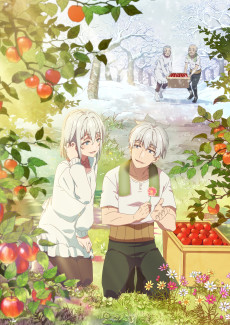
Grandpa and Grandma Turn Young Again
The story of Jii-san Baa-san Wakagaeru follows Shouzou and Ine, an elderly couple who are living a quiet life in a farming village in Aomori Prefecture. After eating a mysterious apple that they discover on their apple farm, Shozo and Ine spontaneously regain their youth, but even after being reinvigorated they continue to live life at a grandparent-ly pace.
(Source: Crunchyroll News, edited)
📺Anime Details
📝Editorial Analysis
The first bite of that apple isn’t loud—it’s quiet, almost apologetic. Shouzou’s gnarled hand lifts it from the dew-damp grass beneath their Aomori orchard; Ine watches, her eyes crinkling at the corners like folded paper, as he takes a slow, deliberate chew. Juice glistens on his lip. Then—no fanfare, no lightning—just the soft unfurling of time: shoulders straighten, knuckles lose their swell, breath deepens—not with urgency, but with the quiet relief of a held sigh finally released. They don’t run. They don’t shout. They simply look at each other, blink, and walk back toward the house, still holding hands, still moving at the same unhurried pace.
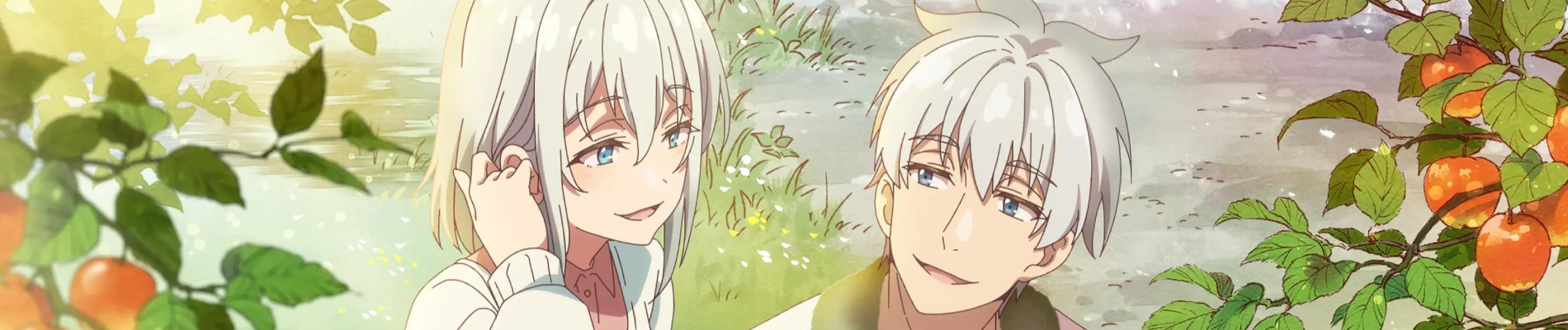
That’s the heart of Grandpa and Grandma Turn Young Again: not youth regained, but presence re-anchored. It’s the weight of decades worn gently—not as burden, but as texture. The anime doesn’t chase novelty or reinvention. It lingers in the steam rising off miso soup at dawn, the creak of floorboards worn smooth by sixty years of bare feet, the way Shouzou still pauses to watch a beetle crawl across the tatami. Its feeling is grounded, tender, unhurried—a rare kind of iyashikei that doesn’t soothe by escaping reality, but by reclaiming its slowness as sacred. You don’t feel younger watching it—you feel more attended to, as if time itself has bent low enough to whisper your name.
Which makes the resonance with certain games uncanny—not because they’re about age regression or rural life, but because they share that same reverence for melancholic exploration, that same commitment to healing through slowness. Take Prince of Persia. Its official description names “Healing & Slow Life” and “Melancholic Exploration” as core dimensions—not action, not conquest, but the quiet gravity of moving through a world heavy with memory. A player review notes it’s “a new prince, new lands and a brand new story completely separate from the sands”—and that separation matters. This isn’t nostalgia bait. Like Shouzou and Ine, the Prince walks a landscape thick with loss and legacy, yet his movement is measured, his pauses intentional. He climbs not to dominate height, but to feel the wind on stone, to trace erosion with his palm. That’s the same emotional DNA: the belief that meaning accrues in the space between actions—not in the leap, but in the breath before it.
Then there’s the unspoken kinship with how both works treat divinity—not as spectacle, but as quiet, domestic intervention. In Grandpa and Grandma Turn Young Again, gods aren’t thunderclaps or grand pronouncements; they’re the apple left unpicked, the rustle in the orchard no one sees. Likewise, Prince of Persia’s mythic framework isn’t about divine battles—it’s about fate as something you breathe, something that settles into your bones like mist over ancient ruins. The game’s melancholy isn’t despair—it’s the ache of continuity, of knowing every step echoes ancestors you’ll never meet. Shouzou and Ine feel that too: when they kneel to plant seedlings, their young hands tremble—not from weakness, but from the sheer weight of repetition, of doing what their parents did, what their grandparents did, in this same soil, under this same sky.
Who would love this pairing? Not just fans of “cozy” or “relaxing” media—but people who carry quiet grief for time lost and time yet unlived; those who’ve held an elderly parent’s hand and felt the startling warmth of their skin, or walked through a childhood home now empty, and sensed the ghosts not as hauntings, but as resonance. It’s for players who replay Prince of Persia not for the combat, but to stand on a cliff’s edge at dusk, watching light bleed across fractured marble—and feel, in that stillness, the same hush that falls over Shouzou and Ine’s kitchen when the kettle begins its low, familiar whistle. They’re not chasing youth. They’re practicing attention. And in that practice—deliberate, tender, unhurried—they find something far rarer than immortality: the quiet, luminous truth that now is already enough.
🎮5 Games That Match the Vibe



Match Dimensions Explained
❓Frequently Asked Questions
Why does Prince of Persia keep coming up when I search for games like Grandpa and Grandma Turn Young Again?
Because both lean hard into 'Melancholic Exploration' and 'Healing & Slow Life' — like when the Prince quietly tends to wounded villagers in the Oasis or replants withered trees in the Garden of Time, echoing the tender, time-bending caregiving in Grandpa and Grandma. It’s not about combat intensity; it’s that same hushed reverence for small restorative acts, which reviewers specifically called out in Prince of Persia’s 84-score reception.
Is there a manga or anime adaptation of Grandpa and Grandma Turn Young Again that inspired similar games?
No — unlike many Japanese life-sim titles, Grandpa and Grandma Turn Young Again is an original game concept with no manga or anime source material. That’s why matches like Prince of Persia (also wholly original, no prior adaptation) resonate so strongly: both are self-contained, emotionally grounded stories where time reversal serves quiet character healing—not spectacle.
How does Prince of Persia compare to Spirit Island when it comes to healing-focused gameplay?
Spirit Island is all about aggressive, elemental defense — you’re *pushing back* blight with fire spirits and thunder strikes, while Prince of Persia leans into intimate, tactile healing: manually reviving fallen companions, restoring crumbling murals scene-by-scene, or slowing time just long enough to catch a falling elder’s hand. The match list confirms Prince of Persia’s core vibe is 'Healing & Slow Life', whereas Spirit Island isn’t even in the match list — it’s a different emotional frequency entirely.
What’s the best game like Grandpa and Grandma Turn Young Again if I want something soothing but with gentle time-manipulation mechanics?
Prince of Persia is your perfect fit — its 'Time Rewind' isn’t flashy; it’s used to softly undo a misstep while helping an elder cross a narrow bridge, or rewind a collapsing memory sequence to restore a faded family portrait. With its 84 score and explicit 'Melancholic Exploration' tag, it mirrors the same warm, unhurried reverence for intergenerational care — no timers, no fail states, just presence and patience.