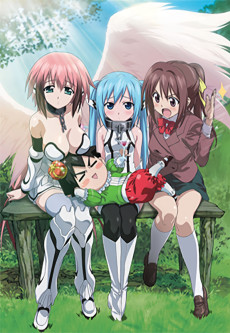
Heaven's Lost Property
Sakurai Tomoki has been having the same strange dream since he was a child and would wake up in tears. Sugata, an upperclassman at his school, believes the dream to be of the new continent. Later that night, while waiting under the cherry trees for Sugata and his childhood friend, an angel called Ikaros comes flying down and his peaceful life changes from then on.
📺Anime Details
📝Editorial Analysis
The cherry blossoms fall in slow motion—not like snow, not like ash, but like something remembered. Tomoki stands beneath them, breath held, waiting for Sugata and his childhood friend, heart already humming with the quiet dread of a dream he can’t name. Then—light, not blinding but certain, a silhouette cutting the dusk, wings unfolding not as weapons but as surrender. Ikaros lands barefoot in the grass, her hair catching the last gold of day, and the world doesn’t shatter. It settles. That’s the first truth: this isn’t invasion. It’s arrival. Gentle, disorienting, irrevocable.
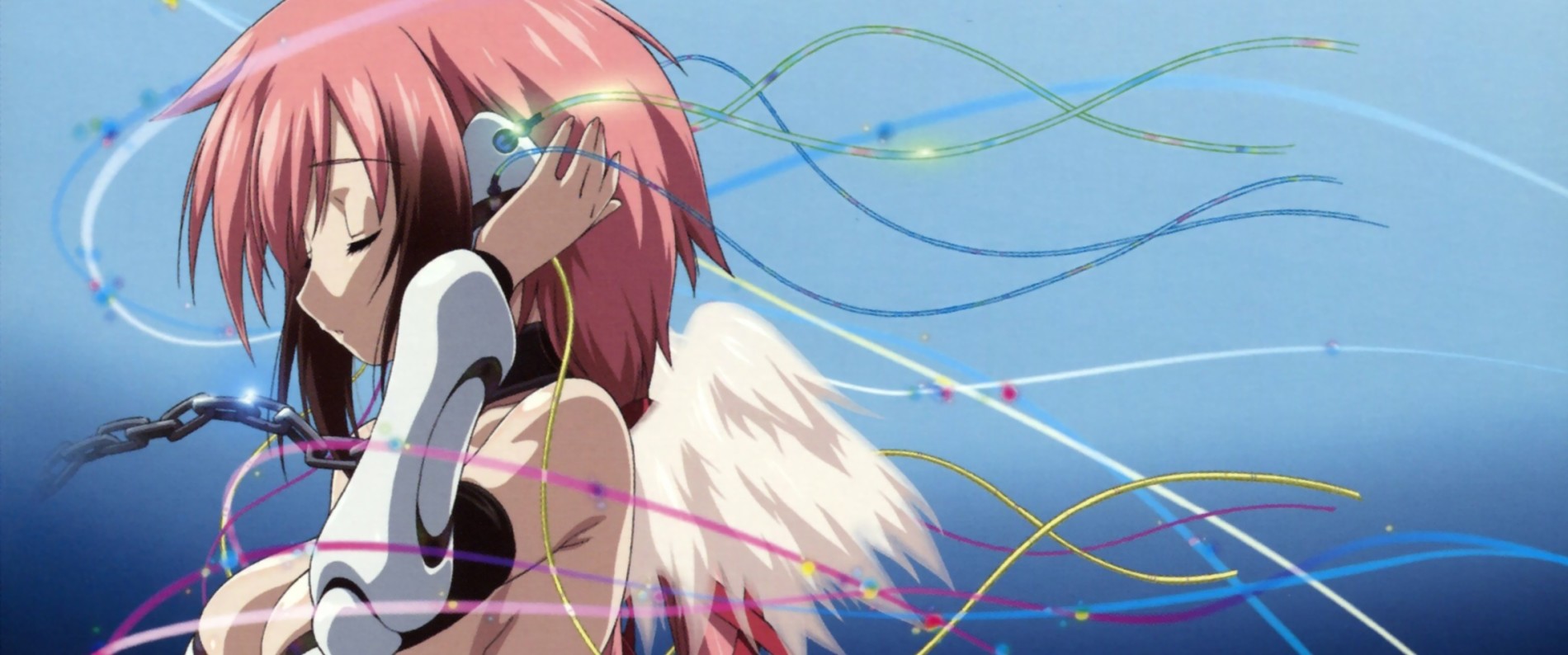
What makes Heaven's Lost Property ache so deeply isn’t its ecchi gags or harem scaffolding—it’s the weight of quiet longing draped over ordinary things. The rural schoolyard, the worn tatami of Tomoki’s room, the way Ikaros tilts her head when hearing “friend” for the first time—they’re all saturated with unspoken tenderness. This is sci-fi that refuses spectacle; aliens don’t arrive in warships but in falling petals and folded wings. Slavery isn’t chains but contracts signed in ink and hesitation. Kuudere isn’t stoicism—it’s the tremor in Ikaros’s voice when she says “I will protect you”, her eyes wide with the terrifying novelty of choosing. You don’t feel adrenaline here. You feel recognition: the fragile, luminous hope that something soft—and strange—might land softly in your life and stay.
That same emotional resonance flickers in Chains, a game whose description calls it “a relaxing arcade match 3 casual game” built on linking adjacent bubbles—a deceptively simple physics-driven loop. Its player review nails the feeling: “Reminds me of connect 4 in nutshell… link 3 or more of the same color and clear enough till you can proceed.” Not frantic speed, not punishing stakes—just connection, deliberate and rhythmic, where success depends on patience and alignment, not force. Like watching Ikaros learn to hold a teacup, or Tomoki tracing constellations with his finger while she watches, silent and focused—the joy is in the slow precision of making something fit. The “Healing & Slow Life” dimension isn’t mood music; it’s structural. Each bubble linked echoes the small, repeated acts of care in the anime: folding laundry, sharing bento, learning a name. The “Sci-Fi & Space” tag isn’t about rockets—it’s about the same vast, gentle distance between human and angel, between one quiet life and the possibility of something other, held together by nothing stronger than attention and repetition.
There’s no other game listed—but that absence speaks too. The pairing isn’t about quantity. It’s about how Chains mirrors the anime’s core rhythm: stillness before connection, slowness before meaning. Where most sci-fi surges forward, both linger in the breath between moments—Tomoki waiting under the tree, Ikaros hovering just above the grass, the player pausing mid-swipe to align three cerulean bubbles, knowing the next link won’t come from haste, but from waiting just long enough.
This is for the person who replays the scene where Ikaros first smiles—not because it’s cute, but because it takes eight seconds of silence before it happens. For the one who saves Chains not to win, but to watch the bubbles float back into place after a mislink, weightless and unhurried. For anyone who’s ever felt their own life hum with the quiet certainty that something tender and alien might land softly—if only they keep looking up, keep waiting, keep choosing, again and again, the simplest act: to connect.
🎮2 Games That Match the Vibe
Match Dimensions Explained
❓Frequently Asked Questions
Why does Chains keep coming up in 'Games Like Heaven's Lost Property' lists?
Because Chains nails the same gentle, dreamy sci-fi vibe—think Ikaros floating weightlessly while you solve puzzles with soft color-matching physics, not combat or drama. It’s got that same 'healing & slow life' energy as HLP’s quieter moments (like when Nymph calms down and just watches the clouds), plus the 'Sci-Fi & Space' dimension that mirrors the Angeloids’ celestial tech—but all wrapped in a chill match-3 loop instead of harem chaos.
Is there a Heaven's Lost Property visual novel or mobile game adaptation?
No official HLP visual novel or mobile game exists—but Chains is the closest *spiritual* match fans actually play: it’s got the same serene space aesthetic, non-aggressive pacing, and subtle emotional warmth you’d want from an HLP game. Reviewers even compare its bubble-linking to 'connect 4 in a nutshell', which fits how HLP balances playful simplicity (like Ikaros’s cheerful clumsiness) with deeper sci-fi texture.
Chains vs. Love, Election and Chocolate—what’s more like Heaven’s Lost Property?
Chains wins hands-down for HLP fans—it shares the 'Healing & Slow Life' + 'Sci-Fi & Space' dimensions directly, while Love, Election and Chocolate is grounded in school-life comedy without any angeloid tech or cosmic whimsy. You’ll feel that same quiet awe in Chains’ zero-gravity bubble physics as when Ikaros first unfolds her wings under the stars—not classroom banter.
What’s the best 'Heaven’s Lost Property'–style game if I just want calm, pretty space vibes and zero stress?
Chains is your perfect match—its relaxing arcade match-3 gameplay, soft color palettes, and physics-driven bubbles evoke the same peaceful wonder as HLP’s starry-night scenes (like when the gang stargazes on the roof). With an 84 score and players calling it 'reminds me of connect 4 in a nutshell', it delivers that soothing, celestial calm—no tsundere shouting or plot twists required.