
Heaven's Lost Property: Forte
Sakurai Tomoki has settled into his life with the two angeloids, Ikaros and Nymph, and is enjoying himself immensely. However, he keeps having weird dreams and asks all of his friends to help him investigate the cause.
Nymph conjures up a device that enables people, but not angeloids, to enter other people's dreams. The device malfunctions at first but eventually they get to what was supposed to be Tomoki's dream but discover that something is very wrong with it.
Later, a meteor comes crashing down from the skies at the site of the large cherry blossom tree where Tomoki first discovered Ikaros. An extremely well endowed blonde angeloid with a huge sword emerges from the meteor and sets off in search of Tomoki!
📺Anime Details
📝Editorial Analysis
The air in Tomoki’s bedroom hums—not with electricity, but with weight. Not danger, not dread, but the quiet, suffocating pressure of a dream that won’t release him. He wakes gasping, sheets damp, heart hammering—not from fear, but from recognition: something familiar is wrong. The walls are too still. The light from the window doesn’t shift right. His own breath sounds like it’s echoing from somewhere just out of phase. That’s the moment—before Nymph cracks a joke, before Ikaros tilts her head in silent concern—when Heaven's Lost Property: Forte stops being about angeloids in bikinis and becomes about the terrifying intimacy of your own subconscious betraying you.

This isn’t sci-fi as spectacle. It’s sci-fi as tenderness under duress. The rural setting isn’t pastoral—it’s porous, thin at the edges, letting in glitches from elsewhere: dreams bleeding into waking, angeloids bound by protocols that feel less like programming and more like inherited grief. The harem isn’t wish-fulfillment—it’s found family forged in shared vulnerability: Tomoki’s confusion, Nymph’s brittle sarcasm masking dependency, Ikaros’s quiet devotion that reads less like obedience and more like choosing, again and again, to stay soft in a world that built her for war. Even “slavery” here isn’t domination—it’s a linguistic scar, a relic of design that the characters keep gently, stubbornly unlearning together. You don’t laugh at the ecchi moments—you laugh with them, because the nudity isn’t titillation; it’s absurd, human, disarmingly ordinary amid cosmic unease. It makes you feel fragile, then held—like someone just handed you a warm cup of tea while the floorboards of reality creak.
That exact emotional resonance—the ache of something deeply personal unraveling inside a vast, indifferent system—is why Dreamfall: The Longest Journey lands so hard. Its player review calls it “less a long journey than a long drama”—and yes, the cyberpunk and dystopia tags mislead. What matters is how it treats consciousness like a fragile, flickering candle in a wind tunnel: April Ryan doesn’t save worlds with guns or spells, but by witnessing, by holding space for broken people whose memories are fraying, whose identities are dissolving. Like Tomoki staring at his warped dream-space, April walks corridors where logic stutters—and the emotional payoff isn’t victory, but clarity, earned through quiet persistence. Both works trust you to sit with disorientation until it transforms into understanding.
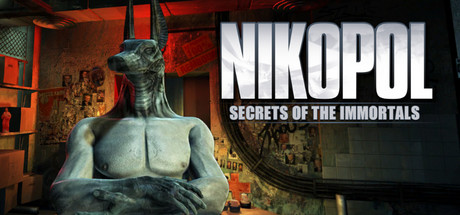
Then there’s Nikopol: Secrets of the Immortals, where a pyramid ship hangs over Paris like a question mark, and the player review notes how “the whole cyberpunk atmosphere gives it a nice vibe”—but the vibe isn’t neon grit. It’s the hush before revelation. Nikopol’s first-person perspective forces you into the body of someone who’s been frozen, thawed, and dropped into a world that moved on without him—exactly like Tomoki, adrift in his own recurring dream, trying to parse symbols he should recognize but can’t. The animations and cutscenes don’t just enhance—they linger, holding shots just long enough for you to feel the loneliness in the silence between lines. That’s the same stillness that settles over the clubroom when Nymph’s device whirs to life, and everyone leans in, not to solve a puzzle, but to bear witness.
Even Space Trader: Merchant Marine, with its goofy Doom-engine charm and “funny little game” review, taps the same nerve—not through tone, but through structure. Its player describes “mini fetch quests” wrapped in shrewd trades and back-alley deals. That’s Tomoki’s entire arc in Forte: navigating layers of hidden systems (dream protocols, angeloid hierarchies, celestial politics) not with grand battles, but with small, earnest negotiations—borrowing Nymph’s tech, trusting Ikaros’s intuition, asking Suzu to translate a feeling he can’t name. The emotional DNA isn’t in the spaceships or the shooting—it’s in the grind of caring, the low-stakes, high-stakes labor of keeping connection alive when the universe keeps glitching around you.
This pairing sings for the viewer who cries during school club meetings, who saves game files obsessively not to avoid failure but to preserve moments of warmth, who watches angeloids fold origami cranes while the sky flickers—and feels, deep in their ribs, that yes, this is how love survives entropy.
🎮6 Games That Match the Vibe


Match Dimensions Explained
❓Frequently Asked Questions
Why does Dreamfall: The Longest Journey keep coming up in Heaven's Lost Property: Forte game recommendations?
Because both lean hard into emotionally charged, character-driven storytelling with strong female leads navigating surreal, layered worlds—Dreamfall’s April Ryan has that same blend of earnest vulnerability and quiet resilience as Ikaros, especially during intimate, dialogue-heavy scenes like the rain-soaked Babel Tower sequence. The cyberpunk-dystopia dimension (shared with Nikopol) also mirrors Forte’s juxtaposition of high-tech angeloids and fragile human emotion.
Is there a visual novel or adventure game adaptation of Heaven's Lost Property: Forte?
No official visual novel or adventure game adaptation exists—but if you're craving that Forte *vibe*, Nikopol: Secrets of the Immortals is your closest match: it’s a first-person point-and-click with cinematic cutscenes, morally ambiguous choices, and a brooding, atmospheric Paris ruled by dogma—think Ikaros’s silent intensity meets Nikopol’s grim, animated pyramid sequences and tense interrogation scenes.
Dreamfall vs. Nikopol: which one captures Heaven's Lost Property’s emotional tone better?
Dreamfall edges it out for raw emotional resonance—its 'long drama' pacing (per that player review) lets relationships breathe like Forte’s slow-burn bonds between Tomoki and the angeloids, especially in quiet apartment scenes or dreamlike transitions. Nikopol matches the dystopian aesthetic more tightly, but Dreamfall nails the tender, melancholic warmth beneath the sci-fi surface—like when April confronts loss in the Winter world, mirroring Forte’s bittersweet finale.
What’s the best game like Heaven's Lost Property: Forte if I want something dreamy but with weight—not just fanservice or fluff?
Go straight to Dreamfall: The Longest Journey—it’s got the emotional narrative depth and surreal world-hopping you love in Forte, minus the fan-service focus. Its 79 Metacritic score reflects how well it balances poetic melancholy (like the lighthouse scene with Zoë) with grounded character moments—exactly the 'dreamy but meaningful' tone you’re after, and way more mature than Space Trader’s janky, joke-driven shooter-sim energy.