
Hidamari Sketch
For years, Yuno has dreamed of attending Yamabuki Arts High School, but now that she's been accepted, it means the scary prospect of moving away from her home and family for the first time! Fortunately, Yuno quickly learns that if her new neighbors at the eclectic Hidamari (Sunshine) Apartments aren't technically family, at least the majority share the bond of being fellow art students. From second year students like Hiro and Sae, who try to behave like helpful older sisters (mostly successfully) to her hyperactive new neighbor, classmate and best friend Miyako (who has the scariest apartment ever) Yuno begins to build the support network she'll need for dealing with strange characters like her oddly masculine landlady, her cosplay obsessed home room teacher, her tooth-chattering principal and all of the other odd denizens who inhabit her chosen world of art.
(Source: Sentai Filmworks)
📺Anime Details
📝Editorial Analysis
The steam from Yuno’s morning cup of tea curls upward in the Hidamari Apartment hallway—thin, trembling, vanishing before it reaches the ceiling. She stands barefoot on worn tatami, holding the chipped mug with both hands, watching the vapor dissolve into the quiet light filtering through the paper shoji screen. No dialogue. No music. Just the faint creak of floorboards as Hiro passes by down the hall, humming off-key. That breath—soft, suspended, fragile—is where Hidamari Sketch lives.
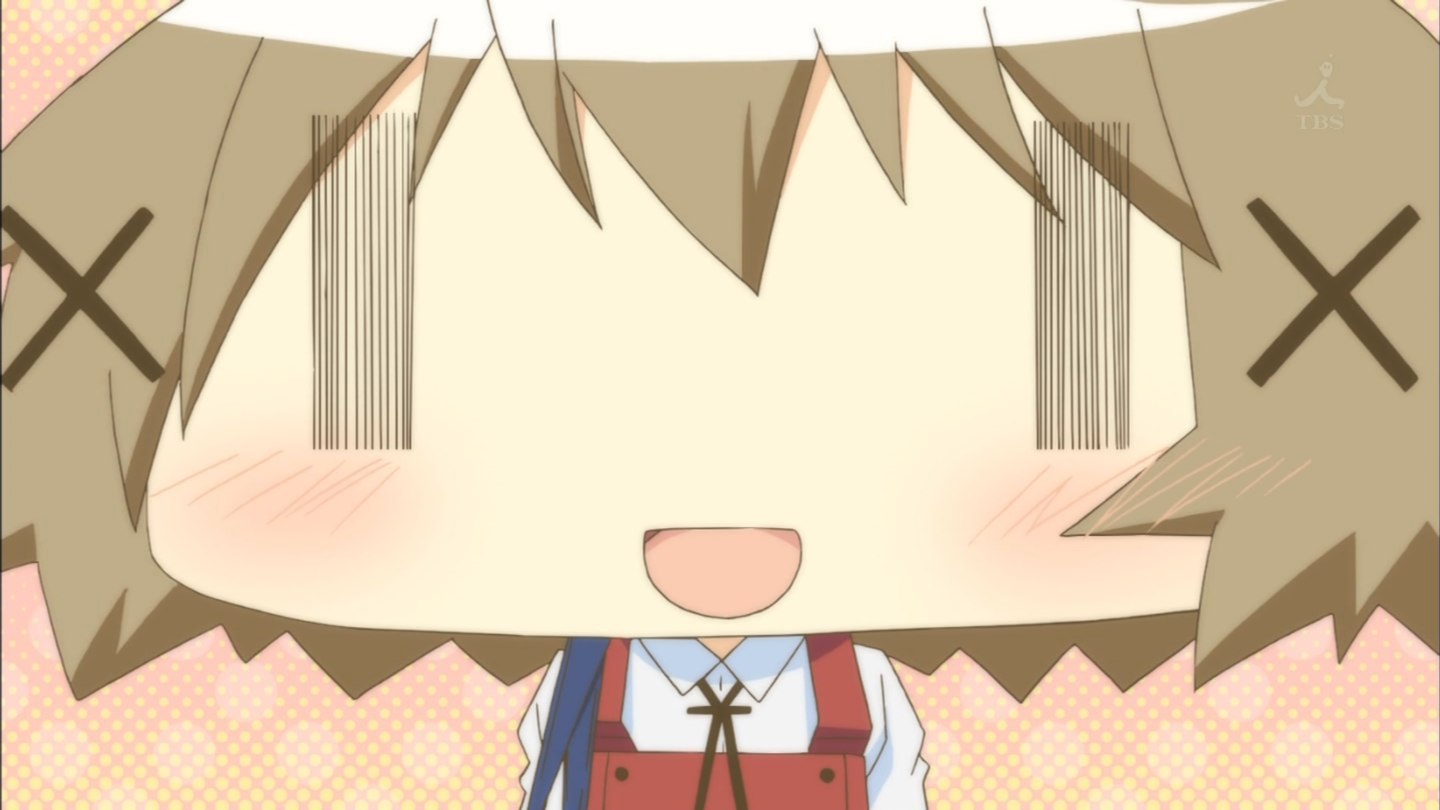
It doesn’t ask you to feel anything grand. It asks you to notice: the weight of a freshly sharpened pencil, the way Sae’s sketchbook smells faintly of eraser dust and rain-damp wool, the particular silence between two girls sharing headphones while staring at the same half-finished watercolor. This isn’t nostalgia—it’s presence. Not the polished warmth of idealized memory, but the tender, slightly awkward reality of being seventeen and learning how to hold space for someone else’s quiet. The achronological order isn’t a gimmick; it’s how memory actually works when you’re young—moments folding into each other like translucent tracing paper, layered but never fully resolved. You don’t watch Hidamari Sketch to follow a plot. You settle into its rhythm like sinking into a sun-warmed kotatsu, letting time soften at the edges. It feels safe, yes—but more precisely, it feels held. Not protected, not curated—just witnessed, without judgment, in all your unremarkable, trembling humanity.
That same quality appears—not where you’d expect—in Prince of Persia, a game whose description names Healing & Slow Life and Melancholic Exploration as core dimensions. Its player review calls it “a new prince, new lands and a brand new story”—and that’s key: this isn’t about legacy or conquest. It’s about movement that feels deliberate, almost ritualistic—the Prince stepping across crumbling arches not as a hero, but as someone relearning how to walk after loss. The slow traversal, the emphasis on environmental texture—the grit underfoot, the hush before a sandstorm—mirrors how Hidamari Sketch lingers on the tactile: the drag of charcoal on newsprint, the way light pools in the apartment’s shared kitchen sink. Both invite you into a world where action isn’t urgent—it’s attentive. Where melancholy isn’t despair, but the quiet hum beneath ordinary things: the ache of distance, the sweetness of shared silence, the weight of a single, unspoken understanding passing between two people who’ve just begun to know each other.
And though the genres seem galaxies apart, the emotional DNA aligns in another subtle way: both are seinen, not in tone alone, but in their refusal to infantilize tenderness. Hidamari Sketch’s teenage girls aren’t caricatures of innocence—they’re artists fumbling with technique, identity, and the quiet terror of becoming. Similarly, Prince of Persia’s description notes Adult & Dark Seinen—not because it’s violent or cynical, but because it treats healing as labor, not magic. Its melancholy isn’t decorative. It’s structural. Like Yuno’s first night alone in her room, listening to the unfamiliar sounds of the city outside her window, the Prince moves through ruins that echo with absence—not as spectacle, but as atmosphere. The stillness in both is charged, not empty. It’s the kind of quiet where you hear your own heartbeat, and realize that’s enough.
Who would love these pairings? Someone who keeps a small notebook not to capture ideas, but to record the exact shade of lavender in a bruise on their knee—or the way their roommate always leaves one chopstick slightly askew on the table. Someone who replays a five-second cutscene just to watch the wind lift a single strand of hair. Someone who finds deep comfort not in resolution, but in continuity: the same teacup, the same hallway, the same unspoken promise that tomorrow will hold another small, unremarkable, honest moment—waiting, like steam rising, to be noticed.
🎮7 Games That Match the Vibe





Match Dimensions Explained
❓Frequently Asked Questions
Why is Prince of Persia listed as similar to Hidamari Sketch when they’re so different?
Great question—it’s all about the shared 'Healing & Slow Life' and 'Melancholic Exploration' vibes, not surface-level aesthetics. While Hidamari Sketch finds warmth in quiet mornings at Yuno’s dorm and sketching in sunlit hallways, Prince of Persia (2024) mirrors that same reflective pacing in its melancholic desert walks, contemplative ruins, and moments like the Prince silently tending to his injured companion in the oasis camp—both prioritize emotional stillness over action. Critics even noted how its slower, more deliberate traversal and atmospheric storytelling evoke the same restorative calm fans love in Hidamari’s slice-of-life rhythm.
Is there a Hidamari Sketch visual novel or game adaptation?
No—there’s never been an official Hidamari Sketch visual novel, RPG, or console game. The franchise stays firmly in anime, manga, and artbook territory. That said, if you’re craving that same gentle, character-driven, low-stakes daily life feel *in game form*, Prince of Persia (2024) is the closest match we’ve got: its 'Adult & Dark Seinen' tone may sound intense, but its healing-focused mechanics—like restoring ancient murals or reviving withered gardens—mirror Hidamari’s quiet acts of care, like Yuno making tea for a tired Miyako or Sae tidying the art room after class.
How does Prince of Persia compare to Hidamari Sketch in terms of mood and pacing?
They’re surprisingly aligned on mood—even though one’s set in a magical desert and the other in a Japanese art school dorm. Both lean into 'Healing & Slow Life' through deliberate pacing: Hidamari’s lingering shots of rain on windows or shared bento lunches echo Prince of Persia’s long, silent walks across dunes or meditative mural-restoration sequences. Player reviews highlight how the 2024 Prince ‘feels like a breath held then gently released’—just like watching Sae quietly sketch by the riverbank in episode 12, or the Prince pausing to watch light shift across a crumbling archway.
What’s the best game like Hidamari Sketch if I just want something soothing and unhurried?
Prince of Persia (2024) is your best bet—especially if you value atmosphere over plot urgency. Its 'Healing & Slow Life' core means no timers, no fail states during exploration, and mechanics built around restoration: reviving oases, repairing murals, listening to ambient wind and distant chimes—all echoing Hidamari’s unhurried rhythms, like Miu watering plants on the balcony or the group napping together in the art room. With an 84 Metacritic score and praise for its 'meditative, almost ASMR-like pacing', it delivers that rare, grounded serenity Hidamari fans miss between seasons.