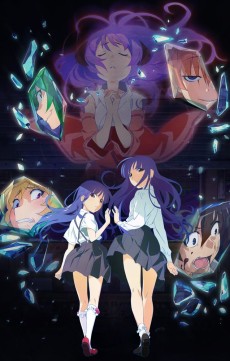
Higurashi: When They Cry - GOU
New kid Keiichi Maebara is settling into his new home of peaceful Hinamizawa village. Making quick friends with the girls from his school, he's arrived in time for the big festival of the year. But something about this isolated town seems "off," and his feelings of dread continue to grow. With a gnawing fear that he's right, what dark secrets could this small community be hiding?
(Source: Funimation)
📺Anime Details
📝Editorial Analysis
The air in the Hinamizawa schoolyard tastes like rust and wet concrete—sharp, metallic, wrong—just before the cicadas cut out. Not fade. Cut. One second their drone is a physical pressure behind your eyes; the next, silence so thick it vibrates. Keiichi’s breath hitches—not from fear yet, but from the wrongness of the pause, the way time itself seems to flinch. His hand twitches toward his ear, as if he could scratch the absence. That silence isn’t empty. It’s waiting.

That’s the core feeling of Higurashi: When They Cry – GOU: not dread as a looming threat, but as a structural flaw in reality. It’s the vertigo of realizing your memories don’t line up with the world’s grammar—of seeing a friend smile while your stomach drops because you know, with cold certainty, that this version of her shouldn’t exist here, now, like this. The horror isn’t just violence or madness; it’s the slow, nauseating erosion of causality, where every festival lantern casts a shadow that doesn’t belong, where every “normal” conversation hums with the static of achronological order, and where “peaceful village” feels less like a setting and more like a sentence you’re being asked to sign—blindfolded. You don’t just watch the conspiracy unfold—you inhabit its dissonance, your own sense of time and self becoming unreliable terrain.
That emotional DNA—time as unstable ground, memory as contested evidence, identity as something fraying at the seams—pulses in several games, not through plot similarity, but through shared sensory logic. Take BioShock Infinite: its description names “Time & Memory” as a core dimension—and the player review hints at the bitterness of what could have been, the haunting weight of branching paths that never materialize. Like Keiichi cycling through fragments of Hinamizawa that contradict each other, Booker DeWitt walks through cities built on collapsed timelines, where Elizabeth’s power isn’t just spectacle—it’s trauma made architectural. You feel the same gut-level confusion when a familiar face appears in a context that violates your internal chronology. The horror isn’t just the blood—it’s the cognitive recoil when your brain tries and fails to reconcile two versions of the same truth.
Then there’s Prince of Persia: Warrior Within, where the description explicitly names “Time & Memory” alongside “Dark Fantasy” and “Body Horror & Occult”—and the player review fixates on the Dahaka chase: relentless, inevitable, a force that doesn’t pursue you through time but as time’s consequence. That’s Hinamizawa’s curse distilled: not a villain stalking you, but causality itself turning predatory. The Dahaka doesn’t need motive—it is the penalty for breaking the rules, just as Hinamizawa’s tragedies aren’t random acts, but the violent recalibration of a timeline straining under paradox. Both make you feel hunted by your own past choices—even when you can’t remember making them.
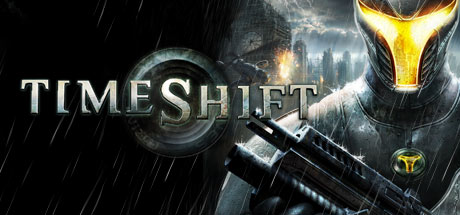
And TimeShift™, with its description of Dr. Krone’s “reckless” Time Jump birthing a “disturbing alternate reality,” mirrors GOU’s central tension: the horror isn’t the jump itself, but the aftermath—the way the new world wears the old one’s scars like ill-fitting skin. The player review calls it a “blast” but notes it “takes a little work to get it into a playable state.” That’s the Hinamizawa experience: the narrative demands active, almost mechanical engagement—reloading, rewatching, cross-referencing—because coherence isn’t handed to you; it’s a puzzle you assemble from jagged, bleeding pieces. The thrill isn’t in smooth progression, but in the click of a timeline snapping into place—then shattering again.
This pairing isn’t for fans of clean resolutions or heroic arcs. It’s for the ones who linger in the pause after the cicadas die—the readers who annotate margins with question marks, the players who replay boss fights not to win, but to catch the glitch in the pattern. It’s for people who find catharsis not in escape, but in witnessing the fracture—who understand that the most terrifying thing isn’t the monster in the dark, but the quiet, aching certainty that the light itself has been lying to you all along.
🎮1 Games That Match the Vibe
Match Dimensions Explained
❓Frequently Asked Questions
Why is BioShock Infinite listed as similar to Higurashi GOU when it's not a visual novel?
Great question—it’s the shared obsession with fractured time, unreliable memory, and body horror wrapped in occult symbolism that makes it click. Think of Booker’s repeated 'lighthouses' or Elizabeth’s tears ripping reality apart—those mirror Rika’s looping tragedies and the visceral dread of the Hinamizawa syndrome’s physical manifestations. The 'Adult & Dark Seinen' dimension ties them tight, especially in how both use psychological unraveling as narrative engine.
Is there an anime or manga adaptation of Prince of Persia: Warrior Within?
Nope—Warrior Within has never been adapted into anime or manga. It’s purely a game-original story, deepening the Prince’s descent into darkness with Dahaka’s relentless chase across crumbling temples and blood-soaked sand. That haunting, almost ritualistic pursuit (especially the iconic hallway sequence where Dahaka closes in while time stutters) feels spiritually kin to Higurashi’s cyclical dread—but it lives only in the game itself.
How does Prince of Persia: The Two Thrones compare to Higurashi GOU in terms of psychological tension?
Both weaponize duality: GOU gives you Rika’s calm mask over unspeakable trauma, while Two Thrones forces you to switch between the noble Prince and his feral, black-clad alter ego—the Dark Prince—who literally whispers doubts mid-combat. That internal war hits like Keiichi’s paranoia spirals, especially during the palace’s decaying halls where every shadow feels like a lie you can’t trust—even your own reflection.
What’s the best game like Higurashi GOU if I want that slow-burn, time-loop dread with body horror?
TimeShift™ is your pick—Dr. Krone’s time-jumping fractures reality into grotesque, flesh-and-steel hybrids (like the mutated soldiers melting into walls), and the entire plot hinges on a single catastrophic loop gone wrong. It’s short (4 hours), but the disorientation of rewinding through ruined labs and seeing your own corpse flicker in and out of existence nails Higurashi’s 'something’s deeply off—and it’s *in* time itself' vibe.