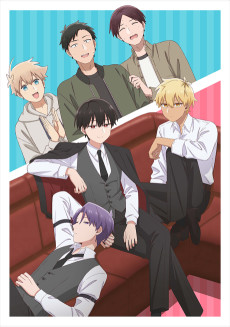
How I Attended an All-Guy's Mixer
College student Tokiwa gets invited to a mixer by his female classmate Suo. But when he arrives with his friends, they're greeted by three dazzlingly handsome men?! But as the two groups get to know each other, they find themselves getting closer in unexpected ways.
(Source: MANGA UP!)
Note: Each episode streamed 1 week early on ABEMA. The original TV broadcast started on October 4th 2024.
📺Anime Details
📝Editorial Analysis
The bar lights are low, warm gold pooling on polished wood—Tokiwa’s fingers tighten around his glass as he realizes he’s the only woman here. Not biologically, not in identity, but in role: Suo invited him to what she called a “mixer,” and he showed up expecting classmates, maybe awkward small talk over cheap beer. Instead, three men stand before him—dazzlingly handsome, effortlessly composed—and his friends’ nervous laughter stutters into silence. That second—where expectation cracks open and something tender, unscripted, starts to breathe in the space between them—is where How I Attended an All-Guy's Mixer lives.
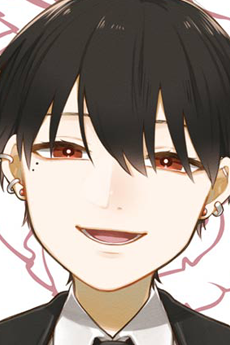




It’s not about the crossdressing gag, though that’s the spark. It’s about the weight of being seen—not as a type, not as a punchline, but as someone whose quiet sincerity becomes magnetic when everyone else lowers their guard. This anime doesn’t chase escalation; it lingers in the pause after a joke lands too well, in the way a glance holds half a beat longer than necessary across a crowded bar, in how college-aged adults—primarily adult cast, yes—navigate intimacy without the safety net of youth-coded fantasy. There’s no grand confession under cherry blossoms. Just shared fries, overlapping stories about work fatigue, and the slow, real-time recalibration of who you thought you were supposed to be in a room full of people who also misread the invitation. It feels human, unhurried, and quietly brave.
That emotional texture resonates deeply with Persona 5 Royal, not because of masks or heists, but because of how both works treat time as emotional architecture. The description says it outright: “Explore Tokyo, build relations.” And the player review nails the feeling: “The seamless transition between daily life…” — exactly like Tokiwa moving from lecture hall to bar stool to late-night text thread, each interaction layering trust like sediment. In both, romance isn’t a destination—it’s the accumulated warmth of showing up, remembering names, noticing when someone’s voice drops just slightly when they’re tired. The shoujo tag isn’t about tropes; it’s about attention to interiority, to how a glance or a hesitation carries more meaning than dialogue ever could.
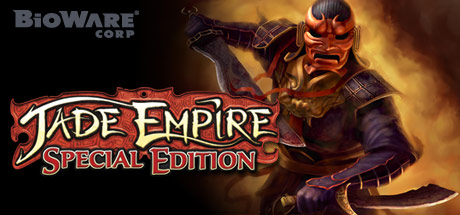
Then there’s Jade Empire™: Special Edition, whose description invites you to “step into the role of an aspiring martial-arts master and follow the path of the open palm or the closed fist.” That duality—open versus closed, soft versus rigid—mirrors the anime’s central tension: Tokiwa walks into that bar assuming he knows the rules of engagement (flirtation, gendered social scripts, college-party logic), only to find those rules dissolved. Like the protagonist choosing between philosophies in Jade Empire, Tokiwa isn’t picking a love interest—he’s redefining how he relates. The player review’s technical frustration (“had to follow these instructions…”) even echoes the anime’s gentle friction: things don’t run smoothly at first, but the effort to make it work—to patch the steam.dll, to decode the mixer’s unspoken grammar—is where authenticity blooms.
And Dragon Age: Origins, with its weighty question—“What will be said about the hero who turned the tide?”—lands with unexpected resonance. Because Tokiwa isn’t saving Thedas. He’s just trying to order another round without tripping over his own assumptions. Yet the review’s praise for the “pause attack mechanic” is telling: it lets you breathe mid-battle, reassess, choose not with reflex but with intention. That’s the anime’s rhythm too—moments held, decisions made deliberately, relationships deepened not by grand gestures but by the courage to pause, listen, and respond—not as who you think you should be, but as who you actually are, right there, in that bar, with those three dazzlingly handsome men and your dumbfounded friends.
This pairing sings for the viewer who watches a rom-com and feels less like they’re waiting for a kiss and more like they’re holding their breath, hoping someone finally says the quiet part out loud—that connection isn’t about perfection, it’s about showing up real, messy, and willing to be surprised. It’s for the player who replays a dialogue branch not to optimize stats, but to hear that one line again—the one that made their chest ache with recognition. Not teenagers chasing destiny. Adults learning, slowly, how to be tender in public.
🎮6 Games That Match the Vibe





Match Dimensions Explained
❓Frequently Asked Questions
Why does Dragon Age: Origins keep showing up in 'Games Like How I Attended an All-Guy's Mixer' lists?
Because both games center on deeply personal romance arcs woven into a rich, choice-driven JRPG narrative—like flirting with Alistair during campfire chats or navigating party banter after a battle. The pause-and-attack combat even mirrors the game’s rhythm of emotional downtime and high-stakes moments, much like how 'All-Guy's Mixer' balances awkward social encounters with sudden, heartfelt confessions.
Is there a visual novel or anime adaptation of How I Attended an All-Guy's Mixer?
No—there’s no official anime, manga, or visual novel adaptation. But if you love its vibe, Jade Empire’s romantic subplots (like your bond with Dawn Star or Master Li) deliver that same blend of tender, slow-burn connection and cultural specificity—just wrapped in martial-arts drama instead of mixer chaos.
How is Persona 5 Royal different from How I Attended an All-Guy's Mixer in terms of romance mechanics?
Persona 5 Royal uses Social Links—structured, time-gated bonds with characters like Ann Takamaki or Futaba Sakura—that unlock combat perks and story beats, while 'All-Guy's Mixer' leans into reactive, dialogue-tree-driven intimacy during single-night events. Both reward emotional investment, but P5R’s system feels more like building trust over months, whereas the Mixer’s charm is in making real-time, high-anxiety choices with guys like Kenji or Ryo.
What’s the best game like How I Attended an All-Guy's Mixer if I want something stylish, music-driven, and full of confident queer energy?
Persona 5 Royal is your top pick—its jazz-funk soundtrack slaps *hard*, its UI pops with bold typography and slick animations, and characters like Ren Amamiya and Ryuji Sakamoto radiate unapologetic charisma. Plus, the Phantom Thieves’ heists and late-night confessions hit that same mix of swagger, vulnerability, and found-family warmth you love in the Mixer.