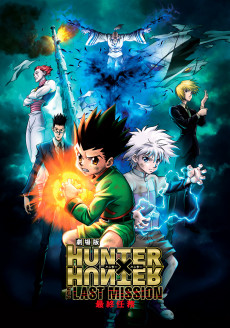
Hunter x Hunter: The Last Mission
The strongest Hunters that once existed in the Hunters Association were split into “light” and “dark”, and each walked down their respective paths. The “dark” side begins moving in order to massacre all Hunters! What actions will Gon take when the many crimes of Netero and the Hunters Association are unveiled...!?
(Source: Anime News Network)
📺Anime Details
📝Editorial Analysis
The air in the ruined plaza tastes like burnt ozone and old blood—Gon standing motionless as the truth detonates: not just that Netero’s legacy is stained, but that the Hunters Association built its light on dark foundations. His fists don’t clench. His breath doesn’t hitch. He just looks, eyes wide and dry, while the world he trusted fractures into jagged, irreconcilable pieces. That silence—not rage, not tears, but hollow, weightless stillness—is where Hunter x Hunter: The Last Mission lives.
This isn’t the adrenaline rush of a tournament arc or the warm camaraderie of Greed Island. It’s the cold ache of disillusionment settling deep in your ribs—the kind that comes when ideals you’ve bled for turn out to be curated myths. The atmosphere hums with moral static: every punch thrown feels heavier because it’s aimed not at monsters, but at institutions you once saluted. There’s no triumphant score swelling as allies clash; instead, there’s the low, dissonant thrum of betrayal echoing across an ensemble cast who all carry different versions of the same wound. You don’t feel empowered watching it—you feel unmoored. And that unmooring is precise, deliberate, devastating. It makes you question not just who the villains are, but whether “villain” is even the right word when everyone’s acting from a warped sense of duty, grief, or survival. The tragedy isn’t spectacle—it’s structural.
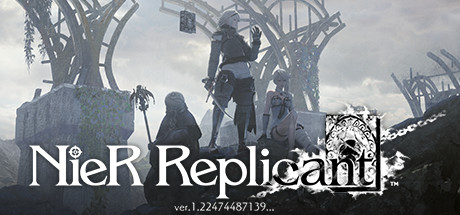
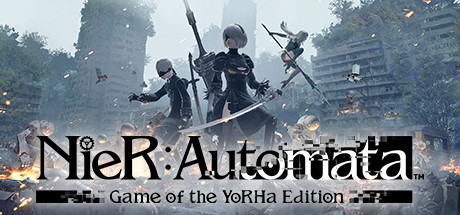
That emotional resonance flickers strongest in NieR:Automata™, where androids 2B, 9S, and A2 fight machines in a world already stripped of meaning by endless war and buried truths. Like Gon, they operate inside a system that lied to them—about their purpose, their origins, even their capacity to feel. The player review nails it: “We’re trapped in a never-ending spiral of life and death”. That’s the exact vertigo The Last Mission induces—not just physical combat loops, but ideological recursion: every revelation about the Hunters Association forces Gon (and us) to re-evaluate every prior victory, every oath sworn, every life sacrificed in service of a lie. Both works weaponize repetition—not as comfort, but as erosion. You watch 2B reset her memory, then watch Gon absorb another layer of institutional rot, and something in your chest tightens with recognition, not novelty.
The shared DNA isn’t in flash or scale—it’s in how both treat power as a corruptible inheritance. In The Last Mission, “super power” and “cultivation” aren’t just tools—they’re legacies passed down like poisoned heirlooms. Netero’s strength wasn’t neutral; it was complicit. Likewise, in NieR:Automata™, android bodies and machine logic aren’t neutral either—they’re inherited architectures designed to serve agendas long since abandoned or perverted. The JRPG Narrative dimension isn’t about exposition dumps; it’s about slow, gut-level dawning—like realizing the “light” Hunters were never separate from the “dark,” just better branded. Just as 9S unravels his own programming only to find more layers beneath, Gon peels back each layer of the Association’s history and finds not answers, but deeper contradictions. No catharsis—just clarity, sharp and unwelcome.
And the ensemble? Not just “primarily male cast”—but men whose bonds curdle under pressure, whose loyalty frays not from malice, but from incompatible truths. You see it in the way A2 moves alone, decisive and isolated, much like certain Hunters in The Last Mission who choose silence over solidarity—not because they don’t care, but because caring demands a reckoning they can’t survive.
This pairing isn’t for fans of clean victories or heroic arcs. It’s for the ones who linger on the pause screen after a boss falls—not to savor the win, but to stare at the wreckage and wonder what else they’ve misunderstood. It’s for players who replay NieR:Automata™’s endings not for lore crumbs, but to sit longer in the quiet horror of “if a being can feel pain, fear, or loneliness…”—because that line doesn’t just describe androids. It describes Gon in that plaza. It describes every Hunter who ever swallowed a lie to keep fighting. It describes you, sitting there, heart pounding not from excitement—but from recognition.
🎮11 Games That Match the Vibe

Match Dimensions Explained
❓Frequently Asked Questions
Why is NieR:Automata often compared to Hunter x Hunter: The Last Mission?
Both dive deep into existential stakes with morally gray characters facing cyclical, tragic conflict—like 2B and 9S’s doomed partnership mirroring Gon and Killua’s fraught loyalty under apocalyptic pressure. The Last Mission’s emotional climax at the Dark Continent echoes NieR:Automata’s layered endings, especially the haunting ‘We’re trapped in a never-ending spiral of life and death’ theme that resonates across both stories.
Is there a Hunter x Hunter anime game adaptation besides The Last Mission?
No—The Last Mission is the *only* official Hunter x Hunter console game tied directly to the anime film. While there are older Japan-only titles like Hunter x Hunter: Greed Island (PS2), none replicate the film’s plot, character arcs, or cinematic combat like The Last Mission does—and none have been localized or re-released since.
NieR:Automata vs. Hunter x Hunter: The Last Mission—which one’s better for intense, story-driven action with philosophical weight?
If you want razor-sharp melee combos, environmental spectacle, and androids questioning their humanity mid-battle? Go with NieR:Automata—it nails Action Spectacle *and* JRPG Narrative (73 Metacritic) with 2B’s blade work and A2’s brutal efficiency. The Last Mission leans harder on faithful anime pacing and HxH-specific Nen mechanics, but lacks NieR’s thematic density and mechanical depth.
What if I love Gon and Killua’s bond but want something with similar emotional intensity and high-stakes teamwork?
NieR:Automata’s 2B/9S dynamic is your best match: their codependent trust, quiet sacrifices, and escalating tension while fighting machines in ruined cities hits the same emotional notes—especially during the desolate desert and ruined city hub areas. It’s not shonen, but the way their relationship fractures and reforms across multiple endings mirrors Gon and Killua’s growth in The Last Mission’s final arc.