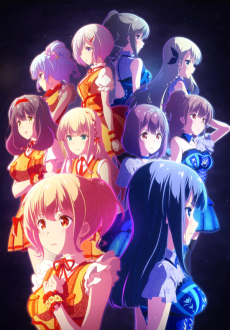
Idoly Pride
After a successful audition, high school student Kotono Nagase and her best friend move into a dorm with eight other aspiring idols. They quickly realize it takes more than cute choreography and cute outfits to reach the top—it will take blood, sweat, and tears to advance in the idol-ranking VENUS program, where the top spot is held by superstar Mana Nagase…who happens to be Kotono’s older sister.
(Source: Funimation)
📺Anime Details
📝Editorial Analysis
The first time Kotono Nagase steps into the VENUS dormitory lobby—shoes untied, backpack slipping off one shoulder, breath catching as she sees nine pairs of identical white slippers lined up like silent sentinels—the air doesn’t just hum. It holds. Not with anticipation, not with excitement—but with the quiet, suffocating weight of inherited expectation. Her sister Mana stands at the far end of the hall, back turned, hair catching the fluorescent light like polished onyx. No smile. No wave. Just stillness. And in that stillness, Kotono’s throat tightens—not from awe, but from the sudden, physical recognition that love here wears the same uniform as competition, and grief is folded into the hem of every stage dress.
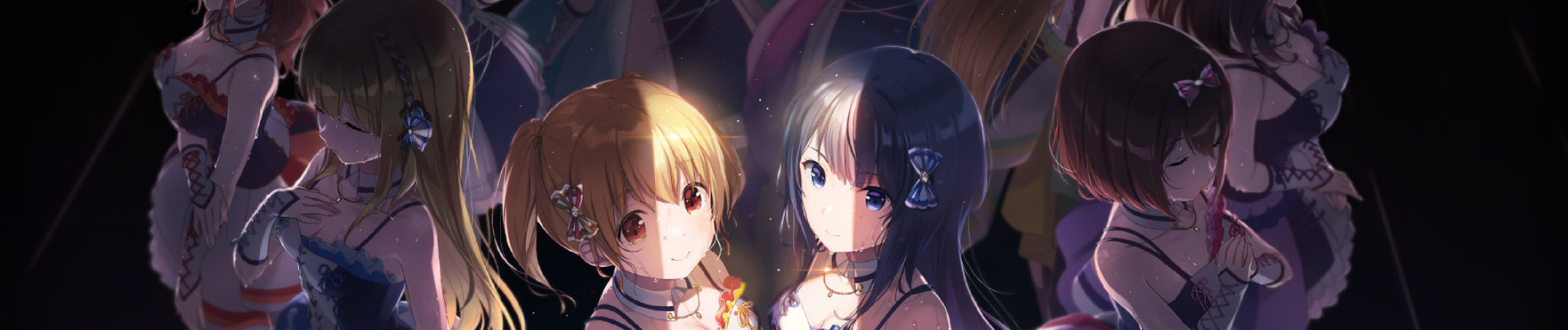
That’s the feeling Idoly Pride lives inside: unresolved proximity. It’s not about rivalry as spectacle—it’s about sharing a bathroom with the ghost of your own future, sleeping three feet from someone whose voice cracks mid-rehearsal because she hasn’t cried in three months, watching a friend’s hands tremble not before a live broadcast, but while folding laundry. The supernatural isn’t fireworks or incantations—it’s the way Mana’s presence lingers like static after a dropped call; the way the dorm’s fluorescent lights flicker only when someone mentions her name twice in a row. This isn’t fantasy-as-escape. It’s fantasy-as-magnifying glass—pressing down on the unbearable tenderness of being seventeen and trying to become real while everyone around you is already performing realness.
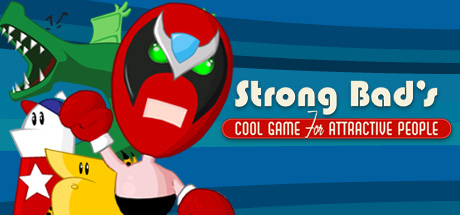
Which is why Strong Bad's Cool Game for Attractive People: Season 1, despite its cartoonish chaos, shares its emotional DNA—not through tone, but through structural unease. Its description promises “wacky comedic adventures,” yet its player review quietly mourns its absence: “I hope Skunkape considers bringing this game back next…” That wistful, almost devotional longing mirrors how Idoly Pride treats idol culture—not as glitter, but as ritual. Both works embed profound emotional narrative inside surfaces that should be disposable: a browser-based flash game, a choreographed handshake event. Both weaponize dissonance—jarring music cuts, abrupt tonal shifts—to make joy feel fragile, laughter feel like a reflex against collapse. The “Body Horror & Occult” tag? In Idoly Pride, it’s the way Kotono’s reflection blinks a half-second too late in the dorm mirror. In Strong Bad’s world, it’s the way pixels glitch just before a confession. Same shiver. Same dread beneath the cute.
Then there’s Persona 5 Royal, whose player review raves about “Stunning Soundtrack” and “the seamless transition between daily life…”—a line that lands like a gut punch when you’ve watched Kotono rehearse until her knees bleed, then sit cross-legged on the floor eating cold rice balls while scrolling through fan edits of Mana’s old performances. The emotional architecture is identical: a meticulously paced rhythm of obligation, intimacy, and exhaustion. In Persona 5 Royal, you build bonds by showing up—again and again—at the same ramen shop, same rooftop, same train platform. In Idoly Pride, you earn trust by noticing whose water bottle is always empty, who rehearses barefoot on the linoleum at 3 a.m., who hums the same chorus over and over—not for perfection, but to keep from forgetting how to breathe. Both understand that emotional narrative isn’t delivered in cutscenes—it’s baked into the repetition, the residue, the weight of showing up.
And though Jade Empire™: Special Edition and Dragon Age: Origins score lower numerically, their shared “Emotional Narrative, JRPG Narrative” dimension reveals something quieter but vital: the ache of legacy. One player calls Dragon Age: Origins’ story “great” while fumbling with installation instructions—mirroring how Idoly Pride’s characters navigate trauma not through exposition, but through logistical labor: re-taping mic packs, re-recording vocal takes, re-folding uniforms with trembling fingers. These games don’t hand you catharsis—they make you earn it through persistence, through choosing dialogue options that cost stamina, through saving the world one exhausted, unglamorous decision at a time. Like Kotono choosing to sing Mana’s signature song—not to replace her, but to prove she can hold the same note without breaking.
This pairing isn’t for fans of “idol anime” or “JRPGs.” It’s for the person who rewatches the same 47-second rehearsal clip because they caught the exact frame where a character’s smile didn’t reach her eyes—and then spends twenty minutes reading Steam forum threads about DLL files just to hear a soundtrack once more. It’s for those who know longing is a muscle, and devotion is measured in small, stubborn returns—to the dorm, to the save file, to the same line of dialogue, sung off-key, whispered like a vow.
🎮8 Games That Match the Vibe



Match Dimensions Explained
❓Frequently Asked Questions
Why does Idoly Pride feel so different from Persona 5 Royal even though both have idol themes and emotional storytelling?
Great question — because Persona 5 Royal’s idol-adjacent moments (like Ann Takamaki’s singing scenes or the Shibuya shopping district performances) are brief flavor, not core gameplay. Idoly Pride lives and breathes idol training, live shows, and fan engagement, while P5R focuses on heists, social links, and turn-based combat in dungeons. The emotional narrative in P5R is deeply personal and psychological, but it doesn’t simulate idol life like Idoly Pride does — no rhythm battles, no backstage prep minigames, no weekly fan-mail management.
Is there an anime or manga adaptation of Strong Bad's Cool Game for Attractive People?
Nope — no official anime or manga exists. Strong Bad’s Cool Game is pure Telltale-style comedy: five self-contained, fourth-wall-breaking episodes where you play as Strong Bad solving absurd mysteries (like finding a missing taco or debugging a haunted CD-ROM). It’s got music & idol vibes in its over-the-top performance energy (think Strong Bad lip-syncing to ‘Trogdor’), but it’s firmly a narrative adventure with point-and-click humor — not an idol sim or anime tie-in.
How does Idoly Pride compare to Dragon Age: Origins in terms of emotional storytelling and player agency?
Both lean hard into emotional narrative, but in totally different ways: Idoly Pride builds intimacy through daily idol routines — think choosing which member to comfort after a rough rehearsal (like Mio’s quiet anxiety before her solo debut), while Dragon Age: Origins delivers weighty, consequence-driven choices — like deciding whether to execute or recruit Loghain, with ripple effects across Thedas. DAO’s pause-and-attack combat gives tactical agency; Idoly Pride’s agency lives in relationship trees, song setlists, and stamina management during back-to-back live shows.
What’s the best game like Idoly Pride if I’m craving something upbeat, music-driven, and emotionally warm — not dark or occult-heavy?
Go straight for Strong Bad's Cool Game for Attractive People — seriously! It’s got infectious music (that ‘Trogdor’ theme slaps), zero body horror or occult dread, and a relentlessly upbeat, self-aware charm. You’ll laugh out loud during Episode 2’s karaoke chaos or Episode 4’s glitter-bomb prank war — all wrapped in bright, cartoonish visuals and tight, joyful pacing. It’s the warmest, most musically playful match on the list, especially compared to Jade Empire’s martial-philosophy gravity or DAO’s grimdark stakes.