
Insomniacs After School
Ganta Nakami is a high school student who suffers from insomnia. One day, he meets Isaki Magari, a girl with the same condition. A strange, but special relationship forms as they share a secret and catch up on their sleep in their school’s abandoned observatory…
(Source: HIDIVE)
📺Anime Details
📝Editorial Analysis
The first time Ganta Nakami and Isaki Magari fall asleep side by side in the abandoned observatory—dust motes drifting in the slant of late-afternoon light, their breathing syncing beneath the quiet hum of a single ceiling fan—it isn’t dramatic. There’s no music swell, no confession, no kiss. Just stillness. The weight of exhaustion lifting like fog burning off cool concrete at dawn. Their hands don’t touch. Their eyes stay closed. But in that shared silence, something settles. Not resolution—just presence. A rare, unguarded permission to be unfinished, unperformed, unhurried.
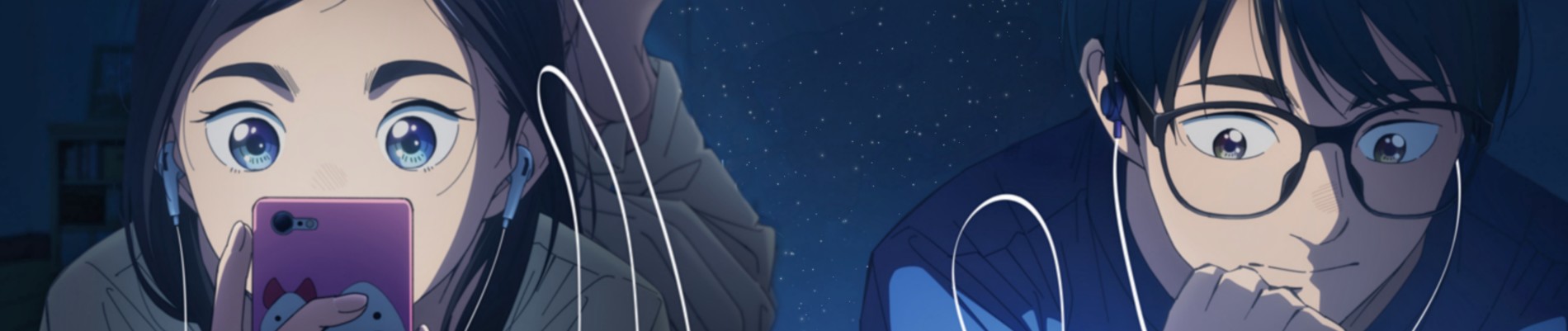
That’s the feeling Insomniacs After School holds like breath: tenderness without pressure, intimacy without urgency. It’s not about falling in love so much as learning how to rest beside someone who understands your insomnia—not as a flaw, but as a quiet language. The observatory isn’t just a setting; it’s a vessel for suspended time—where astronomy charts hang crooked on peeling walls, where film negatives dry on string across sunlit windows, where the weight of adolescence softens just enough to let real feeling seep through. This isn’t iyashikei as passive comfort. It’s active gentleness: two teenagers choosing slowness in a world that demands speed, choosing observation over performance, choosing stillness as resistance. You don’t watch it to escape life—you watch it to remember how to inhabit it, softly.
Which is why Prince of Persia resonates—not the acrobatic spectacle of earlier entries, but this new iteration, described as built by Ubisoft Montreal with an “all-new epic journey” rooted in Healing & Slow Life, tagged explicitly as Adult & Dark Seinen. That phrase—Healing & Slow Life—is the bridge. Player reviews note its departure from familiar lore (“completely separate from the sands…”), emphasizing atmosphere over legacy. Like Ganta and Isaki navigating the observatory’s creaking floorboards and dim lens housings, this Prince of Persia invites players into a world where traversal feels deliberate, where light and shadow aren’t just visual tools but emotional textures. The darkness isn’t menacing—it’s contemplative. The pace isn’t sluggish; it’s attentive. When the Prince moves through ruins softened by mist or pauses to watch wind stir dust in a sunbeam, it echoes Ganta adjusting his camera’s aperture to catch Isaki’s profile against the observatory dome—not to capture perfection, but presence. Both works treat time not as a resource to optimize, but as a medium to hold.
And yet, the resonance goes deeper than pacing. The Adult & Dark Seinen tag signals something vital: this isn’t nostalgia dressed up as maturity. It’s weariness acknowledged, not romanticized. Ganta’s insomnia isn’t a quirk—it’s physiological weight, a body refusing compliance. Isaki’s quiet intensity isn’t aloofness—it’s the guardedness of someone who’s learned to conserve energy. Similarly, this Prince of Persia doesn’t shy from the cost of endurance—the fatigue in the Prince’s posture, the way light fractures across cracked stone like fragile resolve. There’s no triumphant fanfare when he climbs a tower; just the slow, heavy pull of breath, the grit underfoot. That dark isn’t despair—it’s the honest shade where healing begins. Like watching Isaki develop photos in the darkroom, tray by tray, waiting for images to emerge not from magic, but from patience and chemistry.
This pairing won’t land for everyone. It’s not for those craving narrative velocity or emotional fireworks. It’s for the person who’s ever sat awake at 3 a.m., not anxious—but curious, tracing constellations on the ceiling with their eyes. For the player who lingers at a cliffside not to jump, but to feel the wind shift. For the one who keeps a half-developed roll of film in their drawer, not because they forgot it—but because they’re still deciding how to see what’s inside. These are stories for people who understand that some connections begin not with a spark, but with the shared, quiet relief of finally stopping. Who know that the most radical act in a frantic world is to sit in the dim light, breathe, and wait—not for answers, but for the next soft, slow, human moment to arrive.
🎮4 Games That Match the Vibe


Match Dimensions Explained
❓Frequently Asked Questions
Why does Insomniacs After School feel so similar to Prince of Persia despite being a visual novel?
It’s all about that shared 'Healing & Slow Life' + 'Adult & Dark Seinen' vibe — both lean into quiet, emotionally heavy moments where characters confront trauma in atmospheric, rain-slicked urban or ancient settings. In Insomniacs, you’re walking home with Hikari under flickering streetlights after a panic attack; in Prince of Persia (2024), you’re navigating crumbling ruins with the Prince and Elika, healing wounds through tactile, ritualistic gestures — same melancholic pacing, same weight on silence and recovery.
Is there an anime or manga adaptation of Insomniacs After School?
Not yet — and honestly, it’s surprising given how perfectly it fits the 'Adult & Dark Seinen' lane alongside titles like Prince of Persia (which also has no anime but shares that mature, grounded-yet-mythic tone). No official announcements exist, though fans keep comparing its slow-burn character arcs — like Saki’s guarded vulnerability or Ren’s late-night confessions — to the layered emotional restraint you’d expect from a studio like MAPPA adapting a seinen visual novel.
How does Insomniacs After School compare to Prince of Persia in terms of storytelling tone?
They’re shockingly aligned: both avoid flashy action for intimacy and consequence. Insomniacs builds tension through quiet walks home, half-spoken regrets, and hospital waiting rooms — just like Prince of Persia trades sandworms for lingering shots of Elika’s hands trembling as she heals corrupted land. Neither game lets you skip the emotional labor: in Insomniacs, you *choose* whether to hold Hikari’s hand during a flashback; in Prince of Persia, healing isn’t automatic — it’s a deliberate, rhythm-based gesture that mirrors that same care.
What’s the best game like Insomniacs After School if I want that late-night, emotionally raw, healing-focused mood?
Go straight to Prince of Persia (2024) — it’s the only match scoring 83 and sharing both 'Healing & Slow Life' and 'Adult & Dark Seinen' tags. You’ll recognize the same hushed intensity: the way Prince of Persia makes you pause mid-climb to watch mist rise off a ruined temple courtyard feels *exactly* like sitting with Ren on that rooftop at 2 a.m., listening to distant trains while he finally talks about his insomnia. It’s not about saving the world — it’s about showing up, breath by breath.