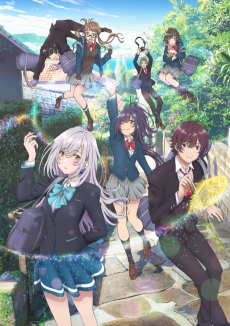
IRODUKU: The World in Colors
Hitomi Tsukishiro may be the child of a family of witches, but after losing her ability to see color, she also lost her sense of magic. Nothing has been able to help her regain that gift — nothing until Hitomi’s grandmother, that is, sends Hitomi back in time to the year 2018! There Hitomi meets her grandmother’s younger self. She also discovers fascinating drawings of a young man named Yuito Aoi. The moment Hitomi lays eyes on his work, colors flood back into view. But why do his drawings have this effect on Hitomi, and for what purpose has her grandmother sent her so far back in time? As Hitomi’s feelings for Yuito grow, she finds herself poised on the cusp of personal transformation, color and magic returning as she blossoms into the young woman she’s meant to be.
(Source: Sentai Filmworks)
📺Anime Details
📝Editorial Analysis
The first time Hitomi sees color again isn’t in a burst of magic or a grand spell — it’s quiet, almost accidental: her fingers brushing the edge of a charcoal sketch on yellowed paper — Yuito Aoi’s drawing — and suddenly the world inhales. Not just red or blue, but the warm ochre of aged paper, the bruised violet in the shadow beneath a drawn eaves, the soft, trembling gold of afternoon light catching dust motes midair. Her breath catches. Her knees buckle. Not from spectacle, but from recognition — as if her eyes had been holding their breath for years and only now remember how to exhale.

That moment isn’t about power returning. It’s about rehabilitation — not of magic, but of attention. IRODUKU: The World in Colors doesn’t trade in apocalypses or chosen ones; it trades in gaze. In the weight of a shutter click, the patience of developing film, the way a single line in a sketch can hold grief, hope, hesitation — all at once. Its atmosphere is tender, unhurried, and deeply textural: the grain of photo paper, the smell of rain on old tatami, the silence between two people learning how to stand beside each other without fixing anything. It makes you feel like time isn’t something to conquer or outrun — it’s something to fold, to revisit, to hold gently in your hands like a fragile negative.
That emotional DNA — the quiet gravity of healing through creative witness, the intimacy of shared creation as emotional scaffolding — echoes sharply in Persona 5 Royal. Its description names “building relations” alongside dungeon crawling and Persona fusion — but what lingers isn’t the heists or the combat, it’s the rhythm of walking home with Ann after school, sharing bento under cherry blossoms, or choosing not to push when someone’s voice cracks mid-conversation. A player review calls out the “seamless transition between daily life…” — exactly the same pulse that makes Hitomi’s slow re-entry into club meetings, darkroom sessions, and hesitant conversations with young Akari feel like breathing again. Both trust routine as revelation — not in spite of its ordinariness, but because of it.
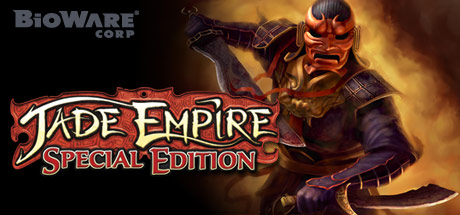
Then there’s Jade Empire™: Special Edition, whose description frames choice not as binary morality, but as embodied philosophy — “the path of the open palm or the closed fist.” That duality mirrors Hitomi’s arc: not regaining magic as force, but reclaiming perception as stance. Her grandmother doesn’t send her back to fix the past — she sends her to witness it, to learn how tenderness becomes resilience, how care is practiced in small, repeated acts: developing film, listening without solving, holding space for another’s unspoken sorrow. The player review’s technical frustration (“copy and paste steam.dll…”) ironically underscores what both works share — they demand presence despite friction, asking you to lean in even when the interface stutters, because what’s being offered — a world where empathy is a discipline, not a trait — is rare enough to warrant the effort.
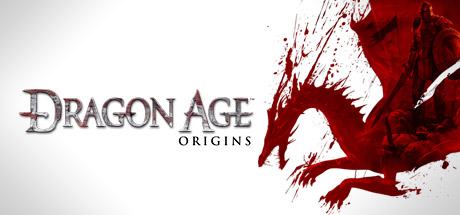
And Dragon Age: Origins, with its description invoking legacy and identity (“a noble dwarf, an elf far from home”), resonates in how IRODUKU treats lineage not as destiny, but as unfinished conversation. Hitomi doesn’t inherit her grandmother’s magic whole — she inherits her sketches, her regrets, her unfinished love letter to Yuito. Like the Warden in Dragon Age, Hitomi’s choices don’t erase consequence — they deepen relationship to it. A player review notes the “pause attack mechanic… help a lot to strategist your tactic” — but what’s truly strategic here isn’t combat timing. It’s knowing when to wait, when to develop the photo instead of rushing the print, when to let silence hold more truth than words. Both understand that some wounds aren’t solved — they’re accompanied.
This pairing speaks directly to the person who cries during film credits, who saves sketches in a notebook they never show anyone, who pauses mid-game not to optimize stats but to watch rain fall on a virtual street for three full minutes. The one who believes rehabilitation isn’t about becoming whole again — but about learning, slowly, how to hold brokenness with reverence.
🎮17 Games That Match the Vibe










Match Dimensions Explained
❓Frequently Asked Questions
Why is Persona 5 Royal listed as similar to IRODUKU when it’s so much more action-packed and edgy?
Great question—it’s not about the tone matching perfectly, but how both games use color, memory, and emotional transformation as core narrative devices. In IRODUKU, Akari literally regains her ability to see color as she heals; in Persona 5 Royal, the shifting UI palettes, vibrant Tokyo districts (like Shibuya’s neon-lit Crossroads), and the 'Change Your Heart' theme tie visual saturation directly to character growth—especially with Ann’s arc in the Velvet Room or the 'Beneath the Mask' confidant story.
Is there an anime or manga adaptation of Jade Empire that captures IRODUKU’s gentle coming-of-age vibe?
Nope—Jade Empire has never been adapted into anime or manga, and honestly, its gritty martial-arts lore and moral duality (Open Palm vs. Closed Fist) feels tonally distant from IRODUKU’s soft, painterly introspection. That said, fans who loved IRODUKU’s quiet moments—like Akari sketching in her notebook or watching sunsets with Tsukasa—often find unexpected comfort in Jade Empire’s quieter interludes: the serene Lotus Marsh flashbacks, or Master Li’s calm, tea-serving pauses between combat training.
How does Dragon Age: Origins compare to IRODUKU in terms of emotional storytelling?
They’re worlds apart in setting—Thedas’ grimdark blight vs. IRODUKU’s sun-drenched coastal town—but both hinge on *how relationships reshape identity*. In IRODUKU, Akari’s bond with her grandmother unlocks buried memories and color; in Dragon Age: Origins, your Warden’s connection with Alistair (especially during his 'I am a Grey Warden' speech in Ostagar) or Morrigan’s morally complex romance forces deep self-reckoning. Even the pause-and-plan combat mirrors IRODUKU’s reflective pacing—you stop, breathe, choose meaning.
What’s the best game like IRODUKU if I just want something warm, unhurried, and full of small human moments?
Go straight to Persona 5 Royal—not for the heists, but for the *quiet* stuff: skipping stones at Kichijoji Park with Ryuji, sharing melon soda on the bench near Shibuya Station, or even just listening to the rain while leveling up Futaba’s Confidant. The soundtrack’s mellow jazz loops and those unhurried calendar days (where you choose *not* to fight, just talk, eat, or draw) hit the same gentle, heartfelt rhythm as IRODUKU’s slow-bloom friendships and seaside stillness.