
Is It Wrong to Try to Pick Up Girls in a Dungeon?
Some adventurers delve into the sprawling labyrinths beneath the city of Orario to find fame and fortune. Others come to test their skills against the legions of monsters lurking in the darkness below. However, Bell Cranel’s grandfather told him a different reason: it’s a great place to rescue (and subsequently meet) girls! Now that Bell’s a dungeon delver himself, the ladies he’s encountering aren’t the helpless damsels in distress he’d imagined, and one of them, the beautiful swordswoman Ais Wallenstein, keeps rescuing Bell instead. As embarrassing as that is, it’s nothing compared to what happens when goddesses get involved. Freya, Hephaistos, and Loki, with their powerful Familias, are intimidating enough, but there’s one goddess whose relationship with Bell is certain to spark trouble.
(Source: Sentai Filmworks)
📺Anime Details
📝Editorial Analysis
The first time Bell Cranel stumbles into the lower levels of the Is It Wrong to Try to Pick Up Girls in a Dungeon? dungeon — not with a war cry, but with a gasp, fingers scraping raw against damp stone as he scrambles backward from a goblin’s rusted scimitar — that’s the heartbeat of it. His breath hitches, his knuckles bleed, and above him, sunlight bleeds through the distant grating like a memory. He’s not heroic yet. He’s terrified, alive, and utterly unprepared — and yet, he doesn’t run all the way out. He stays. Not for glory. Not even really for love. For connection, fragile and fumbling, forged in shared breath and shared danger.

That’s what makes Is It Wrong to Try to Pick Up Girls in a Dungeon? vibrate with such rare warmth: it treats the dungeon not as a gauntlet of abstract threats, but as a social ecosystem. The limestone walls echo with laughter as much as battle cries; healing magic hums beside gossip; swordplay is punctuated by blushing glances and clumsy compliments. It’s hopeful — not naive, not saccharine, but hopeful in the way only earnest vulnerability can be. You feel the weight of stone, yes — but also the lightness of a hand brushing yours during a narrow corridor squeeze, the quiet pride in a mentor’s nod after your first clean parry, the ache of longing that never quite curdles into despair. This isn’t dark fantasy’s grim resignation or high fantasy’s detached grandeur. It’s intimate, grounded, human-scale wonder — where gods walk among mortals not as distant judges, but as flawed, invested, sometimes hilariously petty participants in the same messy, yearning dance.
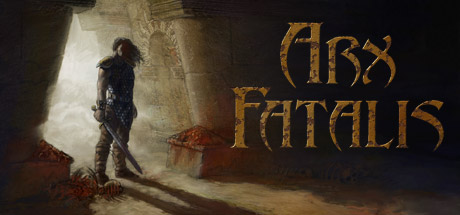
That emotional DNA — intimacy within the labyrinth, warmth beneath the stone, connection as both compass and reward — resonates sharply with Arx Fatalis. Its description calls it “a critically acclaimed first-person RPG” set in a “post-apocalyptic fantasy world” wrought with turmoil — but the player review nails the feeling: “Exploration is truly e…” — that trailing ellipsis feels like Bell catching his breath before stepping off a ledge. Like Orario’s dungeon, Arx’s catacombs aren’t just geometry; they’re lived-in, breathing spaces where magic is tactile (you draw runes in the air), light is scarce and precious, and every torch flicker carries weight. It shares that same tactile vulnerability: you’re not an avatar of power, but a body in space — cold, hungry, learning the rhythm of stone and shadow. The “genuinely fresh” premise mirrors Bell’s own disorientation — both are newcomers mapping meaning, one with a sword, one with a spell-gesture.
Disciples II: Gallean's Return, despite its tactical grid and turn-based pace, pulses with the same ensemble gravity. Its description notes it’s a compilation with expansions, and the player review raves about its “awesome atmosphere and gameplay!” — that emphasis on atmosphere is key. Like the anime’s pantheon, Disciples II populates its world with distinct, morally textured factions, each with gods, histories, and personal stakes. You don’t command faceless units; you shepherd legions led by characters whose motivations echo Aiz Wallenstein’s quiet loyalty or Hermes’ playful mischief — layered, consequential, felt. The “best Disciples ever” sentiment reflects how deeply the game makes you care about who stands beside you in the dark — not just their stats, but their presence.
Even Drakensang, described as a “third-person party-based RPG based on… The Dark Eye” ruleset, taps into that same grounded intimacy. Its player review recalls “good memories” and laments the lack of similar games — a nostalgia for something real, tactile, small. Drakensang’s focus on party dynamics, dialogue-driven choices, and a world built on detailed, lived-in lore mirrors the anime’s ensemble cast: every member of the Hestia Familia has history, quirks, and quiet moments that matter — not because they drive the plot, but because they make the world breathe. It’s the same feeling: the clink of armor in a tavern, the weight of a shared meal after a near-death scrape, the unspoken understanding between comrades who’ve seen each other sweat and swear in the dark.
This pairing sings for the player who doesn’t just want to win the dungeon — but wants to know its echoes, its inhabitants, its quiet corners where courage and kindness flicker side-by-side. For the viewer who watches Bell’s trembling hands not as weakness, but as proof of courage being chosen, not inherited. For the one who saves not just to progress, but to remember the warmth of a shared torchlight — and the quiet, thrilling, terrifying possibility of a hand reaching back.
🎮7 Games That Match the Vibe



Match Dimensions Explained
❓Frequently Asked Questions
Why is Arx Fatalis listed as similar to DanMachi when it’s so dark and serious?
Great question — it’s not about tone matching DanMachi’s harem-comedy, but about *dungeon structure and immersion*: Arx Fatalis drops you into a living, breathing underground world where every corridor, lever, and flickering torch feels consequential — just like the Dungeon in DanMachi, where levels shift, factions clash, and exploration has real stakes. Plus, its first-person perspective and emphasis on environmental storytelling (like finding ancient murals hinting at fallen gods) echo how DanMachi builds lore through layered world-building, not exposition dumps.
Is there a DanMachi video game adaptation I can actually play right now?
No official DanMachi console or PC game exists — only mobile titles like *DanMachi: Memoria Freese*, which got mixed reviews and shut down globally in 2021. So the 'games like DanMachi' list focuses on *spiritual matches*: Disciples II and III nail the faction-driven JRPG narrative (think Hestia Familia vs. Loki Familia rivalries), while Drakensang mirrors the grounded party dynamics and Germanic fantasy aesthetic of the series’ source material.
Disciples II vs. Disciples III — which one captures DanMachi’s story vibe better?
Disciples II: Gallean’s Return — hands down. Its grim yet mythic tone, faction-based campaign (like playing as the Hestia Familia against rival houses), and richly atmospheric writing ('Best Disciples ever... awesome atmosphere!' per player review) line up with DanMachi’s blend of high-stakes politics and personal loyalty. Disciples III, meanwhile, has critical save bugs on modern Windows and lacks the same cohesive narrative punch — plus its revamped UI and mechanics feel less intimate than II’s deliberate, lore-dense pacing.
What’s the best DanMachi-like game if I want that ‘small party exploring a mysterious dungeon’ feeling?
Go with Arx Fatalis — it’s the only match that puts you *in* the dungeon *firsthand*, with tactile, immersive mechanics like casting spells by drawing runes in real time (just like Bell’s quick-thinking under pressure), or solving environmental puzzles using light/shadow — no cutscenes, no hand-holding. Reviewers called its post-apocalyptic fantasy world 'genuinely fresh', and that sense of discovery — stumbling into a forgotten shrine, hearing distant echoes of other adventurers — hits the same emotional notes as Bell’s early solo forays into the lower levels.