
Is It Wrong to Try to Pick Up Girls in a Dungeon? II
The second season of Dungeon ni Deai wo Motomeru no wa Machigatteiru Darou ka.
There's rarely a dull moment when you're the champion of a tiny Familia, and things only get rougher for Bell when the God Apollo declares war on Hestia and her followers. With Apollo's Familia able to field a hundred times as many men, Hestia will have to work a lot of favors to keep her Familia from being completely destroyed.
Even if Bell and Hestia manage to pull off the impossible, a major debt that Hestia owes is about to come due and Lili's sordid past comes back to haunt her! Which means that when Bell and his friends come to Lili's aid, it sets into motion yet another impending clash of the titans that may destroy everything!
(Source: Sentai Filmworks)
📺Anime Details
📝Editorial Analysis
The scent of burnt incense and old parchment hangs thick in Hestia’s tiny shrine—Bell’s knuckles are split, his breath ragged, and the floorboards groan under the weight of a hundred unseen eyes watching from the shadows of the city’s upper tiers. Apollo’s decree hasn’t even landed yet, but the pressure is already physical: a low hum in the air, like the moment before thunder cracks—not fear, exactly, but the dread of scale, of being a single candle flame facing a gale that answers to gods. That’s the heartbeat of Is It Wrong to Try to Pick Up Girls in a Dungeon? II: not the dungeon’s depth or the harem’s banter, but the quiet, grinding awe of standing small in a world where divinity doesn’t whisper—it declares, and expects you to kneel or burn.
What makes this season ache with such specific gravity isn’t its fantasy trappings, but how it weaponizes intimacy against immensity. Bell trains barefoot on sun-warmed stone while Apollo’s Familia drills in perfect, gleaming unison across the city—a visual thesis in contrast. The magic isn’t flashy; it’s the way Hestia’s hands tremble as she folds prayer papers, or how Bell’s sword feels heavier after every favor begged, every debt accrued. This isn’t about power fantasy—it’s about tenderness under siege. You feel the warmth of shared meals in cramped quarters, then the chill when the camera lingers on empty chairs at the table, left vacant by those who won’t return. It’s vulnerable, resolute, and exhaustingly human—even when gods walk among mortals.
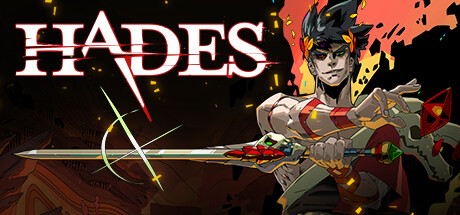
That same emotional DNA thrums in Hades, where you’re not just escaping the Underworld—you’re negotiating with it. The description says you “defy the god of the dead,” but what sticks is the rhythm: dying, returning, overhearing fragmented conversations, slowly learning who Persephone really is beneath the myth, how Zagreus’ stubbornness isn’t bravado—it’s longing, stitched into every failed run. A player review confesses, “I was so close to giving it a negative review, but then I thought that would be unfair…”—that hesitation mirrors Bell’s own doubt mid-battle, the pause before he swings again, not because he believes he’ll win, but because not swinging would betray everyone still breathing back home. Both works treat mythology not as backdrop, but as emotional architecture: gods aren’t plot devices—they’re forces whose moods reshape relationships, whose favor must be earned in whispers, not shouts.
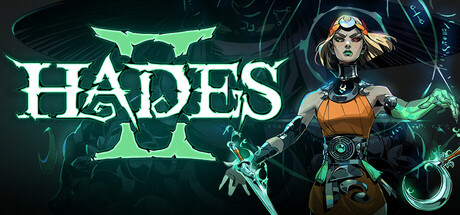
Hades II deepens that resonance. Its score matches Hades’ at 85, and its dimensions—Roguelike & Dungeon, Mythology & Folklore—aren’t just tags. They’re emotional coordinates. Like Dungeon ni Deai II, it layers myth not as lore-dump, but as lived tension: each descent into the Underworld echoes Bell’s repeated dives into the dungeon—not for glory, but to prove something fragile can persist. The roguelike structure mirrors the anime’s relentless pacing: failure isn’t erasure, it’s accumulation—new dialogue, new context, new weight behind a glance. When Melinoë stumbles, recalibrates, and tries again, her exhaustion isn’t pixel-deep; it’s the same bone-tired devotion that keeps Hestia awake stitching armor seams at 3 a.m., or Bell practicing sword forms until his arms shake. Both refuse catharsis on easy terms. Victory feels earned, yes—but more importantly, it feels shared, even when you’re alone in the dark.
This pairing sings to the viewer who cries during training montages—not because the hero gets stronger, but because they finally see the people holding the light. It’s for the player who saves not to win, but to hear one more line from Thanatos, or the fan who re-watches Bell’s first real conversation with Aiz—not for romance, but for the way her voice drops half a tone when she admits, “I’ve watched you.” It’s for anyone who’s ever loved something too small for the world’s notice, and kept tending it anyway. Not with fanfare. With calloused hands, quiet prayers, and the stubborn, glowing refusal to let warmth go out.
🎮2 Games That Match the Vibe
Match Dimensions Explained
❓Frequently Asked Questions
Why is Hades listed as similar to Is It Wrong to Try to Pick Up Girls in a Dungeon? II?
Because both lean hard into dungeon-crawling action with flirtatious, character-driven banter—like Zagreus trading quips with Thanatos or Megaera while dodging spear traps, just like Bell interacting with Hestia or Aiz in the lower floors of the Dungeon. The mythological worldbuilding, recurring NPC relationships that evolve across runs, and that addictive 'one more floor' loop make it a tonal and structural match.
Is there a video game adaptation of DanMachi II?
No—there’s no official video game adaptation of *Is It Wrong to Try to Pick Up Girls in a Dungeon? II* (the anime season). The only licensed DanMachi games are mobile titles like *Danmachi: MEMORIA FREESE* (not on the match list), and none replicate the Season 2 story or mechanics. Hades and Hades II are standalone mythological roguelikes—not adaptations—but they’re the closest in vibe and pacing.
Hades vs. Hades II: which feels more like DanMachi II’s dungeon exploration and party banter?
Hades II leans harder into the ‘ever-deepening dungeon’ feel with its layered biomes (like the shifting Grove of the Fates) and dual-character synergy—think Artemis and Chronos bantering mid-combo, echoing Bell and Hermes’ dynamic. But Hades still wins for sheer density of romanticized NPC interactions: every escape attempt includes fresh dialogue from characters like Dusa or Nyx, mirroring how Bell’s relationships evolve floor-by-floor with minimal repetition.
What’s the best game like DanMachi II if I want fast-paced combat + charming character moments?
Go straight to Hades—it’s got that same lightning-fast dodge-roll combat (Zagreus’ dash has *exactly* the same risk/reward tension as Bell’s evasion skills), plus rich, re-playable dialogue where characters like Achilles roast you after every death, just like Aiz scolding Bell post-failure. And at 85/100, it’s critically beloved for nailing both action and heart—no filler, all floor-running, flirting, and growth.