
JoJo's Bizarre Adventure: Golden Wind
The fifth story arc of the long-running JoJo's Bizarre Adventure series.
Giorno Giovanna, a young man living in Naples, has the blood of DIO -- the eternal enemy of the Joestar clan -- running in his veins. Giorno becomes a delinquent due to being persecuted since childhood. However, he's led back onto the right path thanks to a gangster who saved him and taught him to believe in others. Bizarrely enough, this gang of people who didn't forget honor, gratitude, and respect made him reform. This is how Giorno came to admire gangsters. In the backstreets of Italy, Giorno causes trouble alongside his gang "Passione," and ends up being targeted...
(Source: Anime News Network)
📺Anime Details
📝Editorial Analysis
The rain in Naples doesn’t fall—it clings. It slicks the cobblestones of the Spanish Quarter until they gleam like black glass, catches in the frayed collar of Giorno’s jacket as he stands motionless on a rooftop, watching a pigeon flap away from a crumbling fresco. His fist is clenched—not in rage, not yet—but in quiet, aching resolve. That moment isn’t about power or victory. It’s about a boy who’s been told his blood is poison, standing in the humid, salt-thick air and choosing—choosing—to believe in something honorable anyway.
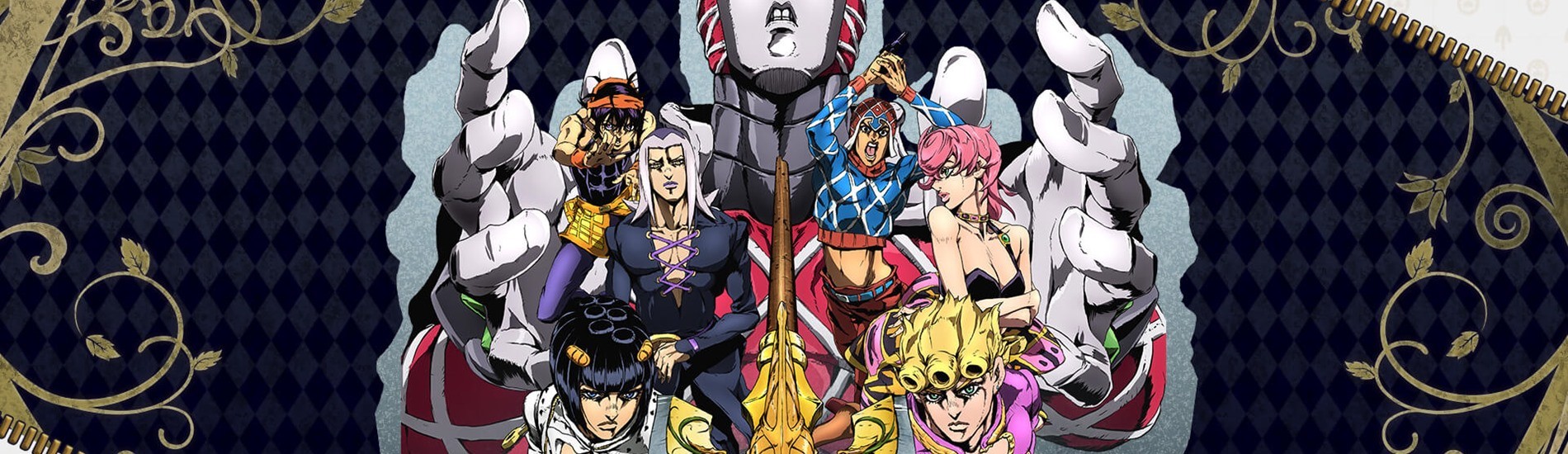
That’s the emotional core of JoJo's Bizarre Adventure: Golden Wind: not spectacle, but dignity under pressure. It’s the weight of a handshake held too long between men who’ve buried friends and lied to survive; the hush before a Stand battle where the real tension isn’t whether someone will win, but whether they’ll keep their word. This isn’t shōnen about climbing ladders—it’s about building scaffolding out of broken loyalties, brick by brick, in a city that forgets everyone. You don’t feel pumped. You feel tender, then fiercely protective—like you’re guarding something fragile inside yourself, something that still believes in gratitude even when the world has made it dangerous to do so.
Assassin's Creed™: Director's Cut Edition shares that same melancholic pulse. Its description calls it Neon Noir, Political Thriller, Melancholic Exploration—and yes, the visuals are dated, as one player notes, but that roughness deepens the mood: the flicker of torchlight on stone, the way Altaïr moves through Damascus not as a conqueror but as a man learning, slowly, what justice costs. Like Giorno walking past the same alley where he was beaten as a child—not flinching, not boasting, just passing through, changed but unbroken—the game’s exploration feels weighted, reverent. The player review doesn’t praise combat or upgrades; it lingers on atmosphere, on texture, on time. That’s the resonance: both works treat moral conviction not as a superpower, but as a daily act of quiet defiance against decay.
The ensemble cast of Golden Wind, with its tight-knit, flawed, fiercely loyal gangsters, also mirrors how Assassin's Creed™ structures its world—not through lone heroes, but through fractured brotherhoods bound by oaths older than logic. When Bruno Bucciarati chooses to protect Trish not because she’s useful, but because she’s human, it lands with the same gravity as Altaïr choosing mercy over mandate—not as weakness, but as precision. Both stories trust the audience to feel the weight in silence: the pause before a vow, the breath before a blade is drawn, the way loyalty isn’t declared—it’s demonstrated, again and again, in small, irrevocable choices.
This isn’t about flashy Stands or parkour leaps. It’s about the texture of honor when it’s worn thin—how it frays at the edges, how it glints in the rain, how it survives not despite the grime, but within it. That’s why the feeling never tips into nihilism, never romanticizes violence—it holds space for grief, for shame, for the slow, stubborn return to light. You watch Giorno kneel to tie Narancia’s shoelace after a fight, and it hits harder than any explosion. You walk through Acre’s market in Assassin's Creed™, listening to merchants argue over saffron prices while guards patrol overhead, and you feel the same layered reality: danger and beauty, corruption and care, all breathing in the same humid air.
Someone who loves these pairings isn’t chasing adrenaline—they’re drawn to moral weather. They notice how a character’s posture shifts when they lie. They replay a cutscene not for plot, but to hear the tremor in a voice saying “I’ll protect you.” They play games not to win, but to witness—to sit with the ache of people trying, sincerely, to mean what they say in a world built to make that impossible. They love the way Naples smells like espresso and wet brick at dawn. They love the way Damascus smells like cumin and dust at dusk. They love stories where the most bizarre thing isn’t a supernatural power—it’s hope, persisting, unreasonable and glorious, in the cracks of everything.
🎮10 Games That Match the Vibe









Match Dimensions Explained
❓Frequently Asked Questions
Why does Golden Wind's 'Sticky Fingers vs. King Crimson' fight feel so unique compared to other boss battles in games like Assassin's Creed?
Because Golden Wind’s time-erasure climax leans into surreal, rule-breaking tension—something Assassin’s Creed: Director’s Cut Edition avoids entirely. Its boss fights are grounded political assassinations (like Al Mualim’s rooftop confrontation), not reality-warping duels. The Neon Noir and Melancholic Exploration vibe means pacing is deliberate, atmospheric, and emotionally heavy—not flashy or metaphysical.
Is there a JoJo’s Bizarre Adventure: Golden Wind game adaptation with voice acting and cutscenes like the anime?
No—there’s no official Golden Wind game with full anime-style cutscenes or Japanese/English dub voice acting. The closest vibe is Assassin’s Creed: Director’s Cut Edition’s cinematic storytelling, but it’s a Political Thriller with scripted assassination sequences (e.g., the Damascus market chase), not Stand battles or Bucciarati’s crew banter.
How does Assassin’s Creed: Director’s Cut Edition compare to Golden Wind in terms of story pacing and tone?
Golden Wind races forward with chaotic energy and rapid tonal shifts—like when Narancia suddenly dies mid-heist—but Assassin’s Creed: Director’s Cut Edition moves with slow-burn Melancholic Exploration and Neon Noir gravitas. You’ll spend minutes silently scaling Jerusalem’s walls, then reflect on Altaïr’s guilt—not shout ‘ORA ORA’ while dodging erased seconds.
What’s the best game like Golden Wind if I want that brooding, stylish, late-night city vibe with political stakes?
Assassin’s Creed: Director’s Cut Edition nails that exact mood: Neon Noir lighting over Acre’s rain-slicked alleys, Political Thriller intrigue around the Templar conspiracy, and Melancholic Exploration as Altaïr questions faith and power. It won’t give you Giorno’s ambition or Sticky Fingers’ swagger—but it *will* make you pause at sunset over the Dome of the Rock, heart heavy and headphones on.