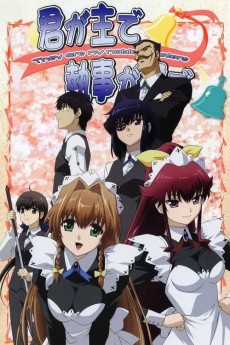
Kimi ga Aruji de Shitsuji ga Ore de
📺Anime Details
📝Editorial Analysis
The clink of a silver spoon against porcelain. The faint, warm scent of vanilla custard rising from a perfectly portioned dessert. Then—a hand slips, the spoon skitters across the tray, and before you can blink, the ojou-sama’s silk sleeve brushes your wrist as she steadies it with quiet, unnerving precision. Her expression doesn’t shift. Not a flicker of embarrassment, not a smile—just stillness, like a pond holding its breath just before something sinks. That moment isn’t about service. It’s about proximity held in suspension, where every gesture is both rehearsed and charged, where comedy wears gloves and romance speaks in starched cuffs.
What makes Kimi ga Aruji de Shitsuji ga Ore de vibrate at this particular frequency isn’t its harem setup or ecchi flourishes—it’s the weight of restraint. You feel it in the silence between lines, in the way a maid folds a napkin three times before placing it beside a teacup, in how a yandere’s affection arrives wrapped in flawless etiquette and edged with something quietly unyielding. This isn’t chaos dressed as order—it’s order infused with feeling so tightly coiled it hums. You don’t laugh at the characters; you laugh with nervous recognition, because their emotional logic—where devotion and danger share the same vocabulary, where parody deepens rather than deflates—is weirdly, unsettlingly human. It makes you wonder: what happens when love is performed so perfectly it stops being performance?
That same tonal tightrope—the balance of absurdity and ache, of satire that never lets you forget the heart beating beneath the joke—pulls you into Undertale. Its score matches not by accident: 77, rooted in Comedy & Parody, Emotional Narrative. Like the anime’s butler navigating a household where every glance could mean adoration or annihilation, Undertale’s world runs on rules that are both ridiculous and sacred. When Sans cracks a pun while standing in front of a crumbling timeline, or when Undyne drops her bravado mid-battle to beg you not to reset—that’s the same emotional DNA: humor as armor, tenderness smuggled inside irony, stakes that feel real because they’re wrapped in silliness.
Then there’s Song of Nunu: A League of Legends Story, also scoring 77 across those same dimensions. Its description promises a journey “told through music, memory, and mischief”—and that’s the key. Like the anime’s maids moving in synchronized silence before erupting into chaotic, character-revealing slapstick, Nunu’s story layers levity over loss, using playful mechanics (snowball physics, melody-based puzzles) to carry profound grief. Player reviews don’t mention combat or lore—they talk about feeling. Just as Kimi ga Aruji de Shitsuji ga Ore de makes you catch your breath when a kuudere’s glove comes off just long enough to reveal a tremor in her fingers, Nunu makes you pause mid-snowball toss when a lullaby cracks open a wound you didn’t know was there.
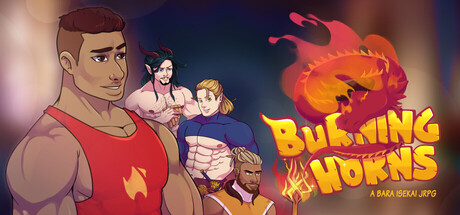
Even Burning Horns: A Bara Isekai JRPG, hitting that same 77 in Comedy & Parody, Emotional Narrative, resonates—not despite its genre pivot, but because of it. Its parody isn’t surface-level; it’s structural, twisting isekai tropes until they exhale raw vulnerability. Think of how Kimi ga Aruji de Shitsuji ga Ore de treats the “butler” trope: not as a power fantasy, but as a cage of expectation where loyalty and longing blur. Burning Horns does the same with bara conventions—using exaggerated musculature, over-the-top declarations, and deliberate camp not to mock, but to amplify sincerity. The laughter lands because the yearning underneath is unmistakable, unguarded, real.
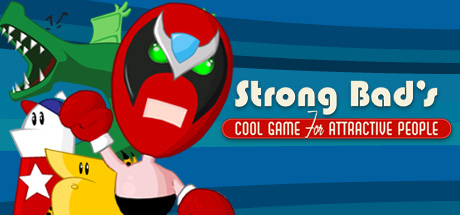
And yes—even Strong Bad's Cool Game for Attractive People: Season 1, with its lower 68 score but identical dimensional anchors, fits. Its description calls it “wacky comedic adventures over 5 full episodes!” and a player review wistfully hopes for its return alongside Poker Night’s remake—not for nostalgia alone, but because it holds space for feeling within farce. Strong Bad’s fourth-wall-breaking rants, his sudden softness when talking about The King of Town’s loneliness, the way a pixelated taco becomes a vessel for existential dread… it’s the same alchemy: absurdity as emotional conduit, where the joke isn’t the point—the relief it offers, the recognition it sparks, is.
This is for the person who watches a maid trip over her own hemline—and feels their chest tighten, not from lust, but from the sheer, aching effort of maintaining grace under invisible pressure. For the player who saves before a boss fight not out of fear of failure, but because they’ve grown too fond of the flawed, funny, fiercely tender people waiting on the other side of the screen. It’s for those who know that the most vulnerable moments wear the sharpest suits, the loudest laughs, the most immaculate bows—and who crave stories brave enough to let both truths exist, side by side, in perfect, trembling balance.
🎮4 Games That Match the Vibe

Match Dimensions Explained
❓Frequently Asked Questions
Why does Undertale keep showing up in Kimi ga Aruji de Shitsuji ga Ore de recommendations?
Because both lean hard into absurdist comedy with sudden emotional gut-punches—like when Undertale’s Sans drops his 'determination' monologue right after cracking jokes about spaghetti, mirroring how Kimi ga Aruji flips from maid-service slapstick to quiet moments where Shinichi silently adjusts Ruri’s collar after a tense confrontation. The shared 'Comedy & Parody + Emotional Narrative' dimension (both scored 77 there) is the real glue.
Is there a Kimi ga Aruji de Shitsuji ga Ore de visual novel adaptation or game remake?
No official game adaptation exists—but Burning Horns nails that same tonal whiplash: it’s a bara isekai JRPG where you’re literally a demon butler navigating over-the-top romantic chaos *and* surprisingly tender scenes like helping your master polish antique teacups while discussing loneliness. It’s not a remake, but fans say it ‘feels like stepping into Kimi ga Aruji’s world if it had dice rolls and dialogue trees.’
How does Song of Nunu compare to Kimi ga Aruji de Shitsuji ga Ore de?
Both use lighthearted, almost childish aesthetics to frame deep emotional arcs—Nunu’s snowball fights with Lulu parallel Kimi ga Aruji’s tea-serving rituals as bonding metaphors, and both hit that sweet spot where humor disarms you before dropping weighty lines (e.g., Nunu whispering ‘I miss her voice’ mid-snowstorm vs. Shinichi’s ‘I’ll serve you until my hands forget how to hold anything else’). They share identical 77 scores in Comedy & Parody *and* Emotional Narrative.
What’s the best Kimi ga Aruji-like game if I want something cozy but with dry, self-aware humor?
Strong Bad’s Cool Game for Attractive People—especially Episode 2’s ‘The King of Town’—delivers that exact vibe: deadpan narration, fourth-wall-breaking asides (like Strong Bad critiquing your choices mid-dialogue), and low-stakes domestic absurdity (e.g., organizing a ‘sweatband collection’ instead of a formal tea ceremony). Player reviews even call it ‘Kimi ga Aruji if Shinichi ran a wrestling-themed email newsletter.’